

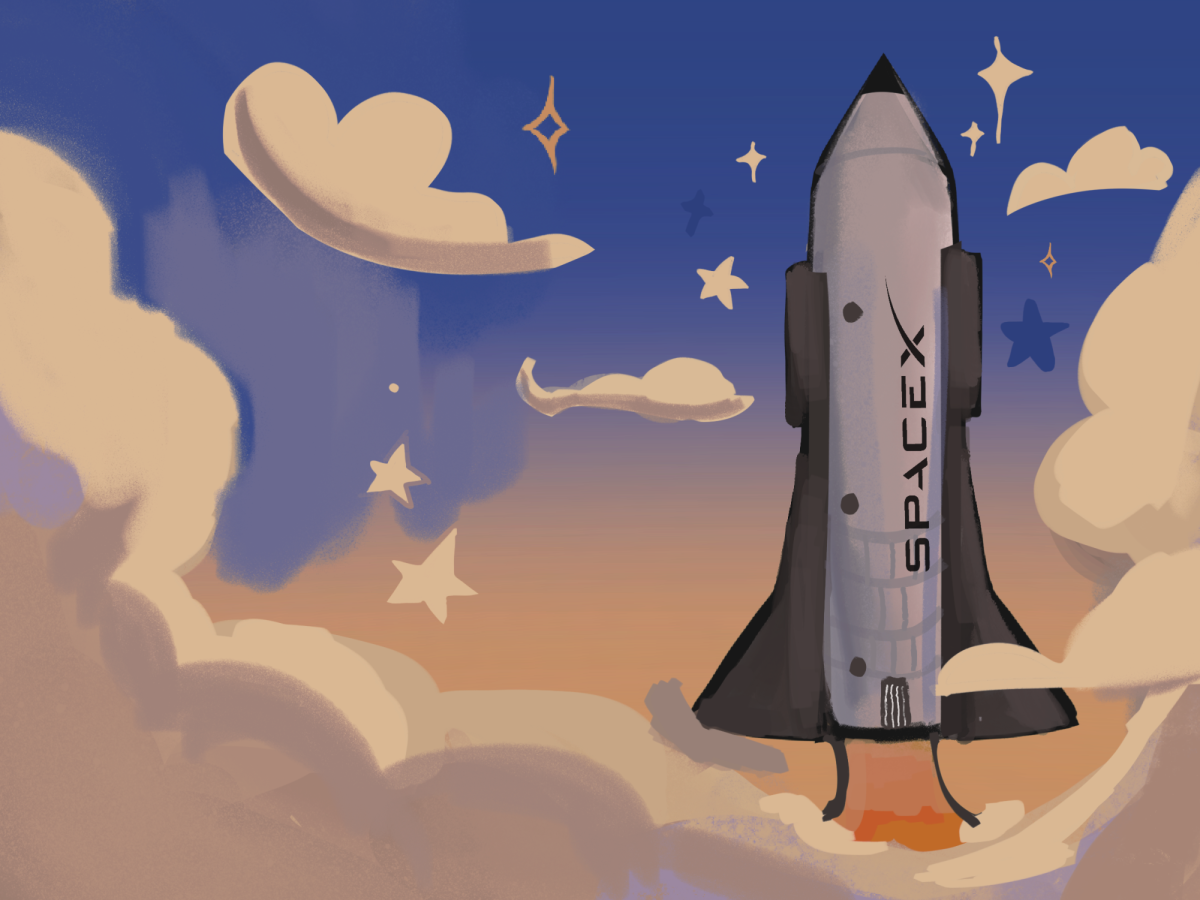
SpaceX’s Starship completed its fourteenth flight on Sept. 28, marking the first time the massive spacecraft reached Earth’s orbit, despite an engine failure that forced the mission to end earlier than planned. The uncrewed spacecraft launched from SpaceX’s facility in Texas. The rocket was originally scheduled to remain in space for 10 hours and complete six orbits of Earth. But, the mission lasted about three hours and completed two orbits before splashing down in the Pacific Ocean. The purpose of the launch was to test Starship’s ability to reach orbit while carrying an operational payload. Flight 14 deployed 26 Starlink satellites into orbit.
NASA Administrator Jared Isaacman described this as a “significant moment in the history of space,” regardless of the mission ending early.
The shortened mission came after Starship experienced an engine problem during its flight. As the spacecraft ascended, one of its six Raptor engines shut down prematurely. However, the flight controllers decided to proceed and the other five Raptor engines burned long enough for Starship to reach orbit.
“Out of an abundance of caution given the engine issue experienced during ascent, the flight control team decided to limit the duration spent on orbit and proceeded with deorbiting Starship to a splashdown location in the northern Pacific Ocean,” according to a post-flight release shared by SpaceX.
Flight 14 was different from previous test flights because it deployed satellites. Earlier flights only tested Starship’s ability to launch, fly and return safely.
“Deploying all 26 Starlink V3 satellites into target orbit is a huge win, especially since this marks Starship’s very first revenue-generating commercial flight,” Dean Sladen, quality manager and aerospace engineer at Accu Components, said. “But from an engineering perspective, the real story was how the team handled that engine failure during ascent.” The deployment of the satellites demonstrated Starship’s potential to deliver cargo into space. But the engine failure showed that the spacecraft needs further testing before carrying out more missions.
Flight 14 also provided engineers with reentry and splashdown performance. The results are important since Starship is being developed for NASA’s Artemis moon program, which aims to return astronauts to the moon. SpaceX describes Starship as “the world’s most powerful launch vehicle ever developed and designed to eventually carry crew and cargo to Earth orbit, the Moon, Mars and beyond.”
Before Starship can be operated with crew, SpaceX must demonstrate that the spacecraft can reliably launch, operate and return safely.
The company will use data from Flight 14 to improve and prepare for future test flights. Although Flight 14 ended earlier than expected, the mission represented a major step forward for SpaceX.