
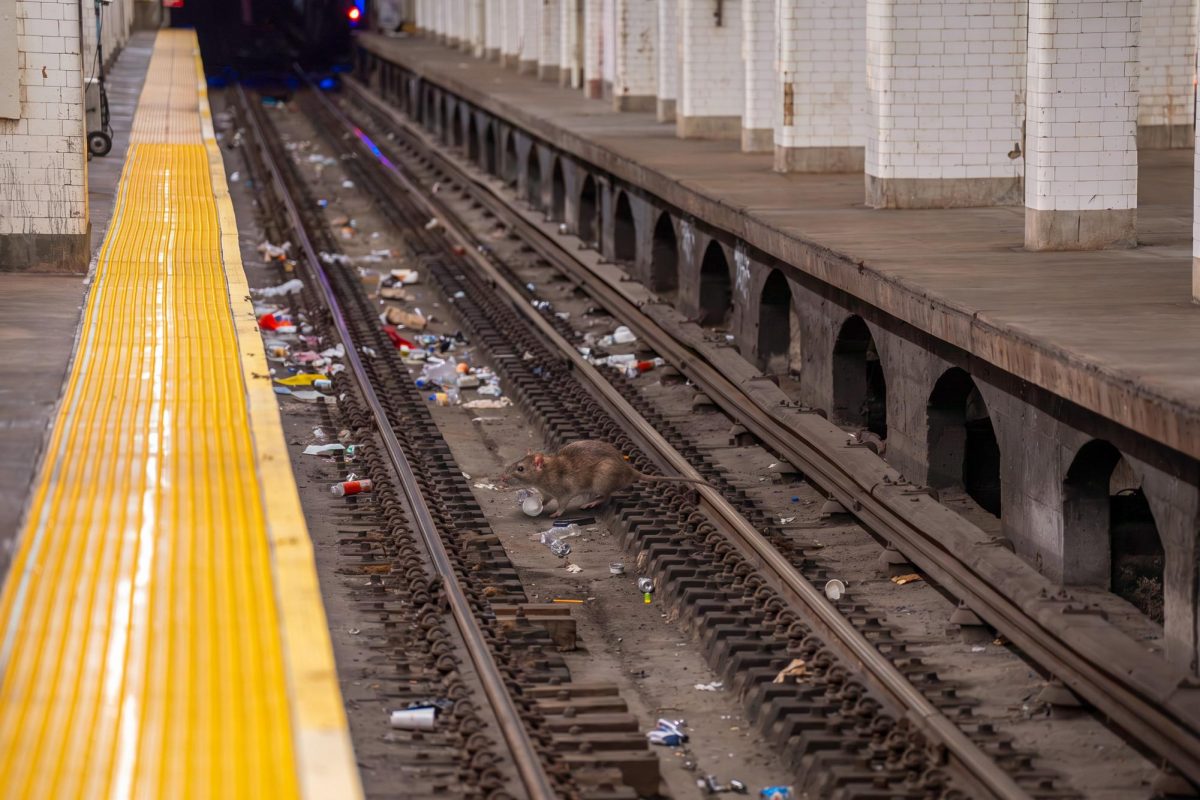
A Rutgers University study released this year found that rats and mice in New York City and other Northeast cities carry gene mutations linked to resistance to common poisons.
The findings may explain why exterminators say rodents are getting harder to get rid of. They also add to research showing that city life is changing New York’s rats down to their DNA. Researchers tested DNA from 147 house mice and 143 rats. Pest control workers collected them in New York, New Jersey, Pennsylvania and Washington, D.C.
Most of the mice had changes in a gene called Vkorc1, with about 84% carrying at least one mutation in it. Nearly 70% had mutations already known to help mice survive poison. About 35% of the rats had mutations in the same gene.
Jin-Jia Yu, the study’s first author and a postdoctoral fellow at Rutgers, said the research started because pest control workers “often told us that rodent control was becoming more difficult in some areas.”
The most common rodent poisons in the U.S. work by causing internal bleeding. A rodent born with the right mutation can eat the bait and live. It then passes that gene to its babies. Over time more rodents in the group become resistant.
Rats seem to be changing slower than mice due to rats being cautious around new food. They often check out bait several times before they eat it, which keeps many of them away from poison in the first place.
“Rats are very clever,” Yu said. The team also found some mutations that no one had reported before. Scientists do not know yet if those help rodents resist poison.
Poison is not the only thing changing New York’s rats. A 2020 study looked at the full DNA of 29 city rats.
Researchers compared them with rats from rural northeast China, where the species likely came from. They found signs of change in genes linked to diet, metabolism, nervous system and movement.
Arbel Harpak was a Columbia University scientist and the 2020 study’s lead author. He said that city rats have changed how they act and what they eat as they live next to people. The city’s layout plays a role.
Matthew Combs studied Manhattan rats as a graduate student at Fordham University. He found that rats north of 59th Street have different DNA than rats south of 14th Street. Midtown has fewer homes and less trash, so the two groups rarely mix. Researchers can even tell East Village rats from West Village rats by their DNA.
Experts say the answer is to rely less on poison. They recommend storing trash the right way and cutting off food sources.