
For nearly 90 years, people in different parts of the world have reported seeing tiny, colorful human figures after eating certain undercooked wild mushrooms. These unusual visions were once dismissed by researchers as folklore or cultural influences.
Now, scientists at the University of Utah have identified a mushroom species responsible for these hallucinations in China and the Philippines, potentially bringing researchers closer to discovering an entirely new brain-altering chemical.
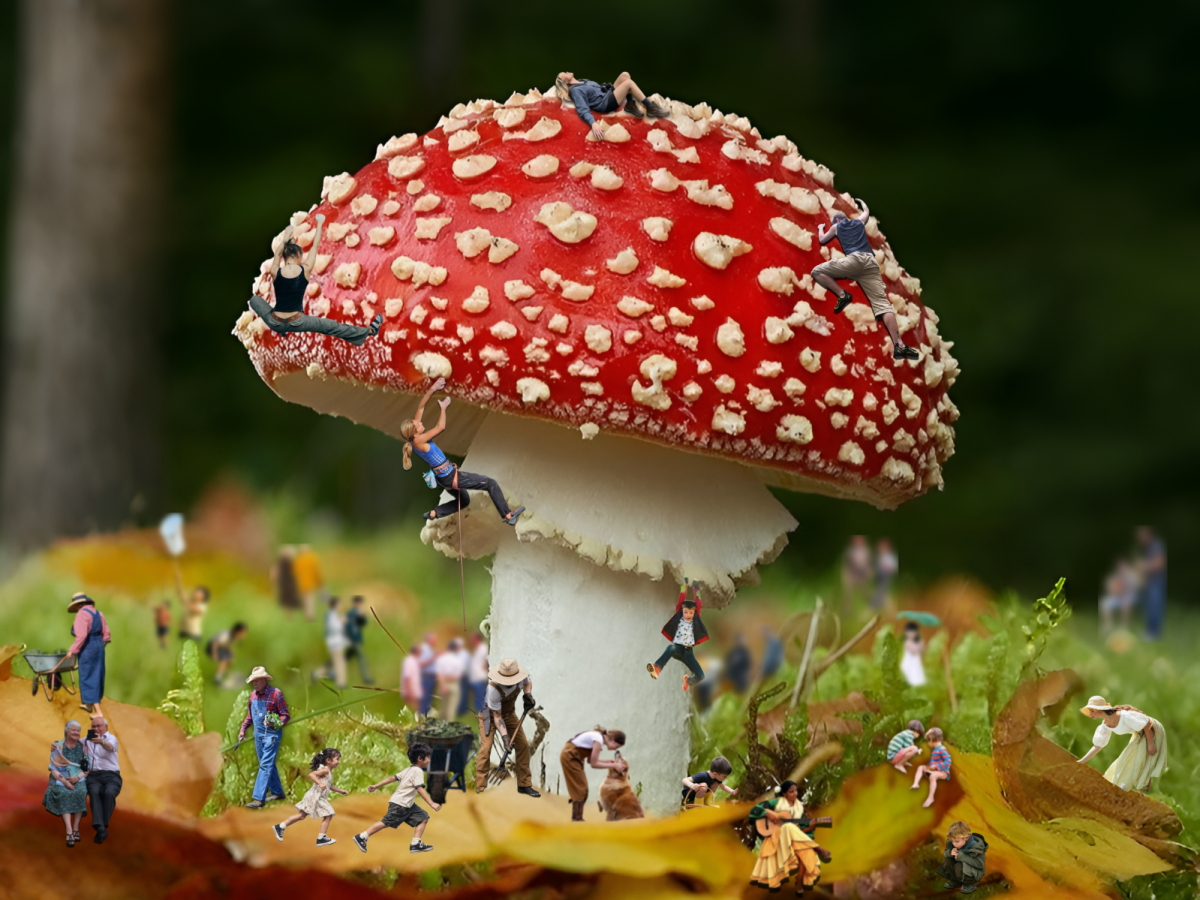
The phenomenon is known as Lilliputian hallucinations, named after the miniature inhabitants of “Gulliver’s Travels.”
People experiencing these visions describe tiny figures, typically between three and 30 centimeters tall, walking across tables, climbing objects and interacting with their surroundings.
Approximately 90% of reported experiences involve figures resembling elves, clowns or other colorful, fairy-like characters.
The mystery first attracted scientific attention in 1934, when researchers documented similar experiences in Papua New Guinea after people consumed wild mushrooms. During the 1950s and 1960s, anthropologists and mycologists investigated the phenomenon but failed to identify a chemical responsible.
Even Albert Hofmann, the scientist who first isolated psilocybin and discovered lysergic acid diethylamide, could not find an active compound. Researchers eventually questioned whether the experiences were biological or simply influenced by cultural beliefs.
The investigation gained new momentum when University of Utah doctoral student Colin Domnauer learned about similar reports from Southwest China and the Philippines.
In Yunnan, China, locals associated the hallucinations with a mushroom called “Jian shou qing,” while an Indigenous community in the Philippines described a mushroom known as “Sedesdem.”
Researchers collected specimens from both regions and used DNA sequencing to determine their identities. The analysis revealed that both mushrooms belonged to the same species, Lanmaoa asiatica.
Domnauer explained the significance of the discovery, stating, “Now, three completely independent cultures have reported the same specific type of hallucination, and two cases are attributed to the same DNA-verified mushroom species.”
Despite identifying the mushroom, scientists have not discovered the substance responsible for its effects. Chemical and genetic analyses found no trace of familiar psychoactive compounds, including psilocybin. Researchers suspect L. asiatica produces an entirely unfamiliar hallucinogenic chemical.
Identifying this substance could help scientists understand how the brain processes visual information and produces hallucinations. Similar miniature-figure visions have also been documented in people experiencing alcohol withdrawal, dementia and macular degeneration.
Domnauer explained that the mushroom could become a valuable research tool “for understanding the mechanisms behind” the compound.
Researchers are now working to isolate and identify the unidentified compound. The study also identified four previously unknown mushroom species, demonstrating how DNA sequencing can uncover hidden fungal diversity.
Discovering the chemical responsible for these visions could eventually provide new insight into human perception, consciousness and neurological conditions.