
Plants have been used to develop medicines, but some of their most promising chemical compounds come from species that can be deadly. A new study identified how two poisonous plants produce a complex chemical with promising medical applications, offering researchers a new way to study these substances and produce them more sustainably.
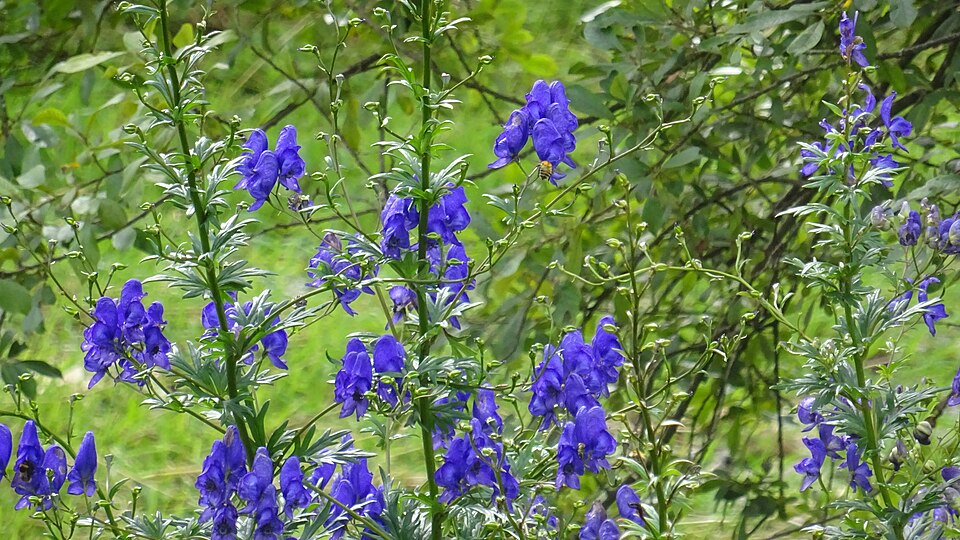
Researchers from Michigan State University and the Czech Academy of Sciences investigated wolfsbane and larkspur. Both plants produce chemicals known as diterpenoid alkaloids, which can be highly toxic but also have useful properties for medicine and agriculture.
The findings, published in the journal Molecular Plant, identify six enzymes involved in producing a compound called atisinium.
Understanding how these chemicals form has been a challenge for scientists due to their structures. Researchers examined several plant species and tracked thousands of genes to identify exactly which ones were involved in the process.
Then, they transferred the selected genetic instructions into tobacco plants to test whether the plants could reproduce the chemical pathway. The modified tobacco successfully produced atisinium, demonstrating that the identified enzymes could work together to create the compound.
The findings show how plants produce these complex chemicals through a series of connected chemical reactions. “You can imagine a biosynthetic pathway almost as an assembly line,” said Garret Miller, co-author of the study and assistant professor at the University of Michigan-Flint.
Each enzyme performs its own specific role in the process, helping to transform one substance into another until the final compound is produced. Identifying these enzymes gives scientists a clearer understanding of how atisinium is formed and may help them investigate how other related plant compounds are produced.
Although wolfsbane and larkspur can be dangerous, their chemistry has attracted scientific interest because some of their compounds may have applications in pain treatment, malaria research, cancer research and agricultural pest control.
Researchers are interested in understanding how these molecules interact with the body and whether their properties could eventually be used to develop new treatments.
However, the study does not establish that atisinium is an effective treatment for any of these conditions.
Plants naturally produce specialized chemicals that help them survive and scientists have increasingly explored how these substances could be used for human benefit.
Björn Hamberger, a study author and professor of biochemistry and molecular biology at Michigan State University, described plants as “the best chemists around,” emphasizing their ability to develop complex natural compounds over millions of years. Many familiar substances, including caffeine, menthol and vanillin, also come from plant chemistry.
Producing these compounds remains a challenge because plants often make them slowly and in small quantities. To investigate alternative production methods, researchers introduced the genes responsible for producing atisinium into tobacco plants. These experiments allowed them to recreate the chemical pathway outside the original plants, potentially making it easier to produce the compound for further study. Still, additional research is needed before the findings can lead to practical medical applications.
The study provides a better understanding of how poisonous plants create complex chemicals and opens new possibilities for investigating their properties. By identifying the enzymes responsible for producing atisinium, researchers have taken an important step toward studying these compounds in greater detail.
The work could eventually help scientists explore new medicines inspired by plants that have both dangerous and potentially beneficial properties.