

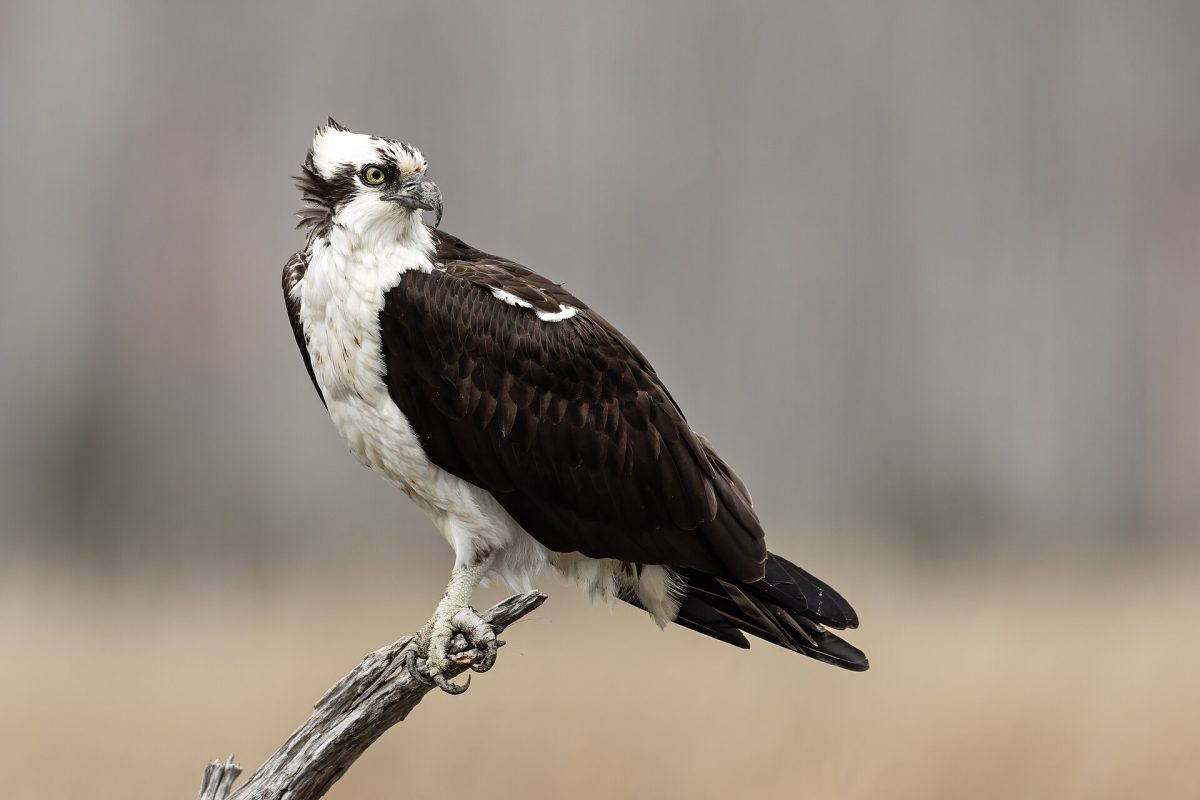
In the years following the ban on the pesticide DDT, the osprey population in Chesapeake Bay saw an astonishing recovery that led to it becoming the world’s largest breeding population of ospreys.
Each spring, the sharp-taloned birds returned from South America to flourish in the tidal rivers, creeks, shorelines, channel markers and nesting platforms of the bay.
Bryan Watts, a research professor at the College of William & Mary’s Center for Conservation Biology, has spent over three decades recording the phenomenon of the osprey’s recovery, and recent findings indicate this progress could be swiftly unraveling.
This year, Watts and his colleagues found that Chesapeake Bay had its worst osprey breeding season the team has ever documented.
The few chicks the team found were emaciated, their breastbones sharply protruding beneath their feathers and their bodies too small for their nests.
Three summers ago, Watts set out to document the osprey population in Mobjack Bay, on the western shore of Chesapeake Bay.
Despite spending hours looking through 81 nests, he was faced with empty nest after empty nest.
Unsettled by the stark absence of chicks, he drove home “with a sick feeling that something is clearly not right.”
This foreboding premonition would see its realization in the years to come.
The biologists at William & Mary released the 2026 breeding performance results for osprey populations, noting that “productivity has declined to critical levels that now threaten the stability of the largest osprey breeding population in the world.”
The primary suspect for this population decline is Atlantic menhaden.
These silver, fat-rich fish are the principal prey of Chesapeake ospreys and an integral part of a food web that stretches far beyond the bay. The issue lies in the suspected overfishing of menhaden.
This has raised concerns shared by an unlikely coalition of people. Recreational anglers rely on menhaden as bait for catching striped bass and other game fish.
Likewise, lobstermen use menhaden for bait. Conservation groups worry about there being enough menhaden for ospreys and other wildlife.
Granted, scientists are exploring numerous explanations, such as changing water conditions, for the decline in the Chesapeake’s osprey population.
Yet Omega Protein, which operates the Atlantic Coast’s last remaining menhaden reduction facility, has drawn a growing number of critics. The plant received nearly 300 million pounds of menhaden in 2024 from its exclusive supplier Ocean Harvesters.
Meanwhile, biologists recorded that in the bay’s saltier waters, where ospreys rely on menhaden as a food source, 81% of nesting pairs failed to raise a single chick in 2026. With alarm bells ringing over what the future could look like should the population continue to dwindle, biologists pushed for reductions in Omega and Ocean Harvesters menhaden harvesting quota.
Though these efforts only served to generate friction between the concerned groups, there is a glimmer of hope. Virginia Gov. Abigail Spanberger supported the biologists’ research by providing $2 million in funding over two years to the Virginia Institute of Marine Science.
Through their efforts, conservationists hope to ensure the stability of the extensive ecosystem of Chesapeake Bay and its ospreys.