
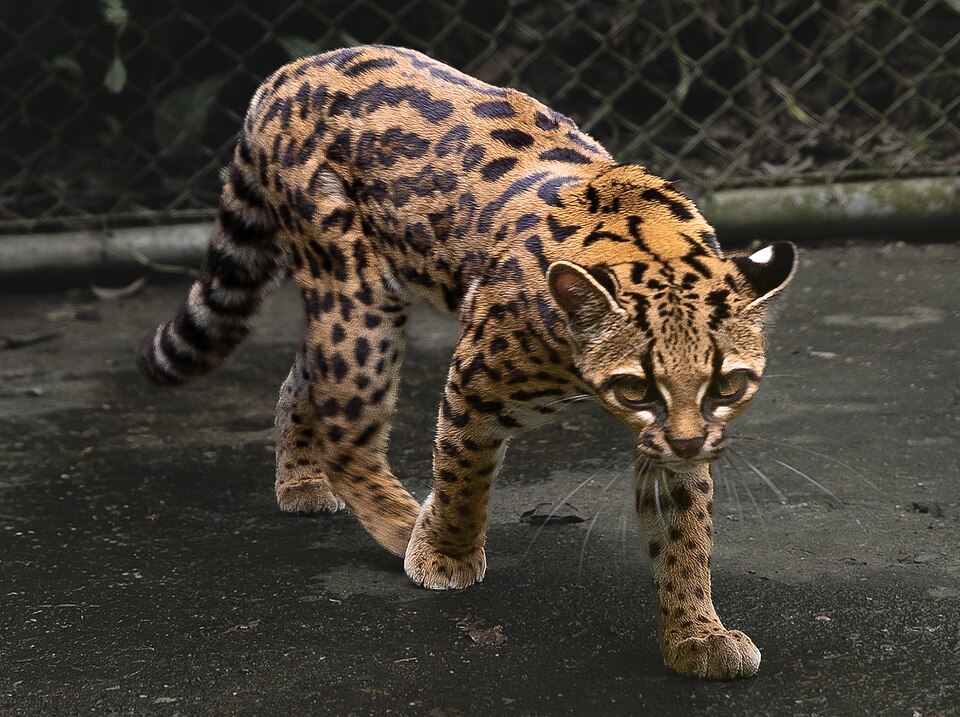
A wild cat mistaken for a stray was discovered to be the first new member of the felidae family discovered in over a century following years of questioning which breed it belonged to. The feline was first taken in by a family in Bolivia in 2016 after finding it alone on the road as a kitten, before they realized it was not in fact a domestic breed of cat, but rather a wild one.
They brought the feline to their local wildlife sanctuary, Senda Verde, after about a year of housing it. The small cat quickly piqued the interest of Bolivian biologist and founder of the Bolivian Felids Research Program, Paola Nogales-Ascarrunz.
Nogales-Ascarrunz originally thought the cat was part of the Leopardus tigrinus species for its similar fur patterns, which the sanctuary used to name the cat Tigrino.
National Geographic reported that in 2019, while creating a booklet of different species native to the area, Tigrino had distinctly different features such as “rosettes that were much larger than the ones across the border.” Although Nogales-Ascarrunz realized that her assumption was incorrect, she was not well equipped enough at the time to perform a proper genetic analysis, leaving the cat’s true species a mystery until now.
Nogales-Ascarrunz teamed up with Eduardo Eizirik, a geneticist at the Pontifical Catholic University of Rio Grande do Sul in Brazil, and Jonas Lescroart, an evolutionary biologist with the University of Antwerp in Belgium, to conduct genetic testing into what the cat’s actual species is. With a research team, they published their findings in Current Biology on Sept. 17.
According to The Guardian, they made their discovery through analysis of the DNA of 38 different tiger cat species.
Not only did they discover Tigrino was the first discovered of his species, but they also discovered there are five different tiger cat species, not just the originally known three.
To coincide with how locals called the cat, tilcayo, the researchers decided to call their newly discovered species Leopardus tilcayo. The origin of the name remains unknown to even Nogales-Ascarrunz, who asked a local how they decided on the name. The local said, “I don’t know! My grandpa called it tilcayo, so I call it tilcayo.”
Though Tigrino is the only one of his species discovered so far, Nogales-Ascarrunz installed cameras throughout the Yungas forest in hopes of finding more, and studying their wild behavior patterns outside of Tigrino within the sanctuary.
While the researchers celebrated such discoveries, they made note of the issues the discovery raises regarding conservation.
BBC reported, “Tiger cat species are considered vulnerable to extinction because of deforestation, habitat loss and illegal hunting, although the new species is missing from previous assessments.”
Another researcher on the study, Dr. Caroline Sartor, said, “These are animals similar in size to a domestic cat, so you might think we would know them all by now, but this discovery shows how much biodiversity is still to be uncovered in some of the less-studied regions of the world.”