

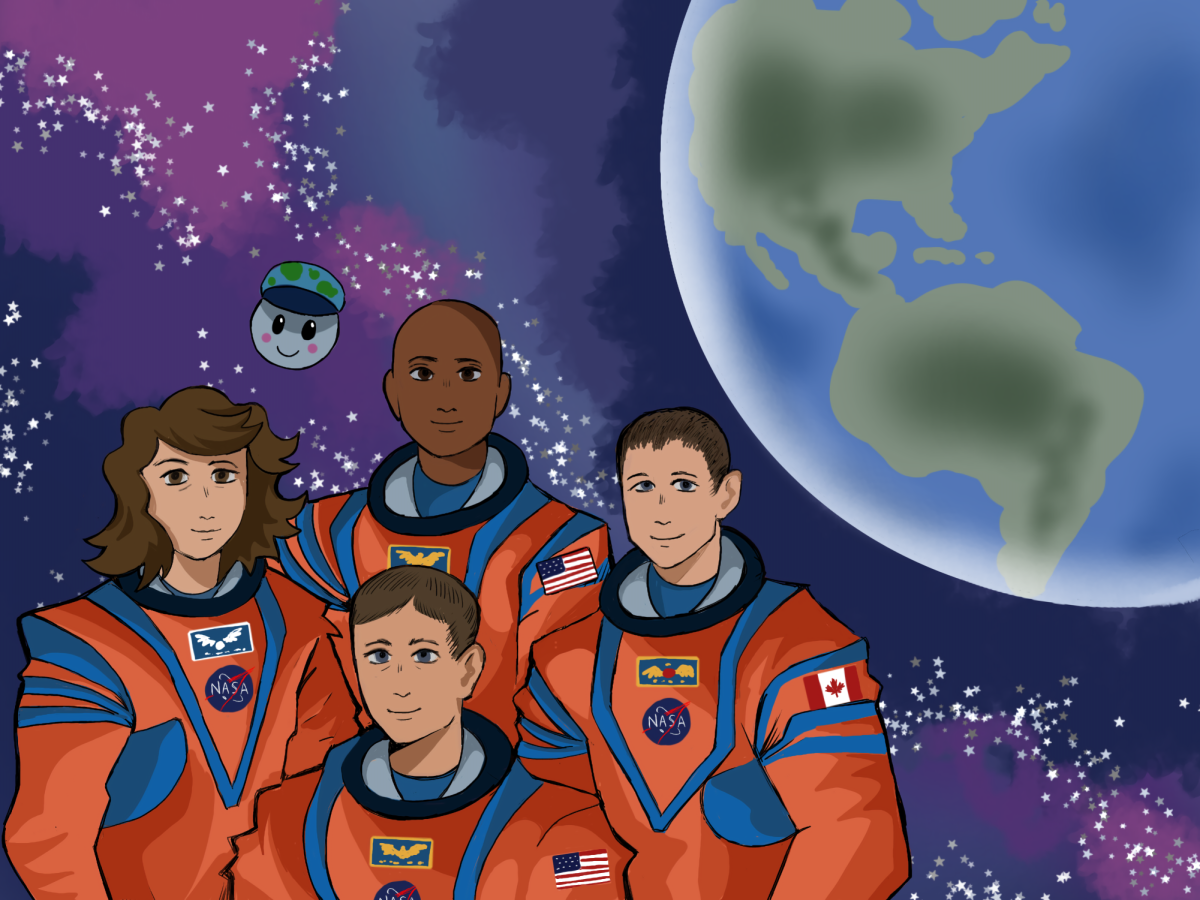
The latest moon mission, Artemis II, has reportedly laid the groundwork for a whole new era of space exploration.
Possible future plans that NASA said this opened the doors for a “third Artemis mission next year, lunar surface missions, a Moon base, and future missions to Mars.”
The Artemis II launched on April 1 from the Kennedy Space Center, Fla. and remained in space until its splashdown on the 11-southwest coast of San Diego.
The rocket was the first to fly with a crew beyond low Earth orbit since the last Apollo program, Apollo 17, went in 1972.
The Apollo program was named after the Greek God of the same name by American engineer Abe Silverstein in the 1960s.
Mythologically, Apollo is known as the God of the Sun, the Light, the Music and the Prophecy. NASA quoted the name as appropriate as its proposed goal of getting to the moon was as grand of an image as “Apollo riding his chariot across the sun.”
The Apollo program was responsible for the first ever moon landing in 1969 and every successful moon landing after that.
The Artemis program followed the exact same mythological naming system.
Artemis is known as the Goddess of the Moon, the Hunt and the Wilderness. In Greek Mythology, Artemis is the twin sister of Apollo, identifying NASA’s latest program as the literal sister to the first.
The program began in 2022 when NASA launched its uncrewed test flight, Artemis I. Its crewed mission, Artemis II, had four astronauts on board. Reid Wiseman acted as its commander, Victor Glover acted as its pilot and both Christina Koch and Jeremy Hansen acted as the mission specialists.
The crew is the most diverse flight crew on a moon mission. In a list of historical firsts, the trip named the first woman, first person of color and first Canadian to travel around the moon.
Unlike previous trips that were made before social media, Artemis II received worldwide coverage and widespread recognition online.
Many users online got emotional over the tight-knit bond the crew displayed.
The most recognized moment online was when the crew had asked for permission to name one of the lunar craters.
“It’s a bright spot on the moon and we would like to call it Carroll,” Hansen said over the radio just after they passed the Apollo 13 mission.
Carroll is Wiseman’s late wife who died from cancer in 2020. Many online referred to it as the literal “I love you to the moon and back” idiom.
The astronauts shared an emotional group hug that people watched from Earth through the live deep space radio calls they had active.
Wiseman also left messages for his two daughters Ellie and Katherine.
During the mission, Wiseman went to the camera and made a heart with his hands before pointing to a bracelet created by them. Mission control replied, “Copy heart, copy bracelet.”
Daily Mail reported that before the launch, Wiseman coached his daughters on what to do if he were to die while in space, including showing them where his will was located.
Other milestones made by the Artemis II trip included the first viewing of the far side of the Moon, the furthest distance humans have ever gone from Earth, a solar eclipse viewing from space and more data on the effects deep space have on human health.
The crew also captured a large variety of new images of the Moon, including an “Earthset” image to complement the 1968 “Earthrise” photo captured during Apollo 8.
NASA has started preparations for Artemis III, which is set to launch sometime in 2027, with the goal of getting humans on the Moon once again for Artemis IV in 2028.