

The Technology Leadership Development Program hosted a panel titled “Careers in Responsible Tech: Designing the Future, Responsibly” on April 28.
Tech professionals gathered at Baruch College to discuss key topics in one of the fastest-growing fields.
The event brought four panelists from different corners of the tech world to talk about ethics, accountability and what it actually means to build technology that does not cause harm.
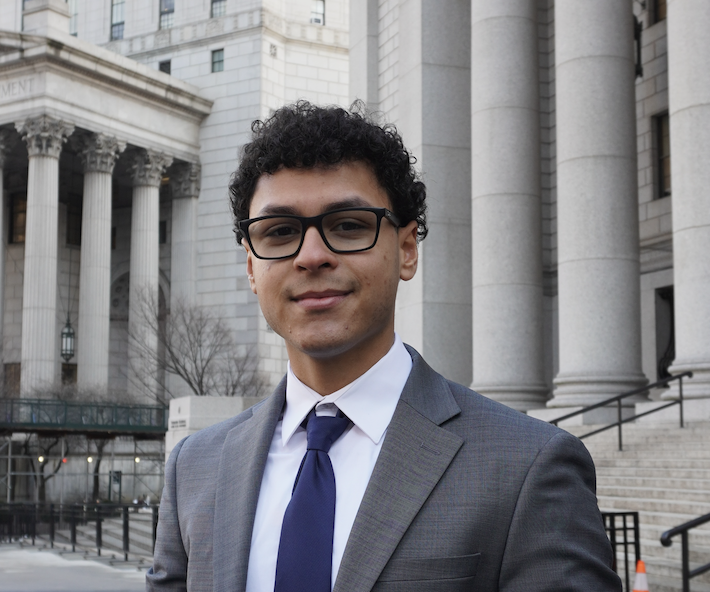
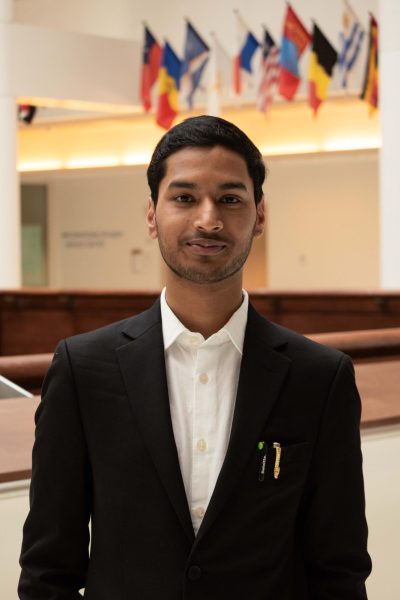
The panelists were Sidrah Durrani, a program manager at SecondMuse; Kathryn Kosmides, founder and CEO of Garbo; Shadeira Nesmith, co-founder of Stacked Up Academy; and Zia Mohammad, a senior product manager at AWS Quantum.
Each came from a different background but kept coming back to the same idea: Responsibility is not a job title but a mindset.
“Any role could be a responsible tech role,” Durrani said. “As long as you carry that philosophy, you can bring it into any company, any team, any product.”
Kosmides, whose nonprofit Garbo.io built a background check tool for online dating safety, spoke about what happens when ethics becomes an afterthought.
She described working in social casino gaming earlier in her career, where products were deliberately designed to hook users.
“You could make them addictive,” she said. “This was all built into how the product was built.”
She said watching people develop unhealthy habits outside the app made her rethink everything.
“It’s admitting that we didn’t think about this and fixing it,” she said.
Mohammad, who previously worked on artificial intelligence at IBM Watson before moving to Amazon, talked about the pressure product managers face when launching new technology. He said responsibility must show up at every stage — from the first idea to the moment something goes live.
“You have to justify those decisions and make sure people understand why certain choices were made,” he said. “Just have a level of transparency.”
Nesmith, who has spent 10 years teaching kids and adults how to build with technology, took a different approach.
She talked about keeping young children away from screens until they are ready and designing physical products like ABC books, as well as teaching concepts like financial literacy before putting anything in front of a child on a tablet.
“How do we avoid them creating things that shouldn’t be out there?” she said.
One of the most direct exchanges came when a student asked what to do when the company makes a decision that conflicts with their values.
Kosmides responded, “What company do I accept an offer from, and if I see lines being crossed, when do I choose to walk away?”
The panelists encouraged students to bring whatever background they have, whether it be psychology, sociology or business, and use it to their advantage.
“We need more interdisciplinary experts,” Durrani said. “Supporting the builders, supporting the people at the forefront of tech.”