
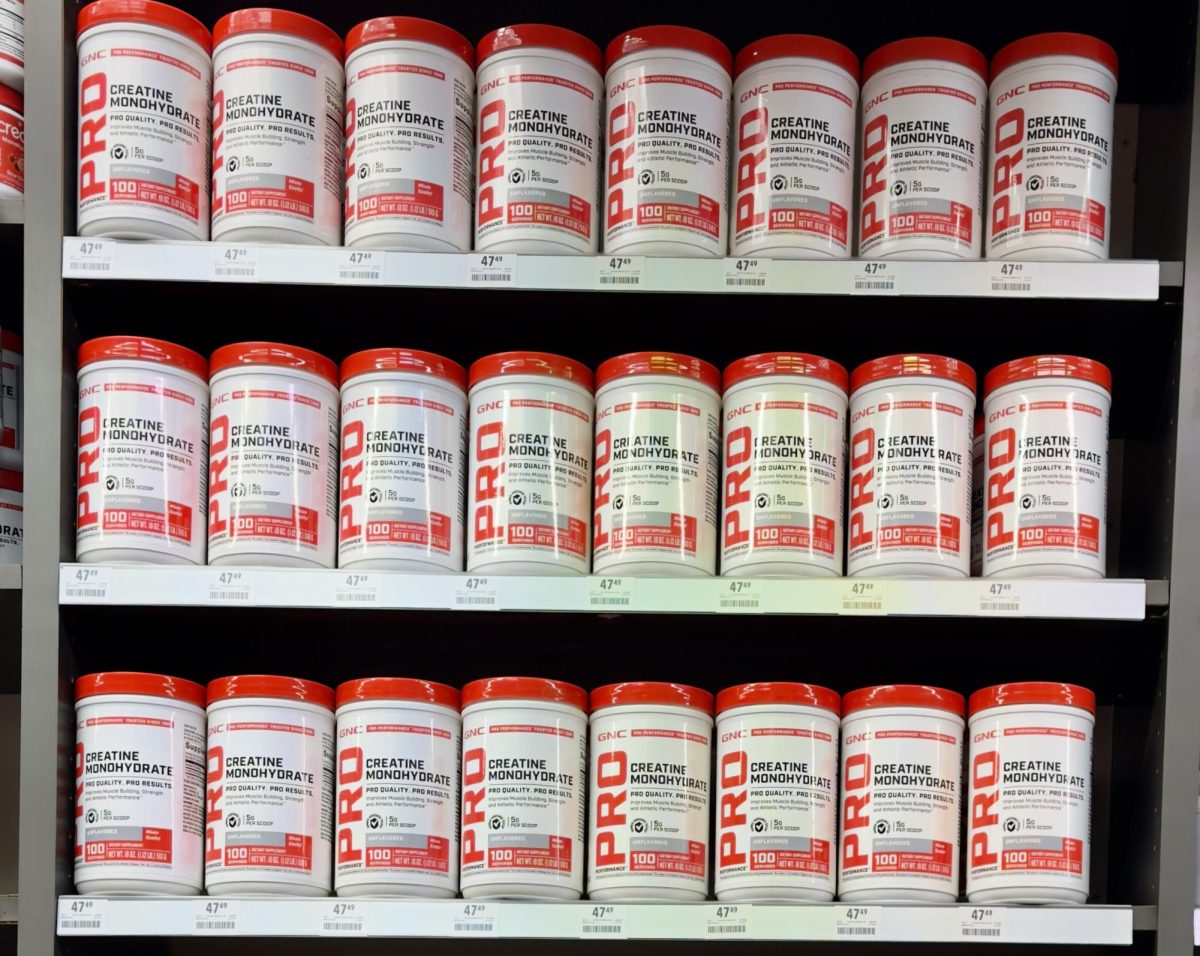
Walk into any grocery store and it is hard to miss the countless creatine options lining the shelves. Creatine is available in pills, powders and even gummies, and are marketed largely toward athletes and gymgoers for improved strength and performance. However, a growing body of scientific work complicates this image, offering new insight into the power of creatine.
According to a review by pharmaceutical researcher Mehdi Boroujerdi, published by the Taylor & Francis Group, creatine plays a fundamental role in how the body produces energy, and the implications extend well beyond athletic performance.
The body produces creatine naturally in the liver, kidneys and pancreas using amino acids including glycine, arginine and methionine. Once produced, it travels through the bloodstream to tissues with high-energy demands. Inside cells, it converts into phosphocreatine, a molecule that rebuilds adenosine triphosphate, or ATP, the body’s primary energy currency. During intense activity, phosphocreatine helps replenish ATP to maintain muscle and brain function. This is why about 95% of the body’s creatine ends up stored in skeletal muscle, with smaller reserves in the brain and heart.
That cellular mechanism is what made creatine famous among athletes and gymgoers. By increasing phosphocreatine levels in muscle, supplementation helps the body sustain short, explosive bursts of activity, improving sprint performance, power output and training capacity. The research now reveals that those same energy dynamics may extend to the brain.
Beyond muscle growth, creatine is now drawing attention as a boost to brain function. Scientists are currently testingwhether supplementation can support memory, mood and cognitive processing speeds for those with naturally lower levels.
Among those who stand to benefit the most are older adults, vegetarians and vegans, who consume little to no dietary creatine and often start with depleted stores. Women generally maintain lower baseline levels than men.
Researchers are exploring the link between creatine and health conditions like Parkinson’s and menopause-related muscle and bone loss. However, Boroujerdi notes that the evidence remains preliminary.
None of this, Boroujerdi argued, makes creatine a cure-all. In a press release, he said that “creatine is not a magic bullet” and that supplementation does not directly build muscle or replace the need for proper training and nutrition.
There is also a limit to how much creatine the body can actually use. Muscle stores have a saturation limit and any excess is converted to creatinine and filtered out through the kidneys, rendering larger doses pointless.
For those who do supplement, Boroujerdi outlines two protocols that reach similar muscle saturation: a one-week loading phase of about 20 grams per day, or a steadier three to five grams per day over roughly four weeks.