
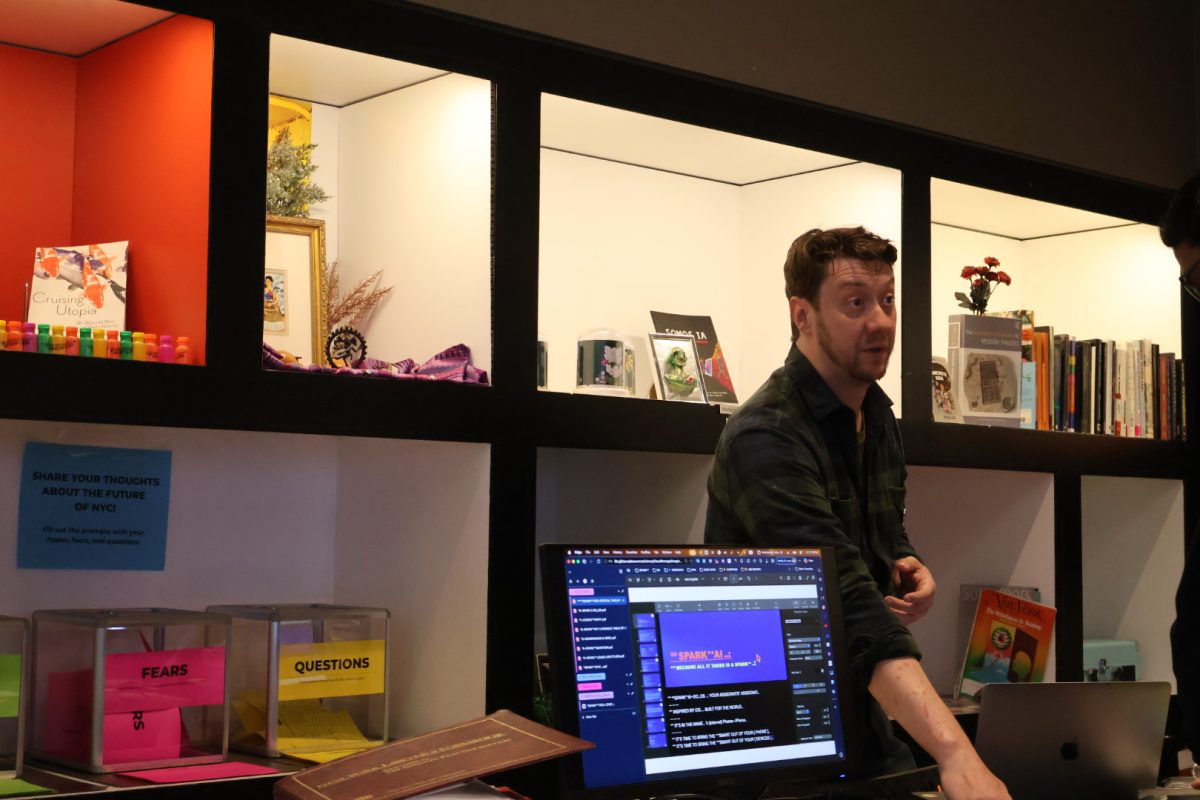
During Open Data Week, the CUNY Public Interest Technology Lab hosted a series of student projects at the Oculus from March 23-27. While several projects explored artificial intelligence and accessibility, one stood out for its focus on ADHD and how technology can support attentiveness and everyday tasks.
The ADHD-focused project was built around the idea that many digital systems are difficult to use because they expect people to remember too much, switch between tools and manage several steps at once.
For people with ADHD, this can make basic tasks difficult to perform.
The creator, Alex Conner, was diagnosed with ADHD and used his own experience to design the project.
“It’s just a part of me,” he said, explaining how the condition shaped the project.
Instead of trying to change how people focus, the system is designed to work with how attention naturally shifts.
The project focuses on reducing mental load. It brings tasks, notes and tools into one place so users do not have to search for information or remember where they left off. When users return to a task, the system automatically restores the context, allowing them to continue without losing progress.
The tasks are broken down into simple steps, so users are not overwhelmed by too many options. This helps users maintain focus and makes it easier to complete work without distraction.
The system supports voice tools, screen readers and flexible layouts, making it convenient for a wide range of people. It also avoids cluttered designs that can make it hard to focus.
The project also looks beyond personal productivity. It raises questions about how larger systems, such as forms or public services, are designed. Many of these systems require long steps and careful attention that can create barriers for people with ADHD.
The project suggests that these systems should adapt to users by simplifying steps and guiding them in a clearer way.
Other projects at the event explored related issues.
One examined how AI chatbots produce incorrect or misleading information, especially about
Black history. More specifically, a dataset was created to track these errors.
Another project used AI to help users better understand their emotions by mapping how feelings affect behavior and decisions.
The projects reflected a shared focus on usability. The ADHD-centered system, in particular, showed how small design changes can make technology easier to use. By reducing steps, organizing information and supporting different ways of thinking, the project highlighted a more practical approach to building digital tools.
The New York City PIT pop-up will continue its programming with “Sonic Spaces,” a weeklong event starting April 19 through April 24 that will explore projects on music and sound, building on the lab’s focus of accessible and public-facing technology.