
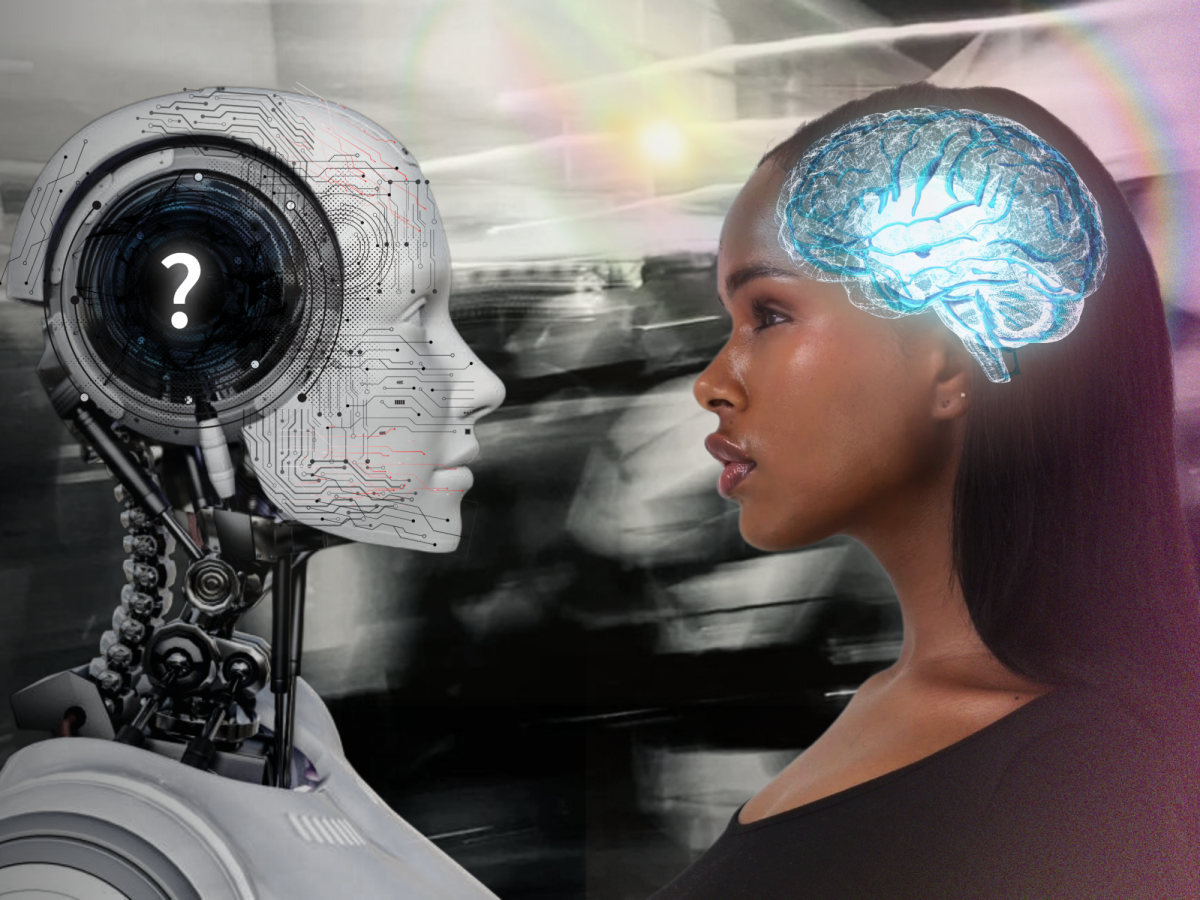
When an artificial intelligence chatbot answers a question, remembers a detail or picks up on someone’s mood, it is easy to talk about it as if it’s thinking. But people still draw a firm line when it comes to calling AI conscious, even when it acts exactly like a human, according to a new study from Ludwig Maximilian University of Munich.
The study, published in the journal Cognition, was led by Head of Philosophy of Mind and Neuroscience Ophelia Deroy, Chair Louis Longin, along with Bahador Bahrami and other researchers. It looked at whether people judge humans and AI the same way when both behave in identical ways.
Longin said earlier research mostly asked broad questions about whether AI has mental states at all. “Our study is the first to directly compare how people attribute the same mental states to AI and humans behaving in exactly the same way, under identical circumstances,” he said.
To test this, the researchers ran experiments with nearly 1,100 participants. One group read short descriptions of AI agents that responded to their surroundings in different ways, such as reacting to sounds or recognizing how others were feeling.
A second group read the same situations, but the characters were described as humans instead of AI. Participants rated how conscious and how aware each character seemed.
Responsiveness mattered for both groups. Characters that reacted more to their environment were seen as more conscious and more aware, whether they were human or AI.
But when it came to consciousness specifically, there was a clear gap. Even the most responsive AI was rated as less conscious than the least responsive human.
The results looked very different when participants were asked about awareness instead. Ratings for humans and AI followed mostly similar patterns, which suggests people treat the two words very differently.
“People are quite willing to say that an AI notices things and is aware of its surroundings. But they clearly draw a line when it comes to the term ‘consciousness,’” Longin said.
The researchers explained that awareness is a more neutral word that describes being able to notice and respond to what is happening nearby. Consciousness, on the other hand, suggests an inner life and the ability to experience things.
Because awareness is based more on behavior people can see, it is easier to apply to both humans and machines.
Deroy said people might describe AI using mental terms simply because there are no better options.
“After all, AI is trained to act and speak like a human, so these descriptions seem natural,” she said.
The findings pointed out how much the words used to describe AI can shape how people see it. Bahrami, a senior author and social neuroscience expert, said companies and journalists often give AI credit for intentions, plans and even a moral conscience.
“For more neutral descriptors such as ‘awareness’, the distinction can largely disappear. That makes our choice of language important,” he said.
For students who use chatbots every day for homework, research or just conversation, the study is a reminder that speech around these tools matters, even if most people still do not think they are conscious.