
Coral bleaching threatens reefs worldwide as rising ocean temperatures put marine ecosystems under increasing stress.
However, a new study from Stanford University suggests that severely bleached corals may recover when they come into contact with healthy, genetically identical corals.
In laboratory experiments, researchers found that this interaction helped bleached corals regain their health within seven weeks.
Corals are animals that often live alongside microscopic algae inside their tissues. These algae use sunlight to produce energy and provide much of the nourishment corals need to survive.
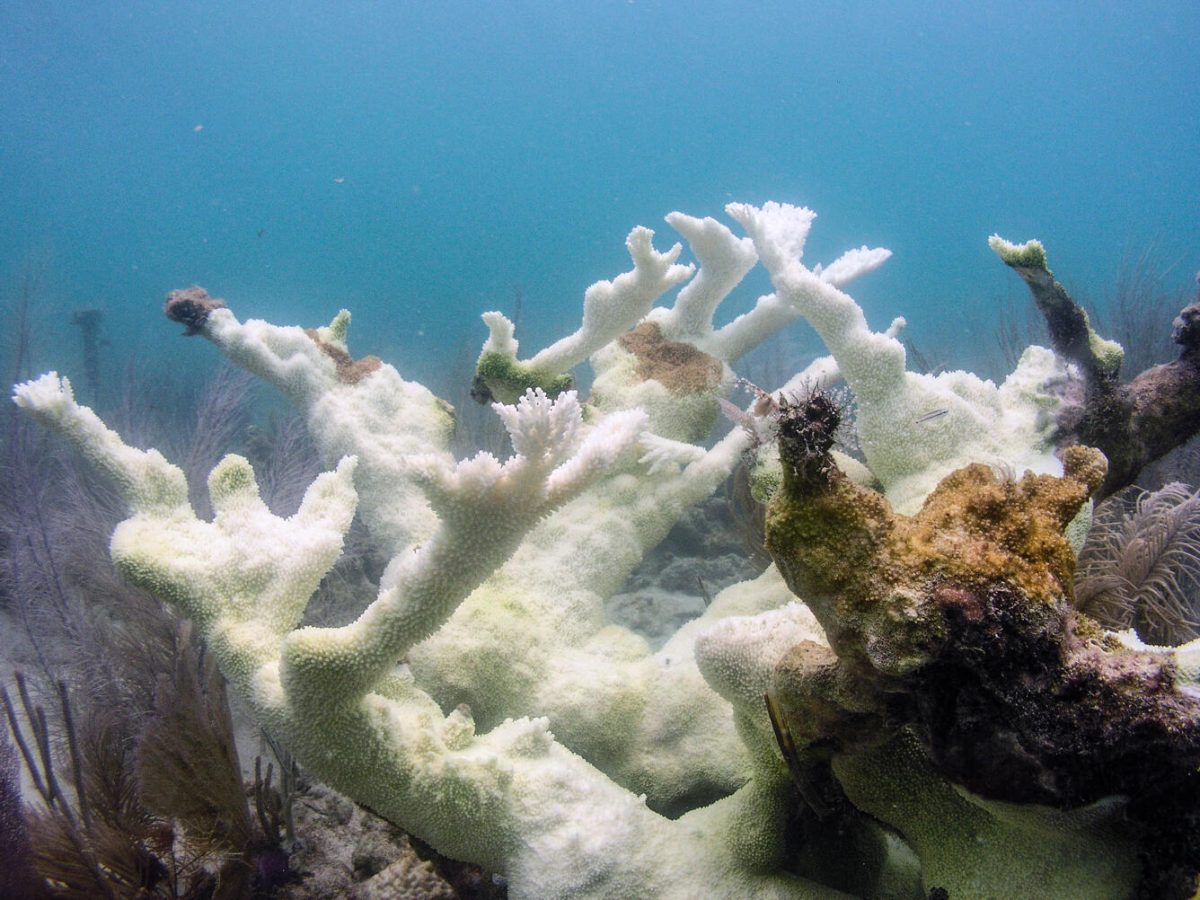
When ocean temperatures become too high, stressed corals expel the algae, causing them to lose their color and turn white.
This process, known as coral bleaching, leaves them vulnerable to starvation and death. Although some corals recover naturally, the process can take months or years.
The research began after Stanford marine biologist Stephen Palumbi noticed a bleached coral fragment regaining its color where it touched a healthy fragment in a laboratory tank.
Lead researcher Danny Collins investigated the observation by arranging 10 pairs of coral fragments, each containing one healthy and one bleached piece from the same colony.
Five pairs were placed in direct contact, while the others were kept a few millimeters apart.
The results were striking: all five bleached corals touching healthy fragments recovered within seven weeks, while those kept apart died. Researchers discovered that the corals’ tissues fused, creating tiny channels that allowed beneficial algae and nutrients to pass between them. Algae began moving into the bleached corals within three days and multiplied rapidly.
“While bleached corals may be dying, they are not dead yet,” Collins said. The team found that as little as five days of contact could begin the recovery process, even after the fragments were separated.
Despite these promising findings, the method faces significant challenges outside the laboratory. The corals must be genetically identical for their tissues to fuse, meaning each damaged coral would need a healthy genetic match.
This requirement makes the technique difficult to apply across entire reefs. Researchers hope to investigate ways to introduce beneficial algae directly into bleached corals without requiring physical contact.
Fiorenza Micheli, a Stanford professor and one of the study’s faculty advisors, noted that bleached corals are often considered beyond saving because recovery after marine heat waves can be slow or may not happen at all. The findings could help scientists develop better coral-restoration strategies, giving damaged corals more time to survive and recover.
However, the researchers emphasize that this method does not protect corals from rising ocean temperatures. Reducing greenhouse gas emissions, pollution and overfishing remains essential to preserving coral reefs.
Published in Science Advances, the study offers new insight into how corals recover and points toward possible approaches for future reef restoration.