
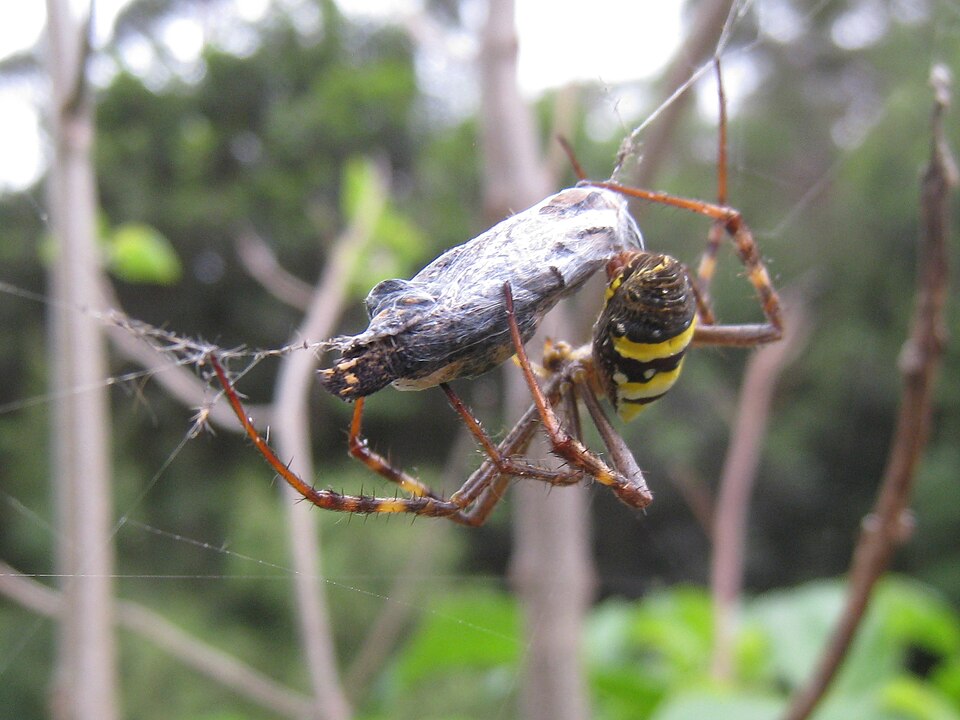
Sleep is often associated with humans and other vertebrates, but a new study suggests that spiders may experience a surprisingly complex form of sleep as well. Researchers at the University of Bonn in Germany found evidence that Australian jumping spiders have two distinct sleep stages, including one that resembles rapid eye movement, or REM, sleep.
The researchers studied Portia fimbriata, an Australian jumping spider known for its complex hunting strategies and unusual learning abilities. Unlike many spiders that primarily capture insects, members of the Portia genus hunt other spiders and can use deceptive tactics to attract their prey.
Their sophisticated behavior made them an interesting species for researchers studying the connection between sleep and cognition.
To investigate how the spiders sleep, researchers monitored individual spiders over several days and nights. The team used infrared cameras to observe the animals without disturbing them with visible light. They recorded the spiders’ sleeping positions, periods of inactivity and episodes involving eye movements and muscle twitches.
The researchers found evidence of two distinct stages of sleep. During one stage, the spiders displayed movements resembling REM sleep in humans and other vertebrates. Their eyes moved while muscles in their bodies and legs twitched.
REM sleep is associated with rapid eye movements and increased brain activity in humans. It is also the stage most associated with vivid dreams. However, researchers emphasized that the discovery does not prove that spiders dream.
Instead, the findings provide evidence that spider sleep may be more complex than scientists previously understood. “We have to be careful not to assume that the observed eye movements and muscle twitches represent the same processes seen during human REM sleep,” the researchers noted through their investigation.
The team needed to determine whether the spiders were genuinely sleeping rather than simply remaining motionless. Researchers tested how quickly the spiders responded to sound. Sleeping spiders were less responsive, helping distinguish sleep from ordinary inactivity.
The researchers also conducted sleep deprivation experiments. After having their sleep interrupted, the spiders showed signs of sleep rebound, meaning they increased their sleep afterward to compensate for the lost rest. This behavior provided additional evidence that the animals experience regulated sleep.
Studying sleep in spiders presents challenges because researchers cannot easily measure their brain activity in the same way scientists study humans. The team relied on detailed behavioral observations and high-resolution video recordings instead.
Despite this limitation, the combination of response tests, behavioral monitoring and sleep deprivation experiments provided strong evidence for two separate sleep stages.
The discovery could help scientists better understand how sleep evolved. Most research on sleep has focused on vertebrates, particularly mammals and birds. Finding similar features in animals with very different nervous systems raises questions about whether certain forms of sleep evolved independently or share a deeper evolutionary history.
The researchers plan to investigate how sleep differs among spider species and whether sleep contributes to learning and other cognitive abilities.
For now, the study suggests that even a small jumping spider experiences a more complex form of sleep than previously recognized. However, whether spiders dream remains unanswered.