
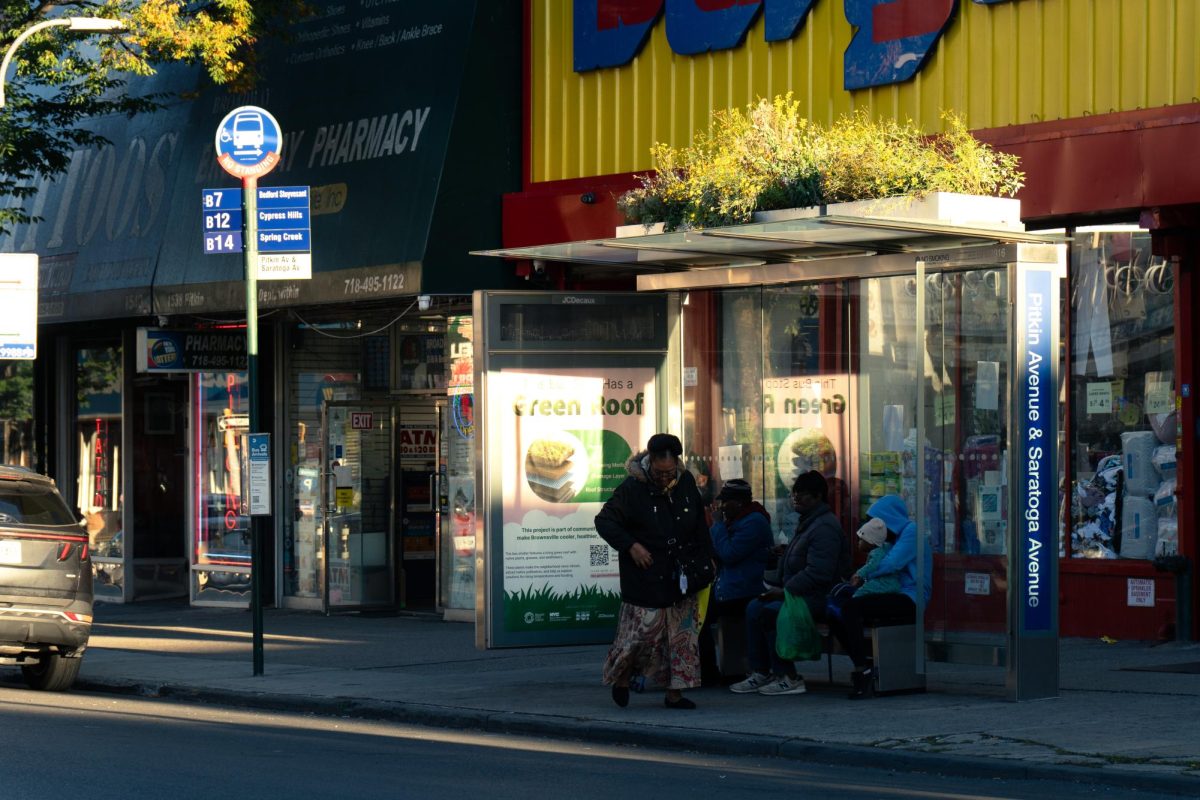
In Brownsville, the first green-roof bus shelter is being put to the test, as native plants and wildflowers are used to help reduce heat and manage rainfall.
As extreme heat and heavy rainfall place growing pressure on city streets, officials are looking at everyday infrastructure in new ways.
The Mayor’s Office announced that four bus shelters along Pitkin Avenue had been outfitted with new roofs as part of a pilot focused on extreme heat and heavy rainfall on Sept. 16.
One became the city’s first bus shelter with a green roof, covered with native plants, grass and wildflowers, while three others received reflective material intended to limit how much heat they absorb from sunlight.
The project brings together the Mayor’s Office of Climate and Environmental Justice, the New York City Department of Transportation, Resilient Cities Catalyst, the Pitkin Avenue Business Improvement District and JCDecaux, which maintain the city’s bus shelters. The two types of roofs are designed to address heat and rainfall in different ways.
The green roof uses native plants and other vegetation, providing habitat for pollinators while creating space to collect rainwater before it reaches the street. City officials told Gothamist that the roof can hold up to 16 gallons of rainwater during heavy storms. At the three other shelters, reflective film redirects sunlight rather than absorbing as much of its heat, with officials estimating that the material could lower temperatures on the pavement underneath by as much as 25 degrees.
The city plans to use the pilot to see how well the designs work and whether similar changes could be implemented elsewhere. “This pilot in Brownsville will help us learn what works so we can bring those solutions to more New Yorkers, while making waiting for the bus safer and more comfortable,” Mayor Zohran Mamdani said in a press release. The pilot is also a part of “Next Stop: Fast Buses, Better Service,” a broader plan to improve bus service across the city unveiled by Mayor Mamdani and Gov. Kathy Hochul.
Brownsville is among New York City’s most heat-vulnerable neighborhoods, where residents waiting for buses can be especially exposed during periods of extreme heat. Elizabeth Adams, senior advisor for Fast and Free Buses, said improving the bus experience also means addressing the conditions riders face while they wait.
“That means adding more benches and shelter for shade and also addressing ways to cool down the bus stop and reduce extreme heat,” she said.
“Extreme heat kills hundreds of New Yorkers a year, and for too long our bus stops — where people can wait exposed for periods of time — have been overlooked in the climate crisis.”
The project reflects a broader effort to consider the time riders spend waiting for the bus as part of the overall transit experience.
The Brownsville project was shaped by two years of community feedback and is being funded by the nonprofit Resilient Cities Catalyst.
The organization has also hired contractors to maintain the plants on the green roof, meaning the pilot will not be funded by taxpayers. Residents and local businesses can continue sharing feedback as the city monitors how the shelters perform.
The green roof is expected to remain in place through at least November, while the reflective roofs will be monitored through May 2027. For now, the new roofs remain a small-scale experiment along Pitkin Avenue.
As the city continues monitoring the shelters, the pilot could better show whether changes to existing bus stops can help riders handle extreme heat and heavy rainfall.