
On Sept. 7, President Donald Trump, in a familiar move, posted an artificial intelligence image to Truth Social, showing the American flag stretched over the United States, Iceland, Greenland, Canada, Mexico, Central America and the Caribbean with a label reading “United States of America.”
Trump’s post dismissing the sovereignty of American allies fits a broader pattern, a habit that poses a serious risk to their trust in the United States. For years now, his fixation on acquiring Greenland, despite Greenlanders saying they do not want to be American, has strained relations with NATO ally, Denmark.
Trump also took steps to rename Lake Ontario, which borders both Canada and the U.S., as “Lake America.” Taken individually, these incidents are easy to dismiss, but the repetition makes it harder for American allies to see them as harmless.
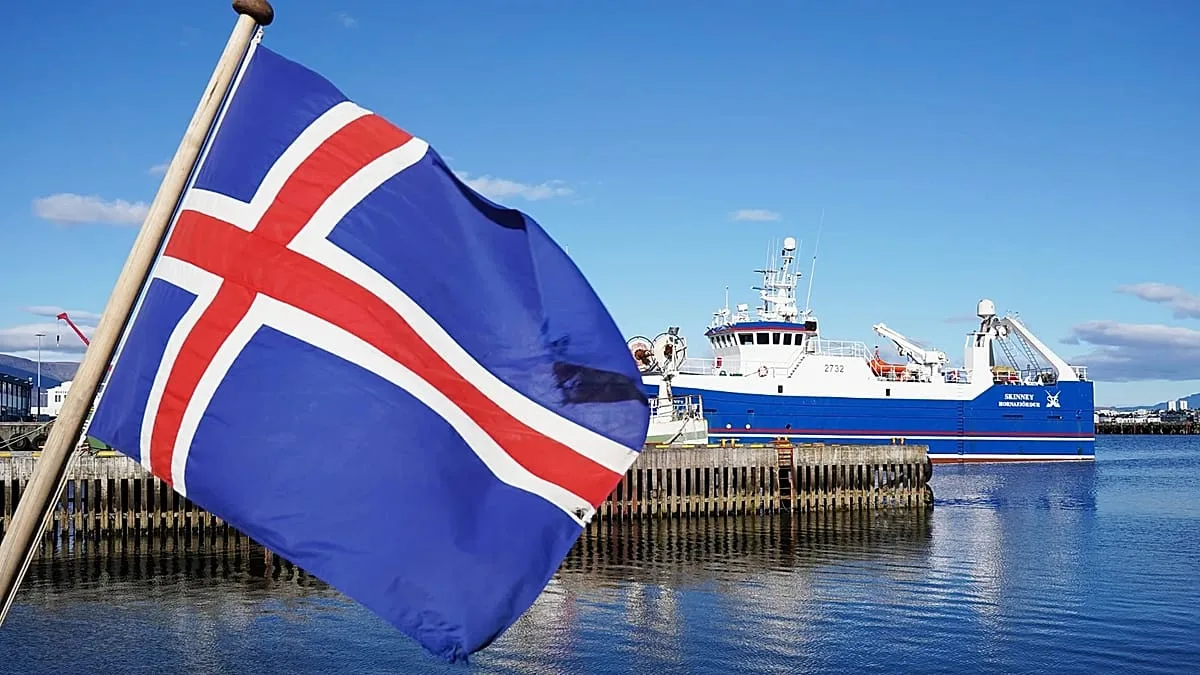
On the same day as the post, Icelandic Foreign Minister Thorgerdur Katrín Gunnarsdóttir summoned U.S. Ambassador Billy Long, who before his confirmation, joked that Iceland could become the 52nd U.S. state. Gunnarsdóttir said, “If this is supposed to be a joke, it’s a bad joke.” The consequences of this are becoming visible.
In a press conference, Prime Minister Kristrún Frostadóttir called it an “insult” to Icelanders, Greenlanders and Canadians. Officials in Reykjavik have grown concerned over Trump’s unpredictable nature, which included confusing Iceland and Greenland earlier this year at the World Economic Forum in Davos.
Iceland’s ambassador to the U.S., Svanhildur Hólm Valsdóttir hired Brownstein Hyatt Farber Schreck, a Washington lobbying firm, on a $25,000 monthly retainer to manage relations with the U.S. government.
For a nation of close to 400,000, about a sixth of Brooklyn’s population, having to hire professional lobbyists to handle interactions with a close ally shows just how degraded trust in the U.S. has become. Iceland is correct to be alarmed about the post. The country is uniquely vulnerable.
It relies heavily on NATO as it is the only member without its own standing military, and therefore the U.S., for its security. When the American president casually posts an image erasing the borders of an ally, it cannot be seen as anything other than a direct threat and a loss of trust As Eirikur Bergmann, a politics professor at Bifrost University in Iceland, put it, “Our protector has become our intimidator.”
The timing of the post makes it more consequential, given that Iceland had shut the door on an alternative to the U.S.
A few weeks earlier, Icelandic voters had rejected a proposal to reopen European Union accession talks, a debate partly revived by uncertainty about American security commitments and Trump’s threats against Greenland.
Trump’s defenders are quick to dismiss the post as harmless political theater or simple social media trolling, arguing that an AI-generated image has no impact on formal U.S. policy.
The defense has precedent. In 2017, then-White House official Sebastian Gorka said, “It’s not policy. It’s social media.” However, this defense misses the larger point. Iceland, like many other countries on the receiving end of this pattern, is not responding to an isolated image.
When the same president raises the same territorial claims and then depicts an ally as American territory, allies cannot reasonably be expected to treat every instance as harmless.
The significance of the post is not about whether Trump actually intends to redraw Iceland’s borders. There is no indication that the U.S. wants to do that. The concern is what the repeated threats, jokes and territorial claims will do to America’s relationships with its allies. It will force allies to consider a future in which American reliability is no longer assumed.