
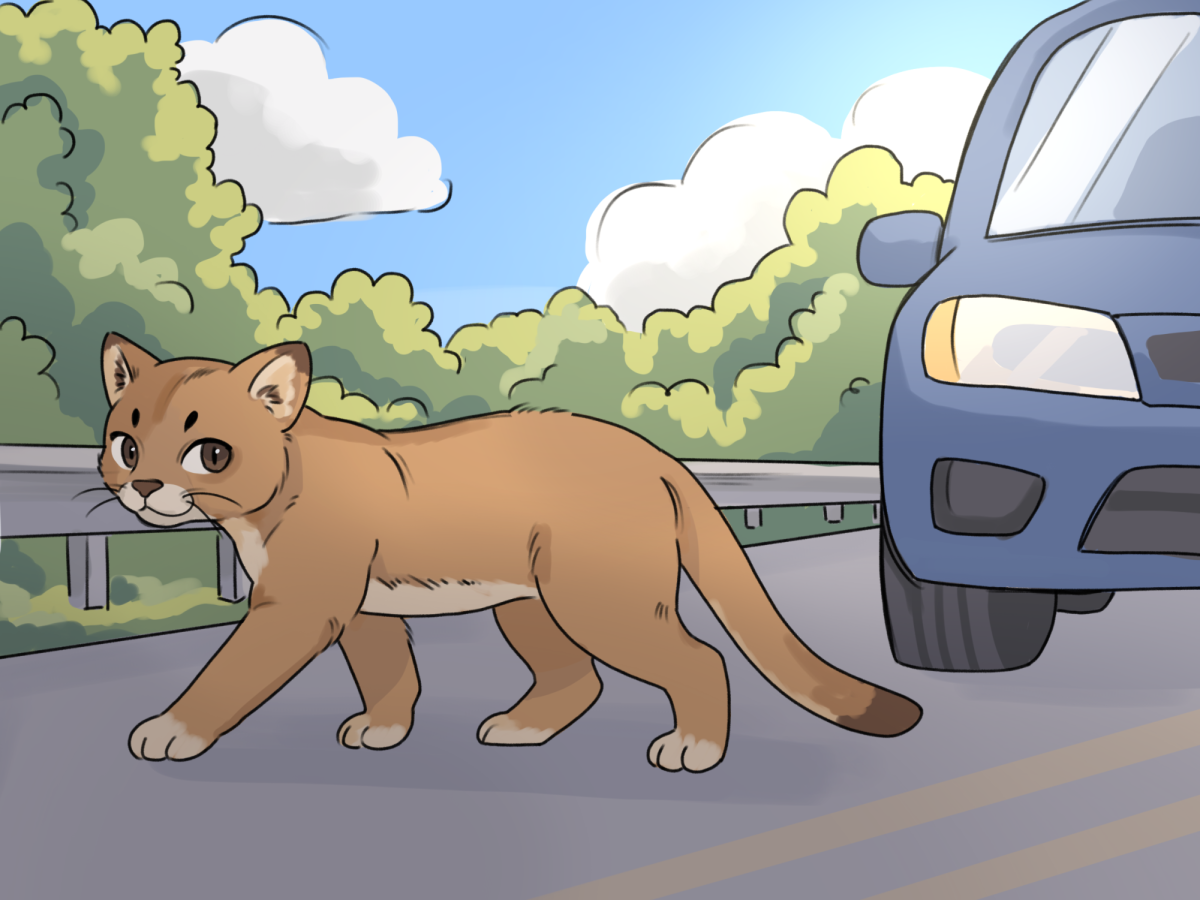
A new study in the journal “Current Biology” looked at pumas, also known as mountain lions or cougars and how they might be making roads safer for drivers without anyone really noticing.
The study took place on the Olympic Peninsula in Washington State over five years.
The researchers used more than 500 camera traps and put GPS collars on 59 pumas so they could track where the pumas went and what the deer around them were doing.
Over those five years, there were more than 950 crashes between vehicles and deer or elk on the peninsula, with two crashes being fatal for people. This shows the problem is not small, such collisions cost lives and money every year.
The researchers found that in places with a lot of pumas, the number of deer-vehicle collisions dropped by roughly 76%. The reason is not because pumas eat deer and there are fewer of them around: it comes down to deer fearing pumas and changing their behavior patterns.
Deer in these areas were 15% less likely to be near roads, choosing instead to stay in more remote areas. They also became more active during the day instead of at night, likely because pumas hunt more at night. Daytime is also when drivers can see deer more easily.
Justin Suraci, one of the researchers behind the study, explained that deer change both where they go and when they go there once pumas are present. This means they spend less time near roads and less time out at night, when the most dangerous crashes tend to happen.
This matters more than it seems, since deer-vehicle collisions happen more than 1.5 million times a year in the United States and cause around 200 deaths along with injuries and financial damage.
If pumas are naturally cutting that number down just by existing and scaring deer away from roads, that is a big deal for something most people never connect to wildlife.
Mark Elbroch, who worked on the study through Panthera, said this research could help people feel more comfortable living near mountain lions, since it shows they are not only a risk but are also quietly benefiting the communities around them.
What started as a random animal fact ended up serving as a reminder that predators people are usually afraid of might be preventing accidents that no one thinks to connect them to.