
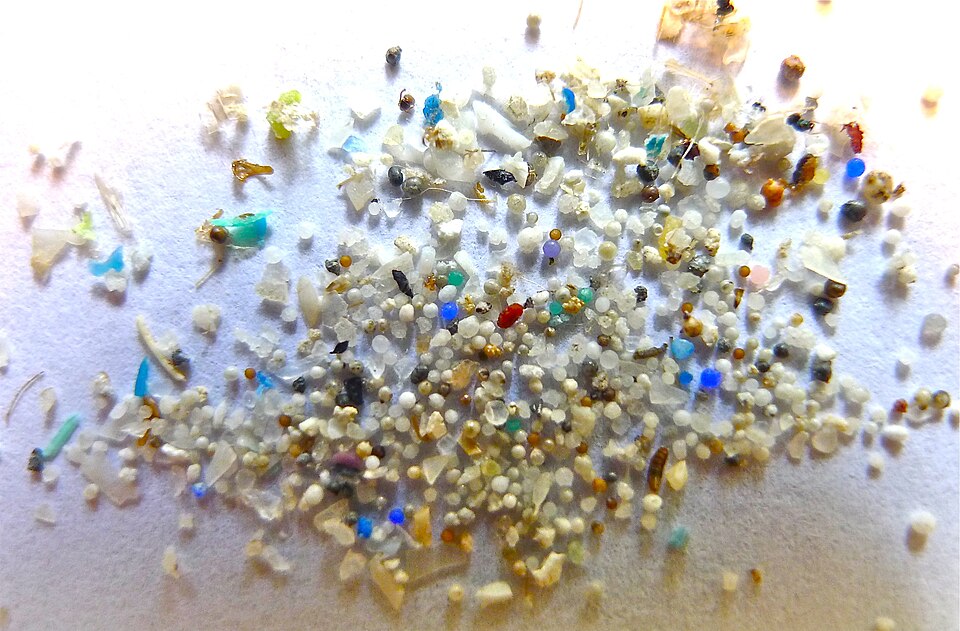
As concern over microplastic pollution continues to grow, scientists are working to understand how these tiny particles are traveling through the atmosphere and reaching places far from their original sources.
Although their presence in the air is increasingly recognized, identifying where they come from has remained difficult. Airborne microplastics can enter the atmosphere through several routes, including traffic, textile fibers, contaminated land and ocean surfaces.
A new study is now offering a clearer look at the sources of airborne microplastics and why earlier estimates may not tell the full story.
Researchers at the University of Vienna approached the question by combining global observations of airborne microplastics with atmospheric modeling. Instead of relying only on computer predictions, the team compared model results with 2,782 real-world measurements collected from studies around the world.
This allowed researchers Ioanna Evangelou, Silvia Bucci and Andreas Stohl to examine whether earlier estimates matched with what was being observed in the environment and how much airborne microplastic may be coming from land and ocean sources.
When the researchers compared the models with actual measurements, they found a large mismatch.
The simulations were much higher than the real-world observations, suggesting earlier emission estimates may have been inflated.
After adjusting the results, the team found that land remained the dominant source of airborne microplastic particles, shifting attention toward sources such as roads, textiles and contaminated land.
These findings challenge earlier ideas of ocean surfaces being the main source of airborne microplastics, suggesting instead that terrestrial human activity plays a greater role in spreading these particles throughout the atmosphere.
The findings also showed that the answer is not entirely straightforward.
“Over 20 times more microplastic particles are emitted on land than from the ocean,” Stohl said.
However, the ocean may still contribute a larger overall mass of plastic because ocean-related particles tend to be larger.
In other words, land may release more pieces, while ocean surfaces may release fewer but heavier particles.
This distinction matters because particle number and particle mass can tell different stories about how microplastics move, where they settle and how they may affect ecosystems.
The study adds a more detailed picture of how microplastics move through the atmosphere, but important gaps remain.
Current measurements still do not capture enough detail to clearly separate traffic-related particles from other sources.
Particle size also remains an important uncertainty, since it affects how far microplastics can travel and how much plastic circulates in the air.
As scientists continue refining these estimates, there remains much to know about a form of pollution that is spreading across the planet.