
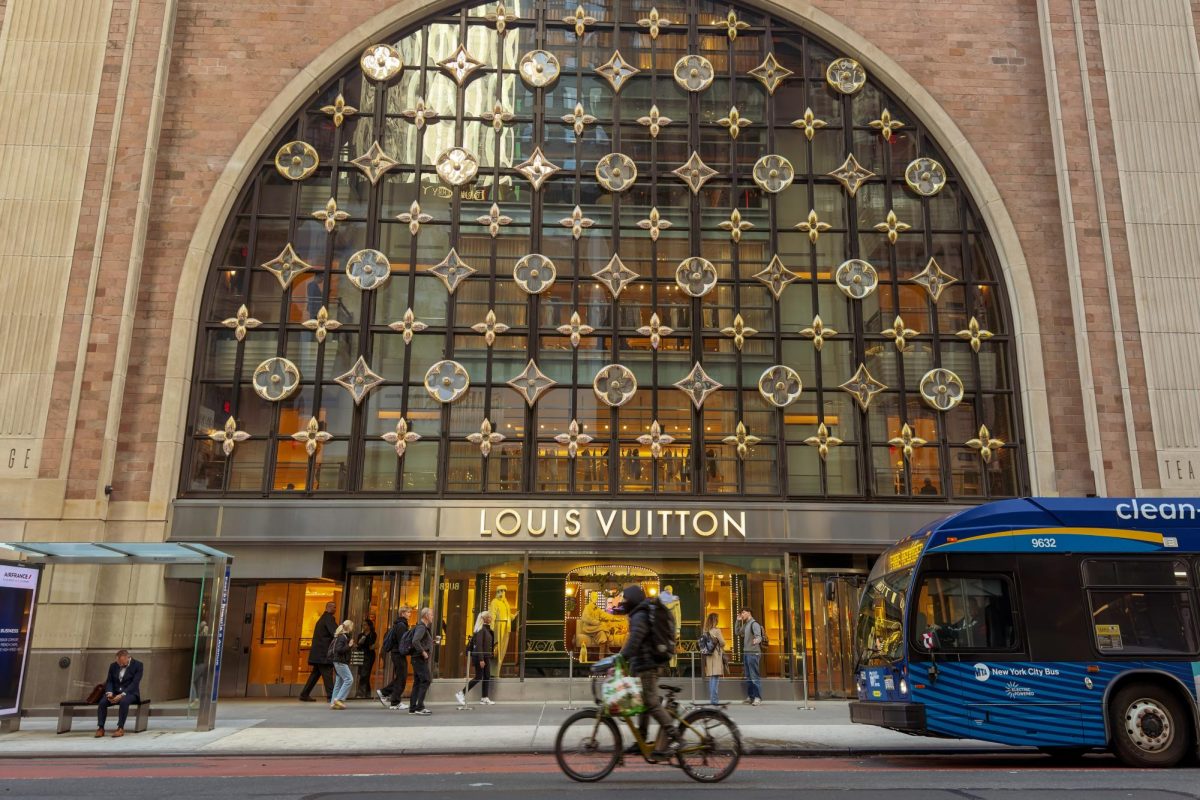
The stores of Louis Vuitton and other fashion retailers were targeted during recent riots in Paris, causing extensive property damage. The reported damage affected stores on the Champs-Élysées and the Place Vendôme, as well as locations in other French cities such as Marseille and Bordeaux. Throughout France, more than 3,000 local businesses have suffered property damage so far, with total estimated losses surpassing $1 billion.
The riots began as a movement of peaceful protests led by high school students in the Paris suburb of Créteil. Their concerns about inadequate resources, crumbling infrastructure and high workloads spread throughout the city’s working-class communities, prompting labor unions and other groups to join the movement.
Eventually, the protests escalated into riots after clashes with police erupted near the Porte de Vincennes and police deployed tear gas. For Louis Vuitton, the riots ironically coincided with the company’s Open Days initiative. This initiative, created by Louis Vuitton’s parent company LVMH, encourages the public to visit the company’s ateliers and workshops to learn how products are made.
According to Serge Carreira, a professor at the School of Management and Impact at Sciences Po, the targeting of Louis Vuitton stores represents the sharp contrast between the luxury industry and working-class communities.
“Most of the younger generation feels excluded from this world. There is no more dream, just envy and rage,” he told The New York Times.
Unlike competitors, Louis Vuitton executives chose not to make any public statements addressing the riots. Instead, security was quietly increased at the company’s Place Vendôme location and these measures prevented rioters from fully breaching the store’s perimeter.
“We have specialist windows that held, but mostly we were lucky. It’s sad. These were not protesters but people who had only come out to break things and steal,” an anonymous store employee told the Financial Times.
Other French retail executives have reacted strongly to the riots in Vogue interviews. “Beyond the destruction and the significant economic losses suffered by all retail stakeholders, it is also our country’s image, its attractiveness and its ability to welcome visitors in the best possible conditions that have been profoundly damaged,” Nicolas Houzé, the executive chairman of the Galeries Lafayette Group, told the magazine.
For LVMH, the economic unrest in France caused further damage after its stock price dropped almost 9% between Sept. 28 and Oct. 12. In addition, the LVMH-owned watchmaker Zenith announced that it was restructuring and significantly cutting jobs. The company’s stock price has since rebounded.
Ultimately, the targeting of Louis Vuitton stores represents the speed with which deteriorating economic conditions can escalate into a major political crisis.
The unrest has since spread throughout Europe, with demonstrations growing in Italy, Spain and Belgium.