
Robots are typically built from metal, plastic and electronic components, but researchers are exploring a different approach by using living tissue to power machines. A new study from the Massachusetts Institute of Technology demonstrates how a tiny swimming robot can use living muscle cells to move through water and change direction in response to light.
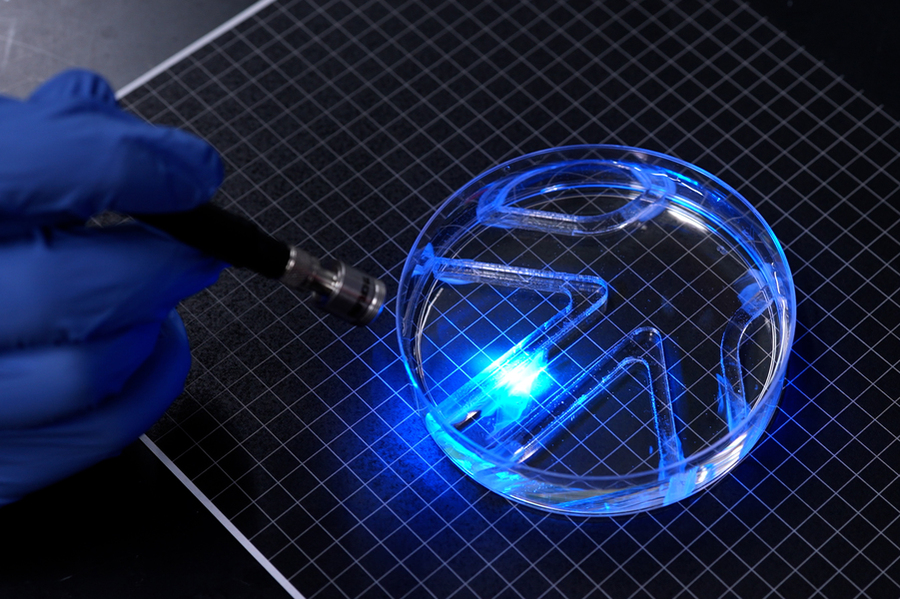
The researchers developed a flexible robot with a thin gel framework and two fins covered in living muscle cells. The device is approximately the size of a stick of gum, with muscle layers thinner than a human hair. The cells were genetically modified to contract when exposed to light, allowing researchers to control the robot without conventional motors.
To develop the robot, the team had to determine how to arrange and support the muscle cells so they could produce enough force. Researchers tested different gel materials, thicknesses and surface patterns.
They found that square-shaped grooves helped the cells align and form organized muscle fibers, allowing them to contract together more effectively. The team also used a firmer gel material to provide better support for the growing tissue.
The researchers strengthened the muscle cells by repeatedly exposing them to pulses of light before incorporating them into the robot.
This process helped the cells respond more effectively to stimulation. Once assembled, the device could swim through water when light stimulated its fins. By illuminating one fin or both fins, researchers could control its movement and direction.
In experiments, the robot swam through a simple underwater maze. Although its maximum speed was relatively slow, the demonstration showed that a thin layer of living muscle tissue could generate enough force to propel a machine through water. At its maximum speed, the robot traveled approximately four times its body length per minute.
Ritu Raman, an associate professor of mechanical engineering at MIT and an author of the study, highlighted the robot’s ability to generate movement despite its small size. “The robot’s quite strong, given its size,” Raman said. Her observation emphasizes how living muscle cells can produce enough force to move a lightweight device without relying on traditional motors.
The technology could eventually have applications in environmental monitoring and scientific research. Small, muscle-powered robots might navigate delicate aquatic environments where rigid machines could cause damage.
Researchers could also investigate whether similar designs could swim faster. However, these possibilities remain speculative, and the current device is still an experimental prototype.
The study highlights the growing field of biohybrid robotics, which combines living cells with engineered materials to create machines with biological capabilities. Developing these systems presents challenges, including keeping the cells alive, providing suitable nutrients and maintaining reliable movement over time.
By demonstrating that living muscle cells can power a small swimming robot, the researchers have taken another step toward building machines that combine biological flexibility with engineered control. Further research may help scientists improve the robots’ speed, durability and ability to perform more complex tasks.