
Crew-13 left Florida and arrived at the International Space Station less than eight hours later, setting a record for the fastest trip by a U.S. spacecraft to the outpost.
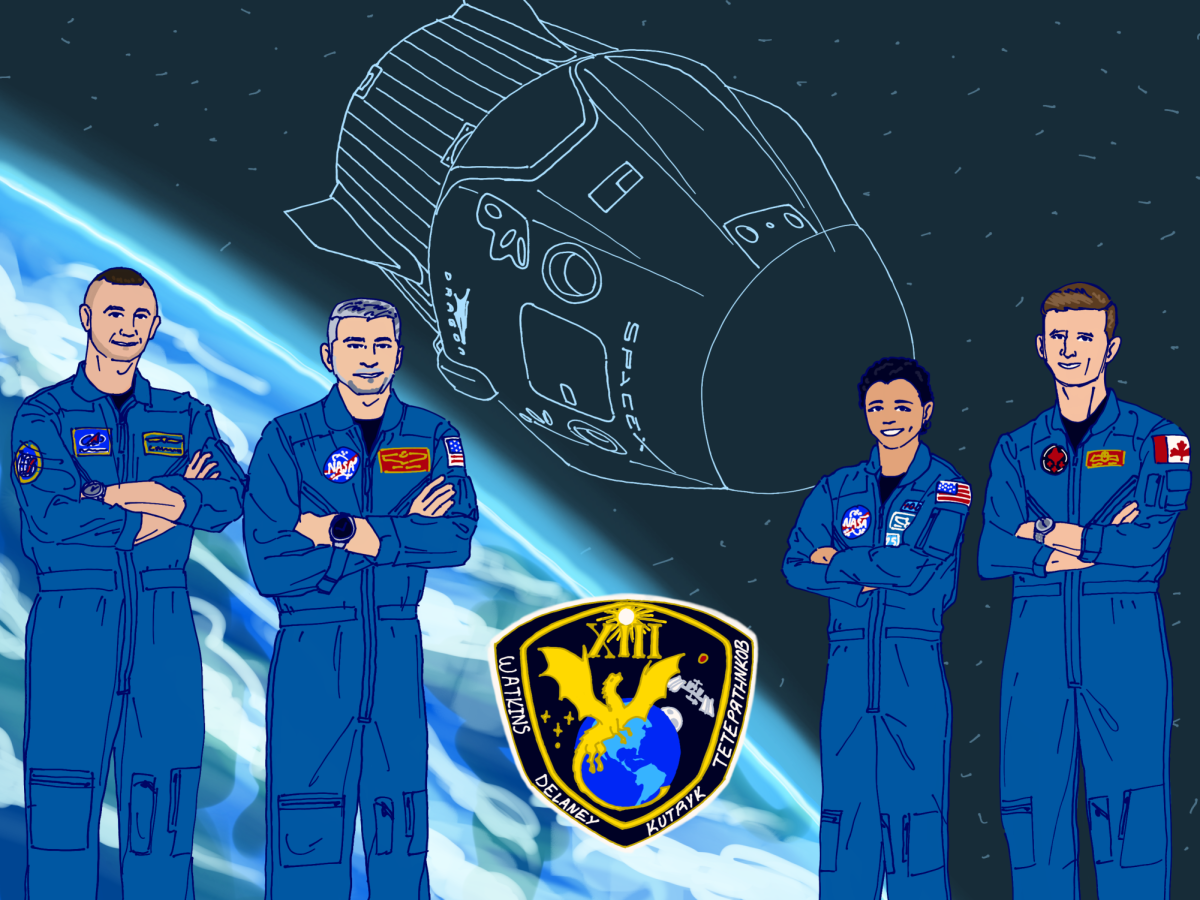
NASA’s SpaceX Crew-13 mission launched at 11:10 a.m. Eastern Daylight Time from Space Launch Complex 40 at Cape Canaveral Space Force Station on a Falcon 9 rocket on Oct. 1. The Dragon capsule, named Grace, docked with the forward port of the station’s Harmony module at 7:05 p.m., seven hours and 55 minutes after the initial launch.
The four astronauts on the mission included NASA astronauts Jessica Watkins and Luke Delaney, Canadian Space Agency astronaut Joshua Kutryk and Roscosmos cosmonaut Sergey Teteryatnikov.
Watkins, the mission commander, became the first Black woman to lead a crew to orbit. A geologist who once worked with NASA’s Curiosity Mars rover team, Watkins made her second trip to the ISS after spending 170 days there in 2022. All three of her crewmates are first-time space fliers.
The flight almost didn’t happen on schedule. It came after a three-week delay to repair the Dragon capsule’s leaking fuel system.
So how did the crew get there so fast? Mostly timing. Typical Crew Dragon missions take 15 to 24 hours to catch up to the space station. Because the station is constantly moving, a spacecraft can’t just fly straight to it. It must launch when the station’s orbital plane passes over the launch site, and if the phasing is right, Dragon can begin catching the station almost immediately.
“We got lucky this time,” said Julianna Scheiman, director of NASA science and Dragon programs at SpaceX, at a post-launch press conference. She added that this was close to the fastest the trip could be.
The previous record for a crewed U.S. flight was 14 hours and 43 minutes, set by Crew-11 in August 2025.
The record only applies to an American spacecraft, though; Crew-13 didn’t come close to the overall speed record to the ISS.
Over roughly six months on the station, the crew will fix equipment and run experiments.
They’ll use microgravity to produce human stem cell-derived tissues for improved personalized medicine, disease modeling and pharmaceutical testing for conditions such as heart disease and Parkinson’s.
They’ll also test a new, mostly autonomous plant growth system, study factors linked to blood-flow abnormalities in microgravity and try out a new in-flight diagnostic device to monitor astronaut health.
The crew’s mix of nationalities reflects how the station has always operated: as a shared project no single country runs alone. That partnership has held up even under strain.
Despite many international cooperation agreements falling apart after Moscow invaded Ukraine in 2022, the U.S. and other ISS partners have continued working with Russia on the space station.
NASA also says station missions help build the experience needed for missions to the moon and beyond.
The crew calls itself “Lucky 13,” a tribute to Apollo 13, the 1970 moon mission that suffered a near-disastrous in-flight failure but returned its astronauts safely to Earth. Before launch, Kutryk said, “We feel like some of the luckiest people in the world.”