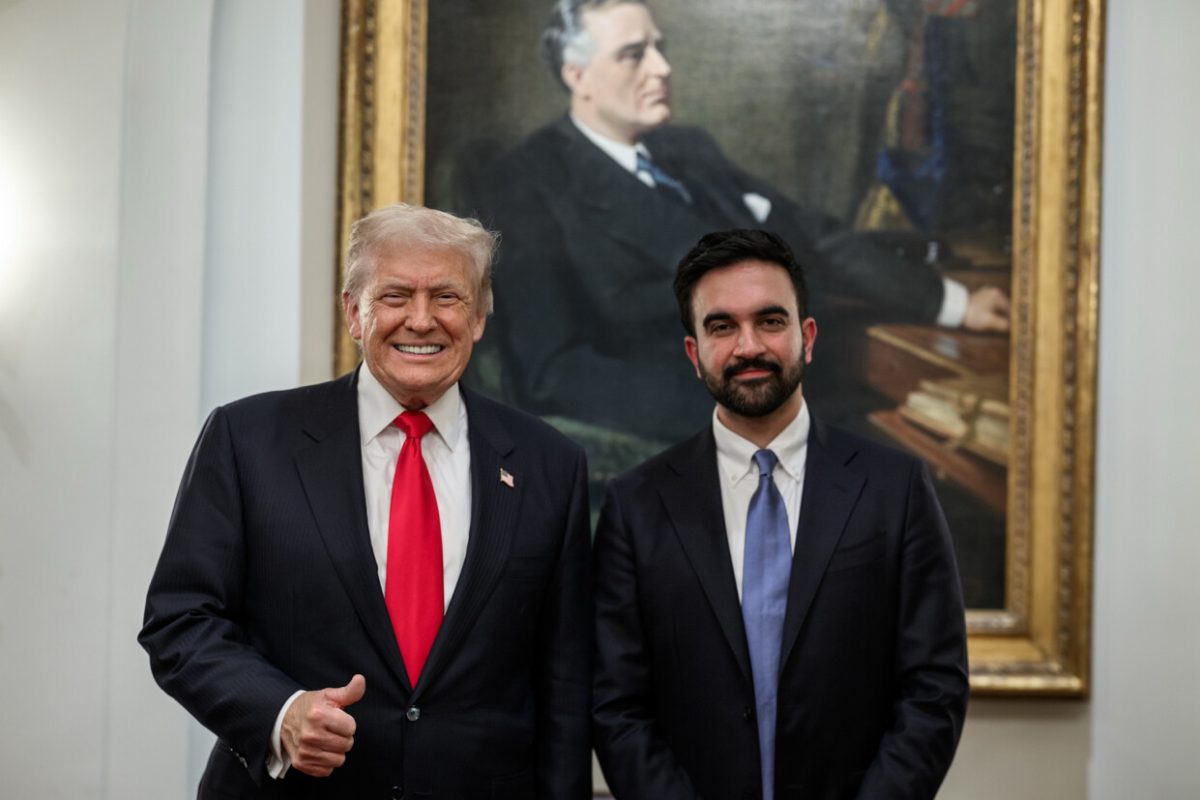

Mayor Zohran Mamdani announced on Sept. 14 that New York City is leading a coalition suing the Trump administration over a new federal rule that would let officials deny green cards and visas to immigrants who use public assistance. The lawsuit, filed in Manhattan federal court, comes alongside a separate suit led by New York Attorney General Letitia James.
Federal law has defined a public charge as someone primarily dependent on the government for long-term subsistence, including cash assistance or institutionalization, for more than 140 years, according to the Office of the New York Attorney General.
The new rule, which took effect on Sept. 18, lets immigration officers count almost any public benefit used for any length of time against an applicant, including benefits legally used by family members who are U.S. citizens.
The city’s suit was joined by Chicago, San Francisco, Santa Clara County, Seattle, King County in Washington state and the Public Rights Project. James is leading a separate coalition of 21 other states, including California, Illinois, Massachusetts, Washington, Pennsylvania and Washington D.C.
Both lawsuits argue the rule is “arbitrary and capricious, exceeds the Department of Homeland Security’s statutory authority, and departs from the longstanding meaning of public charge provision established by Congress,” according to the attorney general’s office.
Under the new rule, a noncitizen parent’s green card application could be jeopardized because their child, who is a U.S. citizen, used state-provided health insurance or took part in a school’s free lunch program. Mamdani said the rule creates a “chilling effect” that could push eligible families away from benefits altogether, regardless of their immigration status.
The DHS has predicted that the change will cost states about $4.05 billion annually in Medicaid and Children’s Health Insurance Program funding and another $1 billion annually in food assistance funding nationwide. A previous, similar rule led to disenrollment rates of up to 35% among mixed-status families and 60% among refugees.
James’ coalition also warned that lower enrollment could cause schools to lose automatic certification for free and reduced-price meal programs if Medicaid and food assistance enrollment falls below required thresholds. This would cut off meals for eligible students regardless of their immigration status.
“The new public charge rule seeks to push immigrant families away from the programs that have kept people fed and healthy for decades,” Mamdani said. “New Yorkers will be afraid to see a doctor or ask for help they are legally entitled to.”
James said the rule “preys on” families’ fears and depends on families forfeiting benefits for which they are legally entitled.
She previously led a coalition that successfully blocked a similar rule in 2020, a decision later upheld by the U.S. Court of Appeals for the Second Circuit.
A DHS spokesperson told NY1, “Sanctuary states are terrified they will lose federal funds because hundreds of thousands of illegals and noncitizens might remove themselves from American welfare programs.”
Immigration advocates said the rule already has families weighing impossible choices. Murad Awawdeh, president of advocacy the New York Immigration Coalition, described it as choosing “between having to feed your children or risk your immigration status, getting health care or potentially being deported.”