
Since the release of “Avengers: Endgame” in 2019, Marvel Studios has gradually declined in box office revenue; however, they just may have found a lifeline.
“Spider-Man: Brand New Day,” released in late July, surpassed $2.2 billion in the box office worldwide, making it the highest-grossing film in the “Spider-Man” franchise .
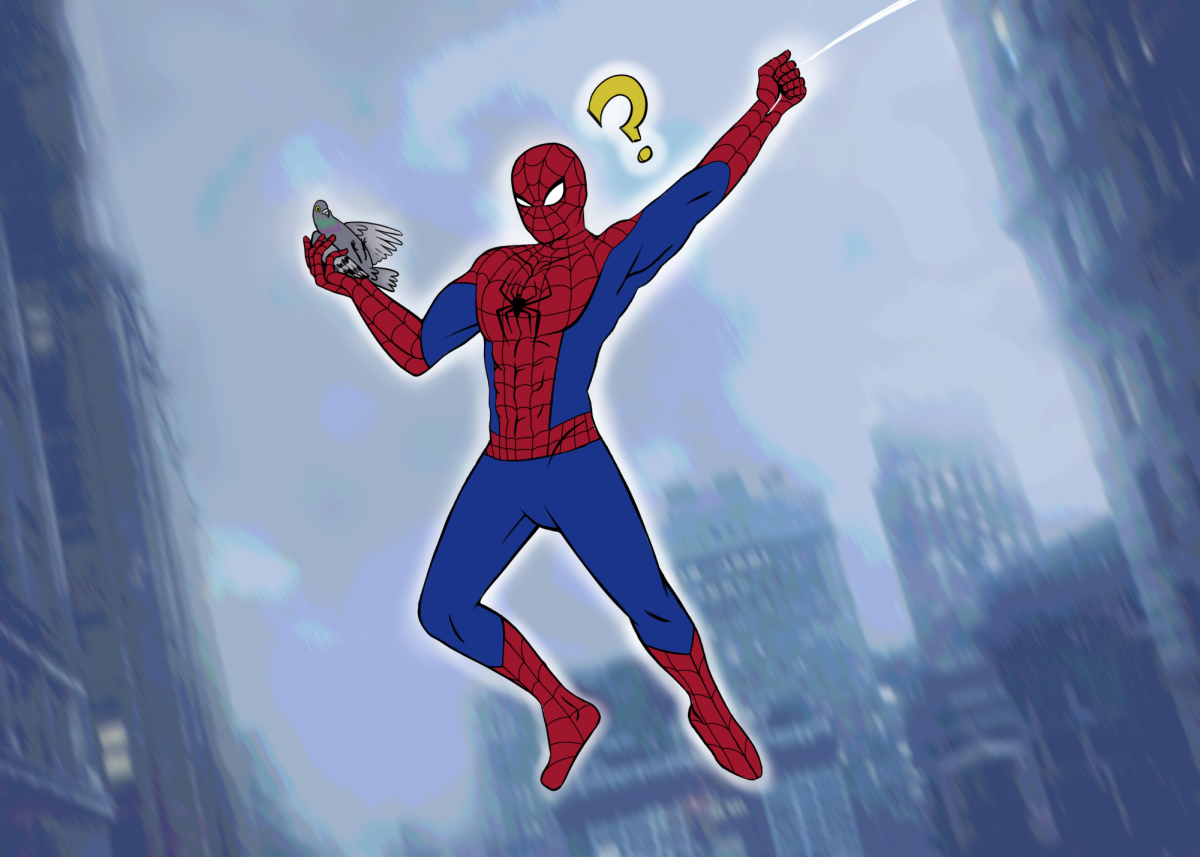
Unlike the quippy, friendly-neighborhood Spider-Man plots that have entertained audiences in the preceding chapters, “Spider-Man: Brand New Day” pushed past its reputation and zeroes in on an alternative, down-to-earth topic: mental health.
Tom Holland’s fourth Spider-Man movie marks a shift in direction, with Destin Daniel Cretton taking over from Jon Watts, a change that is undeniably recognized in the stylistic choices displayed in the film.
While Cretton’s direction exhibits more attention on tone and deep character introspection than Watts, “Spider-Man: Brand New Day” would not have been as successful without drawing parallels to the three other movies, a consistent pattern that was found in the new film.
The first ten minutes of the film montage Peter Parker’s new life in anonymity four years after Dr. Strange cast a spell that made everyone forget Parker.
Within the introduction, fans immediately drew connections to the previous films, such as when Parker watched his former girlfriend’s life evolve without him on Instagram to when he facetimed her frequently in “No Way Home,” the penultimate film.
Cretton also parallels Parkers’s former encounters to when Yelena demanded he strip off his clothes in the bathhouse, a moment almost identical to Parker’s embarrassing suit change in “Far From Home.”
Rather than shying away from Watts’ former direction, Cretton weaved aspects of his films into the movie to keep the spirit of Spider-Man alive in a new light.
Not only do the Easter eggs keep the audience engaged, but they also fit perfectly into Parker’s new life.
Essentially, he is walking in the shadow of his former life as a friend and hero, always doing the same things he has, but now, he’s gone unwitnessed.
The blockbuster shed light on the hidden battles of depression and anxiety, reverberating the idea that even the strongest figures can struggle.
One scene in particular—which was included in the trailer sequence—set the tone of the film, revealing straight from the beginning that this is not your typical friendly-neighborhood Spider-Man movie.
Set atop the roof of a building, Parker receives word of his assistance being needed to stop a hijacked truck.
Nonetheless, instead of hurling himself over the building as he usually does, symbolizing an eagerness to help, Peter slips into a limp freefall, almost as if he wasn’t going to catch himself.
The scene sparked discussion among fans and critics about the declining emotional state of the protagonist, even going so much to say that he is exhibiting traits of someone who is passively suicidal.
Many were taken aback by “Spider-Man: Brand New Day” for its muted color palette and humor that is usually associated with Spider-Man’s character.
In fact, Parker’s lack of energy that he had when he first started out as a public hero was replaced with feelings of dread and grief.
Yet, Cretton does not portray Parker’s isolation as the end of Spider-Man’s story.
Instead, it is just the beginning of the reimagination of what it means to be a hero.
Before Dr. Strange’s spell, the protagonist was comfortable in an environment of guidance and care; now that he no longer has that support from his peers, what it means to be Spider-Man has fundamentally changed.
Through Cretton’s creative decisions in this most recent Spider-Man film communicates a central message: Accept change, for its evolution can strengthen you in ways one cannot anticipate.