
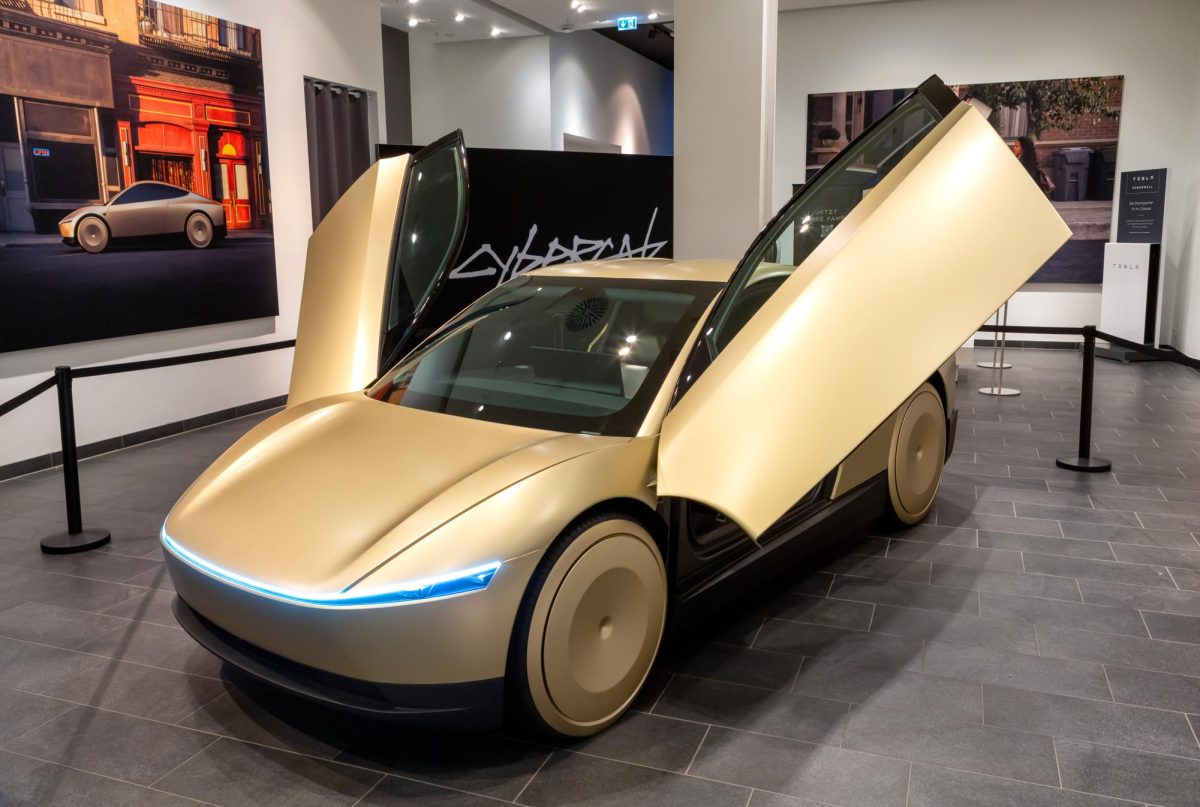
Tesla officially launched the first Cybercab robotaxi service in Austin, Texas, on Sept. 3, as the company moves toward fully autonomous vehicles.
The two-seat Cybercab features butterfly doors and has no steering wheel or pedals, making it Tesla’s first vehicle designed specifically for autonomous driving. After unveiling the prototype in 2024, the company began testing the vehicles earlier this year.
Although Tesla experimented with autonomous driving previously, the launch of the Cybercabs puts the company in direct competition with ride-hailing giants like Uber and Lyft.
The U.S. ride-hailing market is currently valued at $28 billion as public transit options remain limited in many states, including Texas.
In Austin, new customers can book a Cybercab through Tesla’s Robotaxi app, which is available on both Android and iOS. Data from the robotaxi fleet will also be used for testing and refining the Cybercab model as Tesla prepares for a broader commercial rollout.
“For Cybercab and Optimus, almost everything is new, so the early production rate will be agonizingly slow, but eventually end up being insanely fast,” Tesla’s CEO Elon Musk, said.
The company plans to sell Cybercabs for $30,000 and considers self-driving technology as one of the keys to its future growth.
Despite this growth potential, Tesla has faced safety-related criticism, leading to an investigation by the National Highway Traffic Safety Administration.
“NHTSA fully supports the safe development and deployment of automated vehicles. But as the federal regulator, we need to ensure that all of our laws are followed,” said the agency’s administrator Jonathan Morrison. “Our approach of balancing innovation with safety oversight will allow the United States to maintain its global leadership in AV innovation.”
To address safety concerns, Tesla claimed that its Full Self-Driving technology is 10 times safer than human drivers.
According to an industry study conducted by the Insurance Institute for Highway Safety, existing self-driving cars have been involved in 68% fewer police-reportable crashes. The institute studied traffic data in San Francisco, Phoenix, Los Angeles and Austin.
Furthermore, self-driving cars, including Cybercabs, can fully eliminate top sources of human error on roads, including distracted driving, drunk driving, fatigue and excessive speeding.
Despite these benefits, Tesla’s robotaxi service has already faced criticism from some riders over delays and routing problems.
Reggie Overton detailed his experience on X. Overton attempted to travel 2.3 miles in Austin and the vehicle initially estimated that it would take over an hour. After contacting Tesla support, he said the estimated travel time dropped to 16 minutes, but the route never changed.
“For a 2.3-mile trip, this was an incredibly frustrating experience especially when support had no way to correct what was clearly a routing problem,” Overton said. “I didn’t even get a refund.”
After the post went viral, Tesla issued Overton a refund and said it would continue working to improve the rider experience.
Another user said that he was forced to walk after a vehicle dropped him off “three miles away from my car because it was too late at night.”
Tesla is not the first company to launch a commercial robotaxi service, as such taxis have already been deployed in several major Chinese cities.
In the U.S., Waymo has a larger fleet than Tesla and operates in Tampa, San Diego, Houston and other cities. According to Wired, Tesla relies on cameras for its autonomous-driving system, while Waymo uses sensors.
Additionally, the launch of Cybercab is likely to prompt a serious response from Uber and Lyft, which are developing their own robotaxis. For many American taxi drivers, the ride-share industry’s turn to autonomous vehicles could replace their only source of income.
For now, Austin will serve as a testing ground for Tesla’s Cybercab. The project’s success or failure will likely determine how quickly the company will be able to reach its growth targets.