
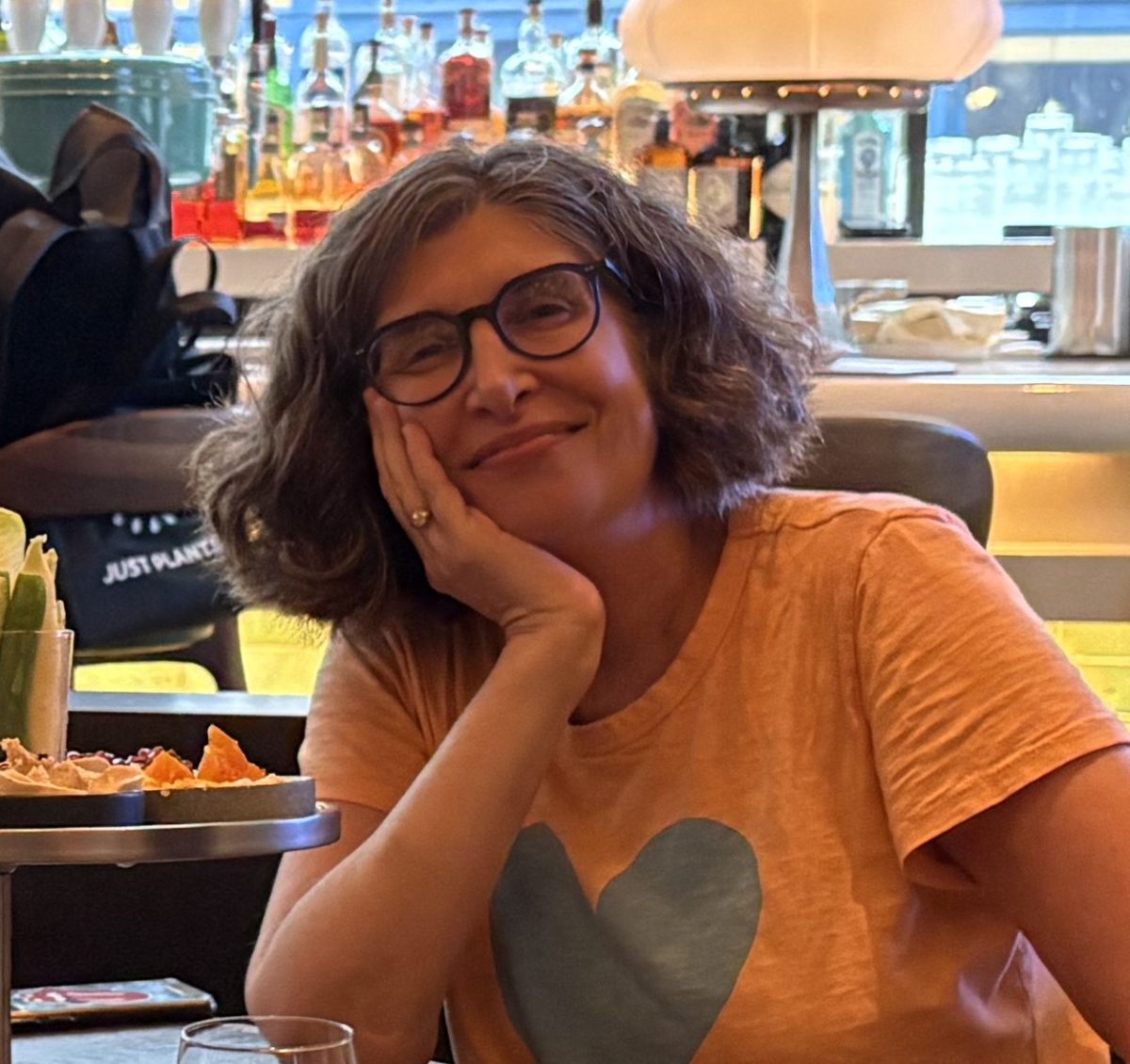
Elizabeth Wollman is a music professor at Baruch College; she was 11 when John Lennon was killed in 1980.
What Wollman remembers most is how people reacted. She watched the news as crowds gathered outside Lennon’s apartment building and inside Central Park to grieve together.
“It just had such an impact on me that people would feel so very, very close to somebody they’d never met because he made music that they liked,” Wollman told The Ticker.
That moment shaped her career. Her work is less about notes and chords, and more about how people respond to music.
Wollman doesn’t play an instrument. “I don’t touch the piano,” she said.
Wollman was a junior English major when she found her path. She took a class on American music that covered classical, popular, folk and religious styles.
“I came out of that class thinking, this is what I want to do,” she said.
Her parents, a doctor and a social worker, saw her career choice as unusual.
Before graduate school, she worked for two years as an editor at Playbill, a job that made her love theater even more but offered little room to move up.
So, she applied to graduate programs in ethnomusicology. She calls it the anthropology of music.
She started graduate school at Columbia University because of its reputation.
The program pushed her toward musicology, which focuses on analyzing scores, and would not let her take classes in other departments.
After a difficult year, the department told her it would not fund her studies.
“I feel like I’ve been fired from my future,” she recalled thinking.
She left and found the CUNY Graduate Center.
It cost less and welcomed students who wanted to study across fields. When she asked to take classes in other departments, “they said, absolutely,” Wollman said. “Come and take all these classes.”
She earned her Ph.D. there in 2002. She joined Baruch as an adjunct lecturer and is now a tenured full professor.
She tells students that mistakes can lead them somewhere new. “I needed to learn how I had screwed up before I could learn what it is that I wanted,” she said.
Wollman studies Broadway, with a particular focus on the business decisions made behind the scenes.
She has written several books on musical theater. They include “The Theater Will Rock: A History of the Rock Musical, from ‘Hair’ to ‘Hedwig,’” “Hard Times: The Adult Musical in 1970s New York City” and “A Critical Companion to the American Stage Musical.”
Her next book is about the cleanup of Times Square in the 1990s. At the time, the city wanted to make the area more welcoming to tourists.
The cleanup was not a new idea; plans had been discussed since the 1960s.
Her research also points back to the 1980s, when President Ronald Reagan and British Prime Minister Margaret Thatcher pushed for a free market.
Before then, U.S. rules kept entertainment companies from growing too large. For example, a company that owned a TV station could not also own a film studio or a radio station.
Reagan loosened those rules. Companies such as Sony and Disney began buying up music, film and TV, and they eventually turned to Broadway.
A hit musical could sell soundtracks and merchandise, and it could also become a movie or TV series.
“Think of the business synergy,” Wollman said.
That shift helped Broadway go global. Today, the same musicals run with different cast members in cities like Shanghai, Madrid and Hamburg.
Disney often gets the credit, but Wollman noted that much of the groundwork was laid before the company arrived on Broadway.
After years at Baruch, Wollman still sees teaching as a work in progress.
“It’s like a craft, like you’re sculpting something and you’re never done sculpting it,” she said.