
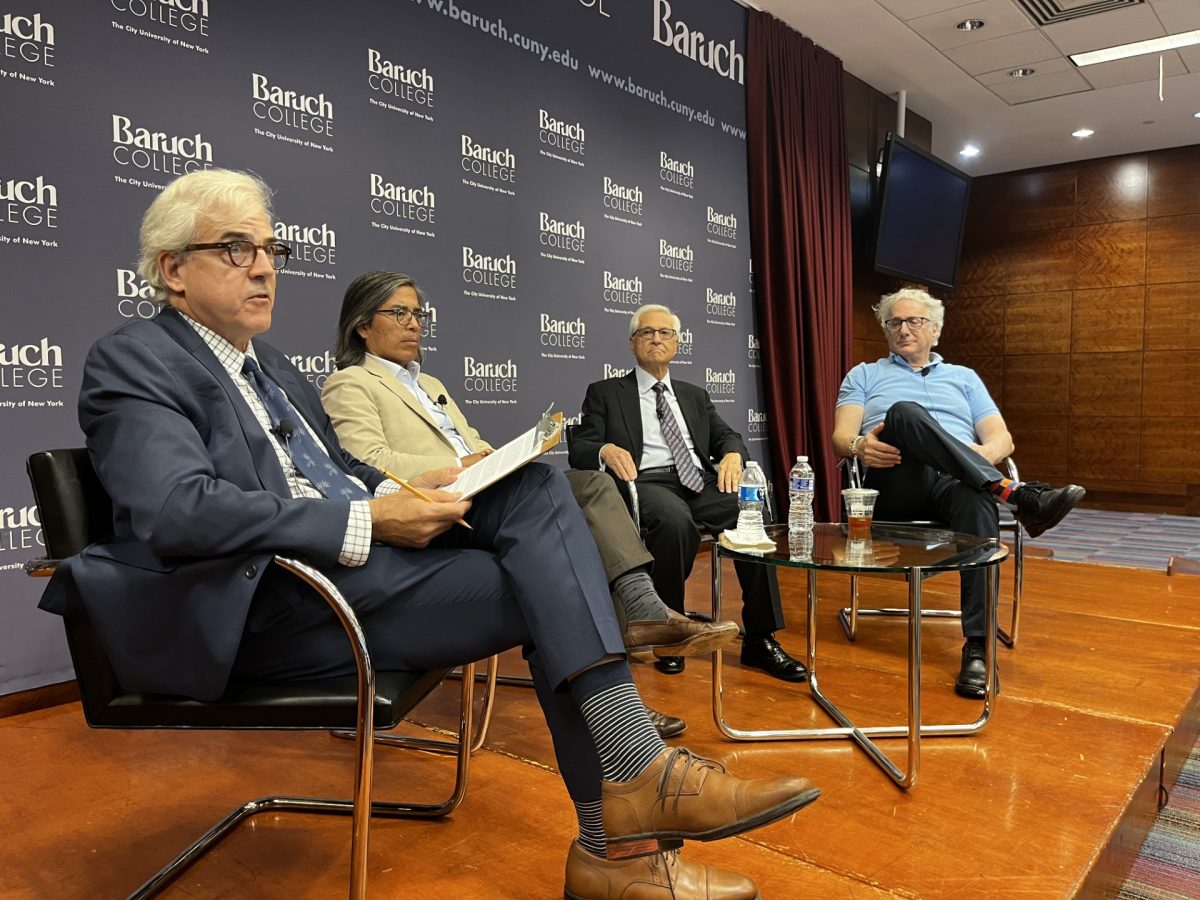
As Americans commemorated the 25th anniversary of the 9/11 terrorist attacks, The Robert Zicklin Center for Corporate Integrity at Baruch College invited guest speakers from several Wall Street firms to share their experiences with crisis leadership.
The event, moderated by David Rosenberg, an associate professor in the law department at Baruch, was attended by faculty members and students from the Baruch Accounting Society.
The event began with a conversation between Rosenberg and Dan Chung, chief executive of Fred Alger Management, about Chung’s experience as a 9/11 survivor. On the morning of the attacks, Chung worked on the 93rd floor of the North Tower in the Fred Alger offices and personally lost 35 colleagues.
“I attended 20 funerals myself but couldn’t make it to all of them because some of them occurred simultaneously,” Chung told the audience.
In the immediate aftermath of the attacks, missing-person posters covered many public spaces in New York City as family members searched for loved ones.
Posters went up along the Armory building near the Baruch campus, and Baruch alum and managing director of J. Bauml & Co., Jeff Bauml shared the lasting impact of the images. “Everyone in finance and trade knew someone that was lost,” he told the audience.
In addition to the funerals and missing-person posters, the speakers discussed the contributions made by the city’s frontline healthcare workers. Expecting mass casualties, hospitals received individuals who had already suffered fatal injuries and could not be saved.
To honor the healthcare workers, Chung explained that Fred Alger paid off student debt for 10 nurses at a local hospital as part of a company-wide fundraising effort.
The World Trade Center Environmental Health Center was also founded by NYC Health + Hospitals to provide care for the long-term health conditions faced by many 9/11 survivors.
After discussing Chung’s personal experiences, the conversation shifted to Baruch’s supportive role to aid the city’s recovery.
“A lot of people and institutions rose to the occasion,” Rosenberg said. After the attacks, Baruch offered displaced Wall Street commodities traders access to the trading floor at the Subotnick Financial Services Center to help stimulate the American economy.
The Lawrence N. Field Center for Entrepreneurship also offered financial aid to local small businesses that were affected by the tragedy.
In sharing their 9/11 experiences, the speakers also noted the importance of returning to their colleagues and workplaces to retain some semblance of normalcy.
“The dust filled up the entire space,” Baruch alum and founder of the International Securities Exchange, David Krell, said of his Manhattan office.
On 9/11, he explained that his team at the International Securities Exchange was among the last to evacuate and later relied on an emergency generator alongside 900 gallons of diesel.
Chung also discussed the emotional toll of working in finance under tremendous grief. “While losing friends, you also had to take action to save a business,” he said.
Many Wall Street firms ultimately provided financial contributions and health coverage to support affected staff members.
Cantor Fitzgerald, a leading financial services firm that lost more than 600 employees on 9/11, pledged 25% of company profits to help victims through its relief fund.
Fred Alger, Chung’s company, also created a nonprofit foundation and paid for all the needs of the survivors and their families. Alger has since been recognized “as one of the leading companies in terms of remembering those lost,” according to Rosenberg.
A total of 2977 victims died in the terrorist attacks, including four Baruch students.
To this day, the tragedy continues to affect the lives of New Yorkers who struggle with both dust-related cancers and traumatic mental illnesses. “There are still victims who are dying all the time from breathing in the toxic chemicals from Ground Zero,” Chung said.