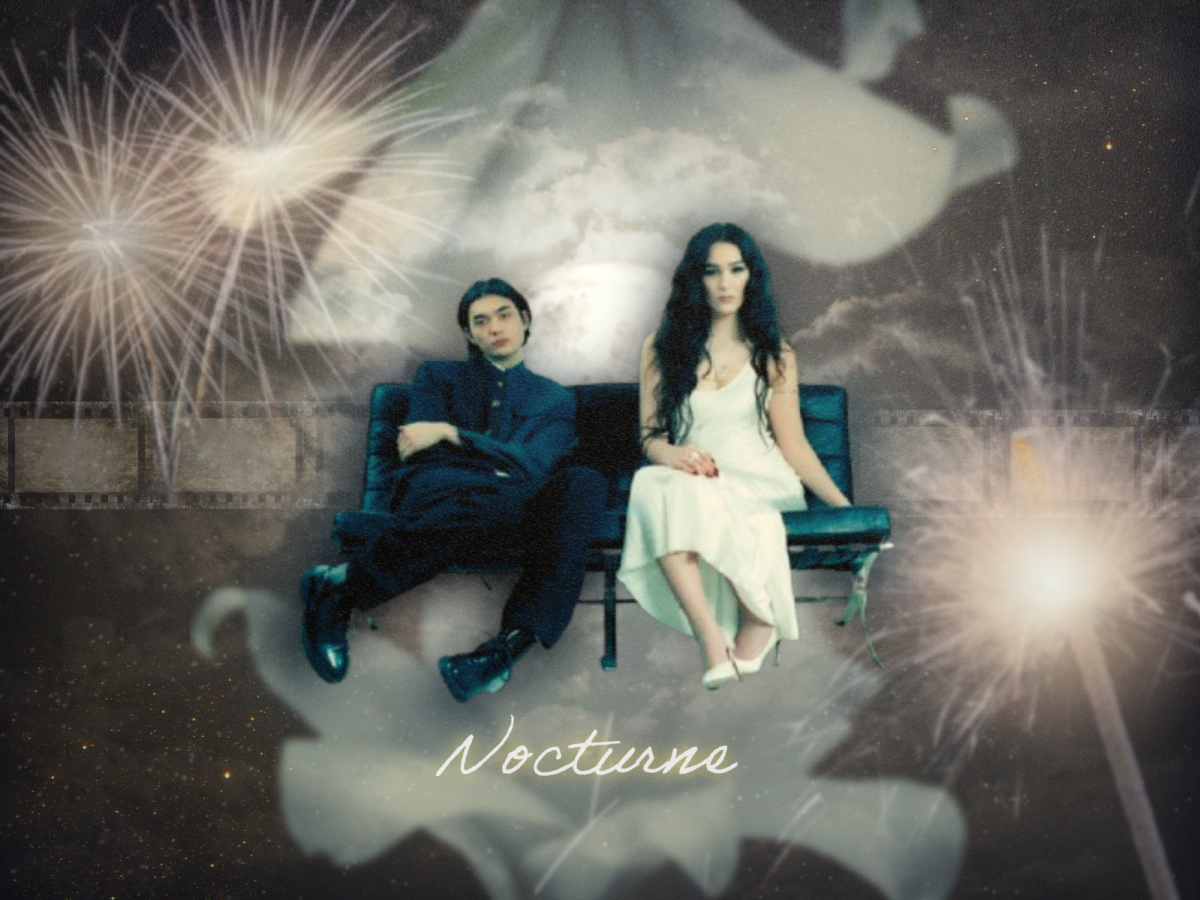


Three years after her last studio album, “Portals,” Melanie Martinez returned with her biggest project yet: a double album, with the first half, “HADES,” embracing a dystopian aesthetic. The album debuted at #1 on the Top Rock & Alternative Albums Chart on April 11.
For years, Martinez was known for her creepy “babycore” aesthetic, particularly through her character Cry Baby. In “HADES,” Martinez officially declares Cry Baby’s death, since she has matured, and introduces a new character, Circle.
The album explores several themes such as power, society and feminine rage. Despite its impressive performance on the charts, some found the album to be lacking in lyricism and instrumentals. However, the album’s success depends on its success in balancing concepts with musical production.
Songs like “WEIGHT WATCHERS” and “UNCANNY VALLEY” highlight Martinez’s frustration with body image and unrealistic beauty standards by using unsettling beats to reinforce this discomfort. While she previously touched on these expectations in “Mrs. Potato Head” with the lyrics “don’t be dramatic, it’s only some plastic / no one will love you if you’re unattractive,” “HADES” pushes that anxiety further, framing beauty as something that strips away humanity.
“CHATROOM” also stands out for its use of nostalgic digital sounds, emphasizing that online hate is still ongoing.
The track “MONOLITH” delivered a raw and emotional portrayal of dehumanization. The lyrics “fantasize, romanticize / infantilize and project lies / dehumanize and scrutinize / god, why won’t you euthanize me?” reinforces how society will dehumanize artists for entertainment. Here, Martinez’s melancholy lyrics and slow pace feel fully aligned, creating one of the album’s most captivating tracks.
“DISNEY PRINCESS” stands out by pairing a deceptively soft melody with lyrics about the industry’s manipulation of young girls. The line “my allowance bought me everything / still can’t buy my innocence,” refers to Cry Baby’s death, suggesting that innocence is something that cannot ever be reclaimed.
Meanwhile, “MONOPOLY MAN” features a rapid tempo at the end to portray corporate greed. These tracks ultimately work best when Martinez successfully aligns concept and production.
“IS THIS A CULT?,” “WHITE BOY WITH A GUN,” “GRUDGES” and “THE VATICAN” explore anger through a gendered lens.
“WHITE BOY WITH A GUN” is one of the album’s most direct songs, calling out toxic masculinity and performative feminism. The lyrics “You’re racist, not nuanced / might as well just wear white cloth / he said, ‘don’t you know that I’m a real nice guy?’” are blunt but demonstrates this deception clearly.
While directness is effective, “GRUDGES” leans more on instrumentals than lyrics, weakening its impact.
Still, “THE VATICAN” closes this section strongly by criticizing religious hypocrisy, especially by institutions that use religion in an abusive way, with dramatic, theatrical instrumentals.
“POSSESSION,” “AVOIDANT” and “THE LAST TWO PEOPLE ON EARTH” speak about relationships. “POSSESSION” comments on the suffocating reality of an abusive relationship with the strange post-chorus, “Dum, dum, di-di-dum,” to show how being controlled can reduce someone to something lifeless.
The album closes with “THE LAST TWO PEOPLE ON EARTH,” which uses explosive sounds to contrast its intimate lyrics. “Can we die together? And is there a heaven?” reflects the need for human connection in the face of danger.
Overall, “HADES” can be seen as both a successful and a weak album. Compared to “Portals,” which felt more seamlessly combined with its concepts and instrumentals, this album instead aimed for consistency, leaving it feeling overextended, with certain tracks lacking the individuality they need to stand on their own.
“HADES” is one of Martinez’s boldest and darkest works. Leaving behind Cry Baby, Martinez has proven a willingness to evolve. Fans can only hope her upcoming film continues to expand on the current issues introduced here.