

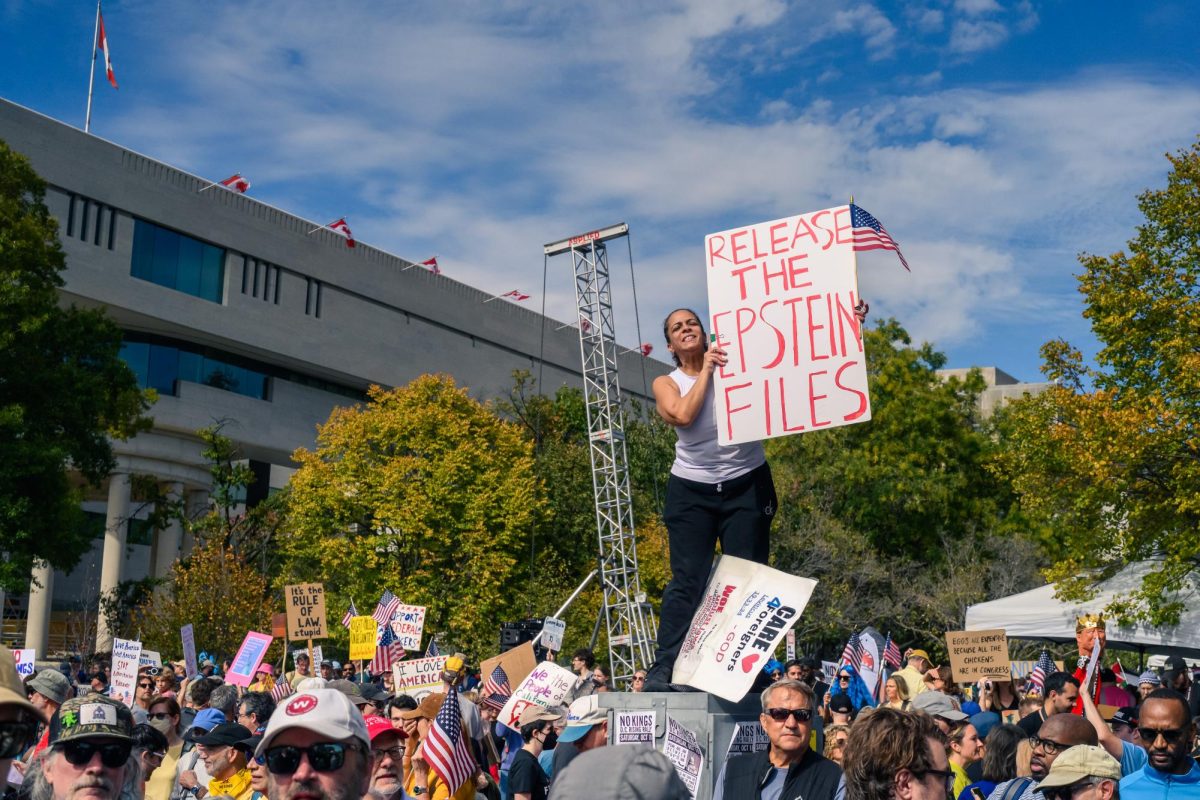
The Justice Department is legally obligated to release the complete records of the Jeffrey Epstein investigation. Recent developments, however, suggest that some documents related to allegations involving President Donald Trump are missing from the publicly available archive. If these files were intentionally withheld to protect the president, it would constitute one of the most significant abuses of federal authority to date.
Epstein’s trafficking operation spanned years and was rooted within elite social circles that included politicians, wealthy financiers and celebrities. Survivors spent decades trying to expose the network, seeking justice and transparency.
The release of the Epstein files was meant to shed light on the individuals and institutions involved, providing the public with a clearer picture of what was known but concealed.
Congress passed the Epstein Files Transparency Act to ensure the public received a complete record. The intention was to prevent powerful figures from being shielded through secrecy or political influence. Under that mandate, federal agencies were required to disclose the investigative files related to Epstein’s case.
But reports now indicate that some interview records mentioned in official indexes are missing from the publicly accessible database. Among these missing documents are investigative materials linked to an accuser who alleged misconduct involving Trump when she was a minor. These allegations have not been proven in court and Trump has denied any wrongdoing.
The absence of these documents raises serious questions about the transparency and integrity of the disclosure process. It is troubling because the connection to Trump has long been part of the public record. The two were photographed together multiple times during the 1990s and early 2000s and moved within the same social circles of wealth and influence. Trump once described Epstein in a 2002 interview as a “terrific guy” who liked younger women.
While this history does not imply definite guilt, it makes the missing investigative files involving Trump concerning. Previously released Epstein files included references to Trump, such as FBI tips alleging misconduct and records of interactions between Epstein and his victims.
The Justice Department argues that some files may be withheld because they contain privileged information, duplicates or details related to ongoing investigations. Protecting the privacy of survivors and sensitive personal data is essential. However, this does not justify removing records mandated by law.
Deliberately withholding legally required documents undermines the credibility of the Justice Department. Federal law enforcement agencies are meant to apply the law impartially, without favoritism or concealment. If records are hidden intentionally, it would represent an abuse of authority and a betrayal of public trust.
Any official knowingly suppressing records should face investigation and possible prosecution. When federal authorities misuse their power, it erodes confidence in the justice system and damages the trust that citizens place in institutions meant to uphold the rule of law.
Accountability does not end with the Justice Department.
If evidence emerges that executive powers were used to cover up investigative records, constitutional mechanisms, such as impeachment and conviction, are there to address such abuses.
No president or high-ranking official should be able to manipulate agencies into hiding information. Such actions threaten the foundations of democratic accountability and the rule of law.
Supporters of the administration often argue that many claims within the Epstein files are unverified or unreliable. This is true: Allegations alone are not proof of guilt. A fair legal process must evaluate the evidence fully. However, preventing certain files from being released to the public suggests there is something to hide.
When investigative records are hidden from the public, it feeds into speculation that powerful people are outside the scope of accountability. Some defenders claim that nothing damaging is in the Epstein files, and therefore, all documents should be released without delay. If that is accurate, then the administration’s position should be to release every document required by law. No harmless information should be concealed.
The Epstein case has already revealed how wealth and influence can obstruct justice. Survivors fought long and hard against institutional neglect. Allowing the government to keep the remaining records secret would only perpetuate the same failures.
The Justice Department should release all remaining records immediately and provide clear explanations for any redactions. Anything less weakens public confidence and suggests that powerful individuals are still being shielded.
Justice depends on transparency. The Epstein files were meant to serve that purpose, to uncover the truth and to hold those involved accountable. The American people have a right to the full record.