
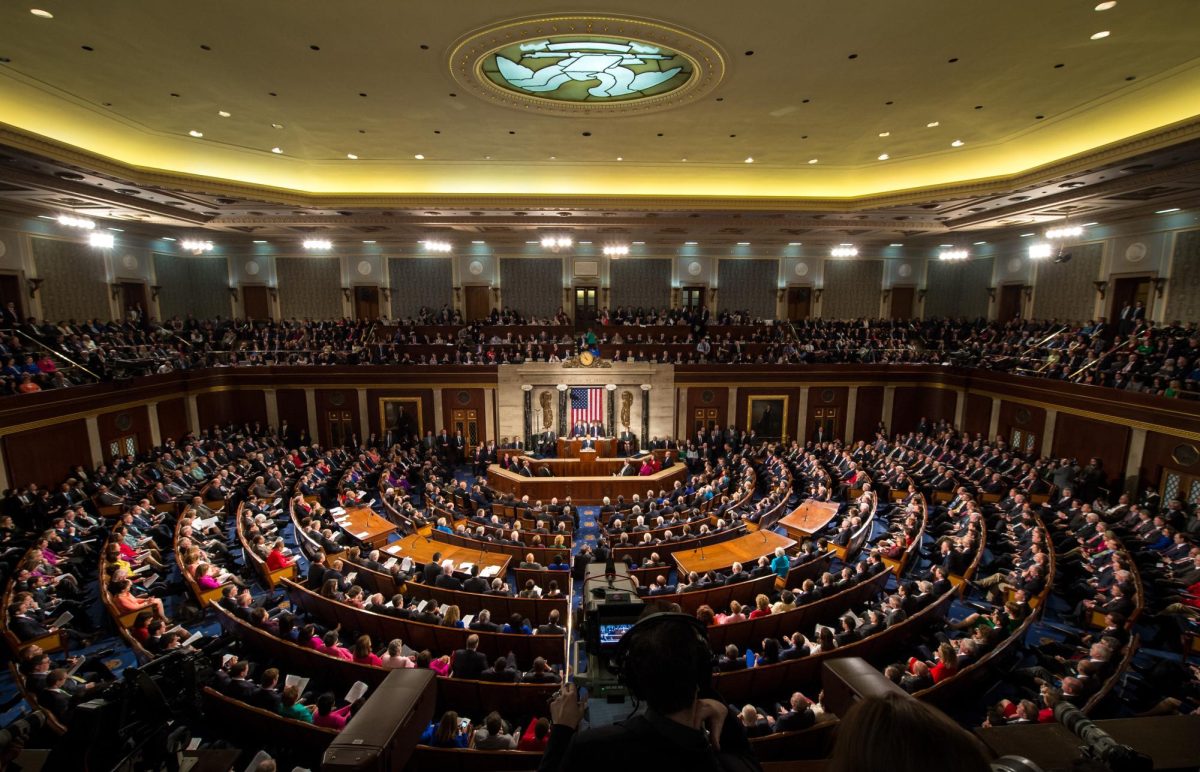
The State of the Union address occupies a unique place in American politics. It is a constitutional obligation in which the president addresses Congress and the public on the condition of the republic. It is one of the few annual occasions in which rhetoric, policy and constitutional structure converge in a single speech.
Democratic legitimacy depends on the alignment between what is proclaimed and the measurable and constitutional structures that sustain the republic. When rhetoric stretches beyond those structures, the strain becomes visible.
This year’s address relied heavily on historic superlatives: the strongest border in American history, the single largest decline in murder rates in more than 125 years, inflation reduced to 1.7%, $18 trillion in foreign investment and the largest tax cut ever enacted.
What all these statements share is their status as empirical claims, referring to measurable indicators tracked by federal agencies, economic institutions and public reporting systems.
In an ideal democracy, bold empirical claims invite proportionate verification. Border encounters are published in monthly reports, inflation is calculated, crime data is compiled and foreign investment flows are documented across sectors.
The more expansive the claim is, the more evidence is required for ascertainment. Superlatives such as “largest,” “strongest” and “never before” condense years of policy, global movements and structural changes into singular moments of triumph. Simplification can obscure context.
National indicators rarely move because of a single, isolated decision. Inflation reflects monetary policy, supply chain stabilization, global commodity prices, labor market shifts and fiscal decisions that often span multiple administrations. Border enforcement numbers respond to seasonal migration patterns, diplomatic negotiations, international instability and domestic statutory frameworks. Crime rates fluctuate alongside demographic shifts, local governance strategies and economic conditions.
When rhetoric frames these layered systems as direct and singular outcomes of executive will, analysis turns into exaggerated fantasy.
Economic rhetoric shows this tension well. Gas prices and energy production were cited as reflections of executive strength, yet oil markets operate within global systems shaped by OPEC production decisions, refining capacity, currency movements, shipping constraints and geopolitical volatility. Regulatory policy influence elements of that system, but no president unilaterally determines international commodity prices.
A narrative that compresses global markets into direct executive authorship streamlines accountability while narrowing public understanding of structural interdependence.
The address also included language that raised constitutional questions. References to the “Supreme Court’s unfortunate involvement” in striking down emergency tariffs, coupled with suggestions that “congressional action will not be necessary” for future trade authority, gesture toward tensions between executive initiatives and institutional constraint.
In the U.S., separation of powers is not an inconvenience but a fundamental principle. When executive ambition appears to minimize judicial review or legislative participation, it introduces ambiguity into the boundaries of constitutional governance.
Similarly, remarks suggesting that the present presidential term should be a “third term” may be delivered in jest, but they resonate against the clear structural limits imposed by the 22nd Amendment. Constitutional stability depends on rhetorical respect for those boundaries.
Education policy offers a different, but related, structural dimension. The One Big Beautiful Bill spells the elimination of the Graduate PLUS loan program beginning July 1, altering how students finance advanced degrees. It includes attorneys who litigate constitutional disputes, accountants who audit public funds, public health experts who manage crises and analysts who construct economic forecasts.
At institutions where many students finance their education independently, including Baruch College, federal lending structures determine who gets access to those pipelines to expertise. The bill’s adjustments to those mechanisms will block off many students who intended to pursue these professions that sustain public and private governance.
A State of the Union address, therefore, communicates more than accomplishments. It reflects how leadership looks at evidence and institutional constraints. When claims align with measurable data and constitutional boundaries are treated with precision, public trust is strengthened. When rhetoric outpaces reality, the gap invites scrutiny.
Scrutiny in this context is not opposition but rather participation. A republic depends on citizens capable of distinguishing symbolic emphasis from hard facts. Democratic legitimacy is secured through alignment: between claim and verification, and between ambition and constitutional design.
The durability of American institutions rests on whether political speech respects the frameworks it operates in. Institutional authority carries institutional responsibility, and the higher the office, the greater the obligation to ensure that rhetoric and structure move cohesively.
When they do, confidence grows. When they diverge, legitimacy cracks.