
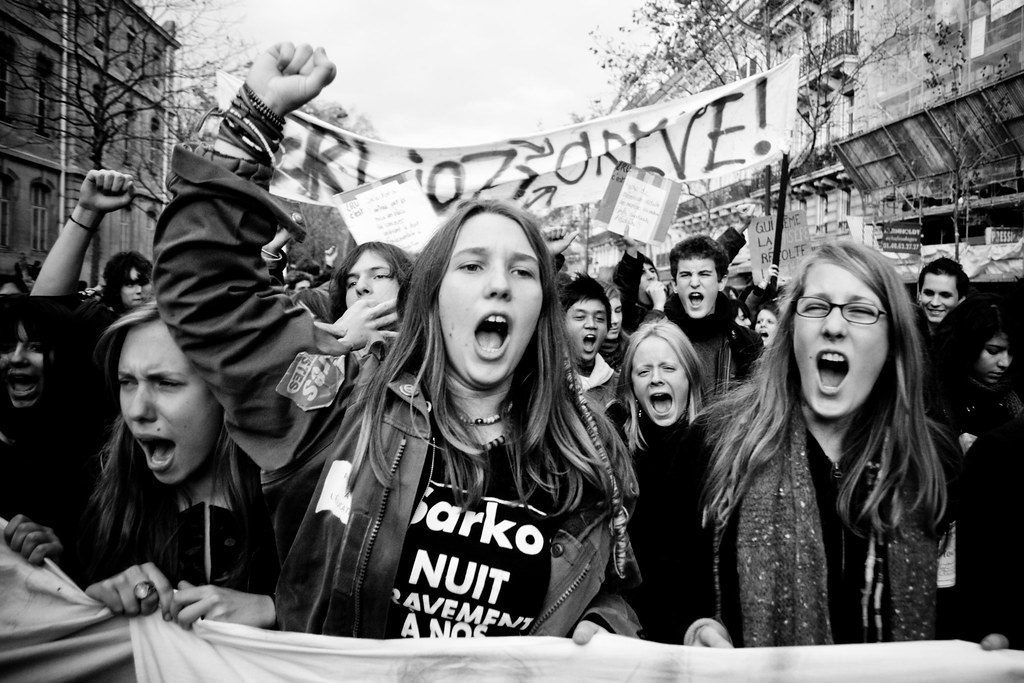
Student-led protests have swept across France as high school students demand better public school conditions, citing overcrowded classrooms, teacher shortages and deteriorating infrastructure among their grievances.
On Oct. 6, more than 266,000 people took part in such demonstrations.
The protests, which began in a working-class suburb outside Paris, have included both peaceful and violent demonstrations, with students barricading schools and facing police violence in response.
A 15-year-old boy suffered a severe hand injury, possibly caused by a stun grenade used to disperse crowds, according to The New York Times. Parents, adult demonstrators and labor unions have also joined the protests in support of the students.
“We need to listen to them,” Léa Monimart, an adult demonstrator in the northern French city of Lille, told NPR. “They are 17 years old; they are not completely clueless, and they know what they are talking about. It’s important to show that there are adults who support them.”
The protests come amid efforts by the French government to reduce spending on parts of France’s welfare system because of the rising interest payments the nation now must pay to its creditors.
Students should not be the ones to bear this burden, especially public school students from working class areas who already lack proper resources.
The solution is simple: more teachers, less overcrowded classrooms and updated buildings.
The students’ demands are not unreasonable; they are necessary to foster a productive learning environment.
Nations must invest in their youth to ensure a successful future for their citizens.
French Minister of National Education Edouard Geffray has taken steps to hear students’ grievances but has yet to take concrete action beyond opening an online portal where students can file complaints.
“Geffray has listened. He now must take action,” Louis Letoublon, vice president of the student union Les Lycéens, said in an interview with France Info.
The devaluation of public education in France mirrors a similar trend in the United States.
Similar concerns have been raised within the CUNY community, where students and faculty have voiced frustrations over inadequate funding and deteriorating facilities.
“Austerity and disinvestment have led to hiring freezes, limited services, crumbling buildings, and low morale,” Annie Tummino, an assistant professor at Queens College, said in testimony published by the Professional Staff Congress in May.
The struggles that students are facing in both countries underscore the consequences of underfunding public education.
The issues that students are dealing with in France should serve as a warning.
When governments fail to invest in public education, young people bear the consequences.
Students should not have to take to the streets to demand adequate classrooms, qualified teachers and safe learning environments.
Education should not be a privilege reserved for those who can afford it, but a fundamental public good.
The U.S. should take notice, as the concerns raised by CUNY students and faculty demonstrate that these struggles extend beyond France’s borders.
Investing in students is investing in the future of a nation.