
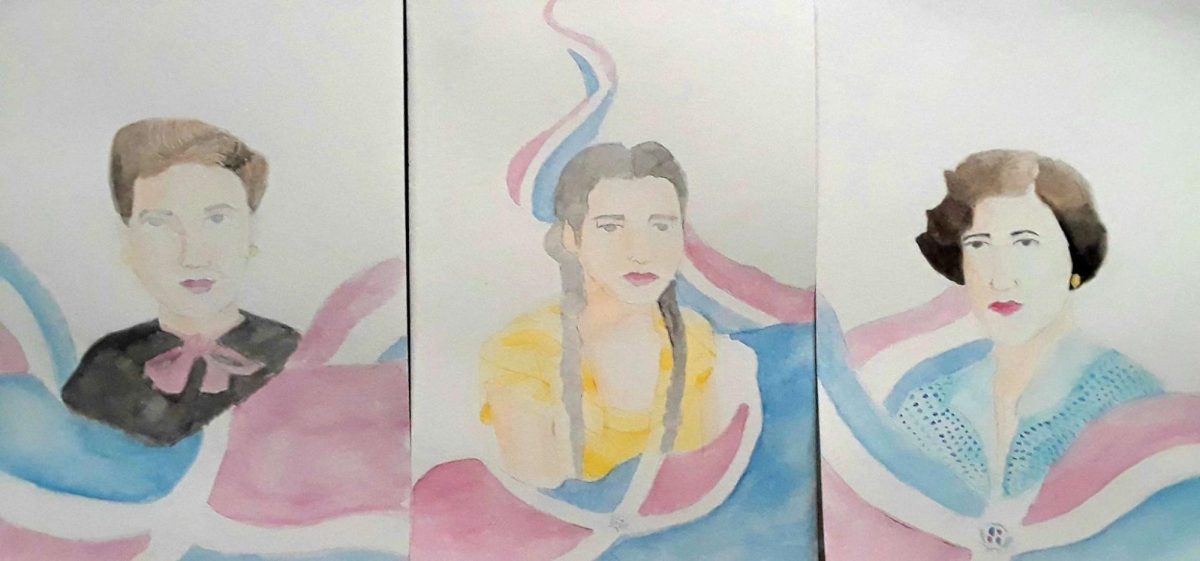
Baruch College’s Office of Student Life hosted a workshop titled “The Mirabal Sisters Story” on Sept. 17. The event examined the sisters’ lives, activism and resistance against the dictatorship of Rafael Leónidas Trujillo in the Dominican Republic.
The workshop was held as part of a tribute to Latinx History Month, which celebrates the lives of those part of theLatinx community. The presentation was led by Evelyn Almonte, community engagement manager for the Office of Student Life. In an interview with The Ticker, Almonte traced the story of sisters Minerva, Patria and Maria Teresa Mirabal, who became central figures in the 14th of June Movement, an underground resistance network opposing Trujillo’s rule.
The presentation was led by Evelyn Almonte, community engage
ment manager for the Office of Student Life.
In an interview with The Ticker, Almonte traced the story of sisters Minerva, Patria and Maria Teresa Mirabal, who became central figures in the 14th of June Movement, an underground resistance network opposing Trujillo’s rule.
The movement took its name from a group of Dominican exiles trained in Cuba who launched a
failed uprising against Trujillo on June 14, 1959.
Almonte described the sisters as remarkably progressive for their
time. “These women were very advanced for their time,” she told The Ticker. “They loved poetry. They were artists. They loved the arts.”
Almonte said that Minerva earned a law degree but Trujillo prevented her from practicing afterward. “He did not allow them to post any honors on their diplomas or anything, just a regular diploma and he also prohibited them from practicing their craft,” she said.
Minerva was the first woman to graduate from law school in the Dominican Republic and was later stripped of her law license after rejecting the dictator’s advances. Almonte said the toll of that punishment went beyond the sisters’ eventual deaths.
“He did not just end their lives when he killed them,” she said. “He ended their lives while they were alive, that is putting an end to your dreams, to everything that you have done for yourself.”
The presentation detailed the sisters’ imprisonment alongside their husbands, who were also leaders in the movement, as well as the events leading to their deaths.
On Nov. 25, 1960, the three sisters were ambushed and killed by Trujillo’s men while returning from visiting their husbands in
prison. Almonte said their deaths were staged to look like an accident: “They took the bodies, rearranged them again, put them in the seats in the car and drove the car down a mountain to make believe that the car had crashed.” Their deaths provoked widespread anger and are credited for accelerating the collapse of Trujillo’s regime. Trujillo was assassinated less than a year later, in May 1961.
Almonte connected the sisters’ story to the broader climate of fear under Trujillo’s rule. “This is how he resolved every situation, by killing people,” she said, describing the regime’s demand for absolute loyalty and control over the country’s institutions.
She also referenced the case of Jesús de Galíndez, a Columbia University lecturer who was abducted in New York and killed after writing a critical dissertation on the Trujillo regime.
Almonte also pointed to the international legacy of the sisters’ deaths. She said the United Nations later designated Nov. 25 as the International Day for the Elimination of Violence against Women in their honor.
The workshop framed the sisters’ legacy within ongoing conversations about gender-based violence and political resistance on a global scale. Reflecting on the program afterward, Almonte thanked colleagues who helped bring it together, including staff across the
Office of Student Life and the college’s custodial team. She said they were essential to “accomplish this dream that I had of presenting this presentation on the Mirabal sisters.”