
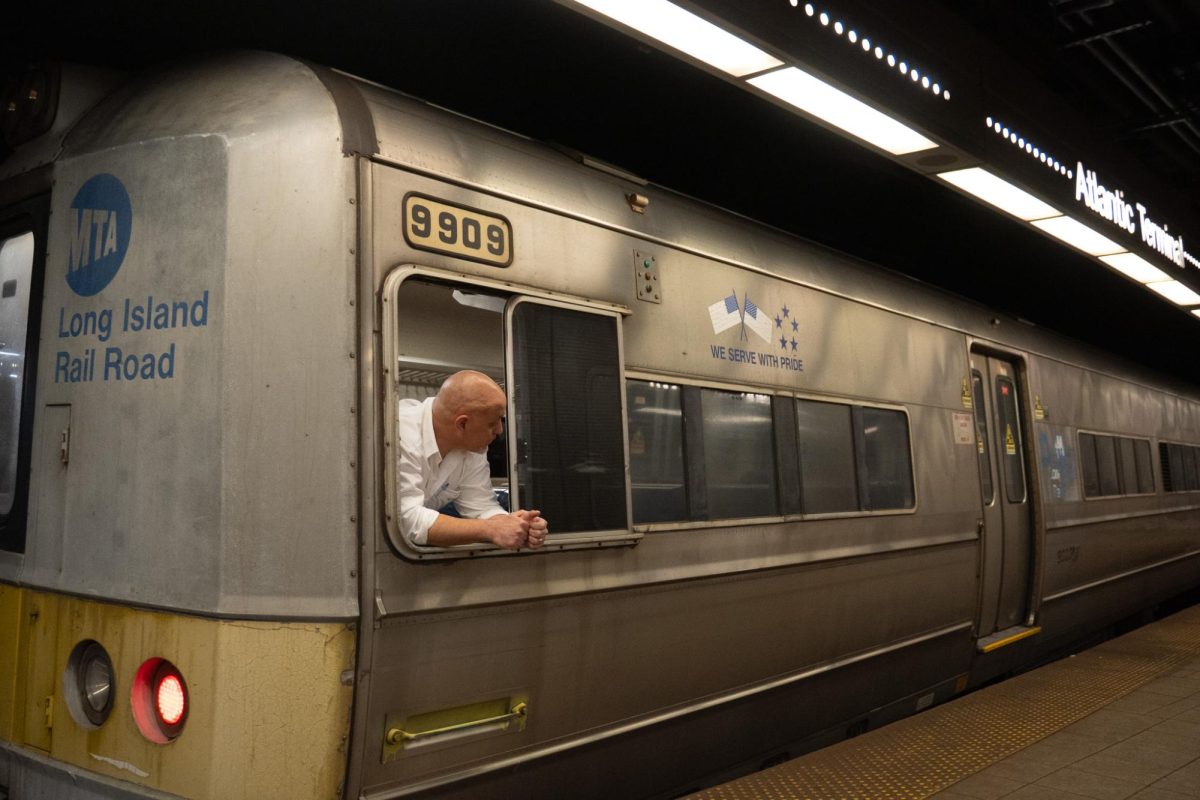
Unions representing Long Island Railroad workers threatened to go on strike following an ongoing contract dispute with transit officials on April 8 if an agreement is not reached.
Kevin Sexton, vice president of the Brotherhood of Locomotive Engineers and Trainmen, believed a strike would be a “disaster for Long Island” and anyone who relies on the LIRR.
This would stop service between Long Island and the city.
The Metropolitan Transportation Authority and LIRR sought federal help twice to resolve the contract dispute.
Despite this, the matter was unresolved and union leaders were given permission to strike as early as 12:01 a.m. on May 16.
“We have very little time left to get this resolved and the clock is ticking,” Michael Sullivan, the general chair of the Brotherhood of Railroad Signalmen, told Gothamist.
The negotiations impact five unions representing over 3,500 workers who are demanding raises in critical rail operation jobs such as engineers, machinists and signalmen.
These workers have not received a pay raise since their last contract expired four years ago.
In response to the demands for raises, transit leaders have advocated for changes to work rules, like those giving engineers double pay when they operate both an electric and diesel train in the same shift.
These penalty payments comprised almost 15% of the average engineer’s compensation in 2024, the MTA said.
According to The New York Times, there were two federally appointed boards that sided with the unions. Union leaders said they disapproved of the work rules.
As a result, MTA officials said they agreed to the union’s retroactive 9.5% pay raises request for the last three years, but they haven’t agreed to a 5% pay bump for the fourth year.
John McCarthy, MTA chief of policy and external relations, said the additional demands could still be resolved through negotiations.
According to the Gothamist, the presidential board report showed that the MTA was reluctant to accept a 5% increase in the last year of the contract because it would set a precedent to MTA bargaining units that it’s “better to hold out and seek government intervention” than voluntarily resolve contract disputes.
This is not the only time a strike has been brought up. There was a major LIRR strike that lasted 11 days in 1987 under President Ronald Reagan.
There was also a strike in 1994 that led to a two-day suspension of the rail lines.
LIRR workers are allowed to go on strike because their jobs do not fall under the Taylor Law jurisdiction of New York State that prohibits New York City subway workers from labor strikes.
If the strike takes place, it could have damaging effects on the 2026 reelection campaign for Gov. Kathy Hochul, a Democrat who faces Bruce Blakeman, the Republican Nassau County executive with close ties to Long Island.
Both sides are in strong disagreement as MTA officials refuse to give into the demands of the unions. Meanwhile, LIRR unions continue to stand their ground.
“Our memberships are prepared to do what’s necessary, if it comes to it,” Jeff Klein, the general chairman of the International Brotherhood of Electrical Workers, said.