
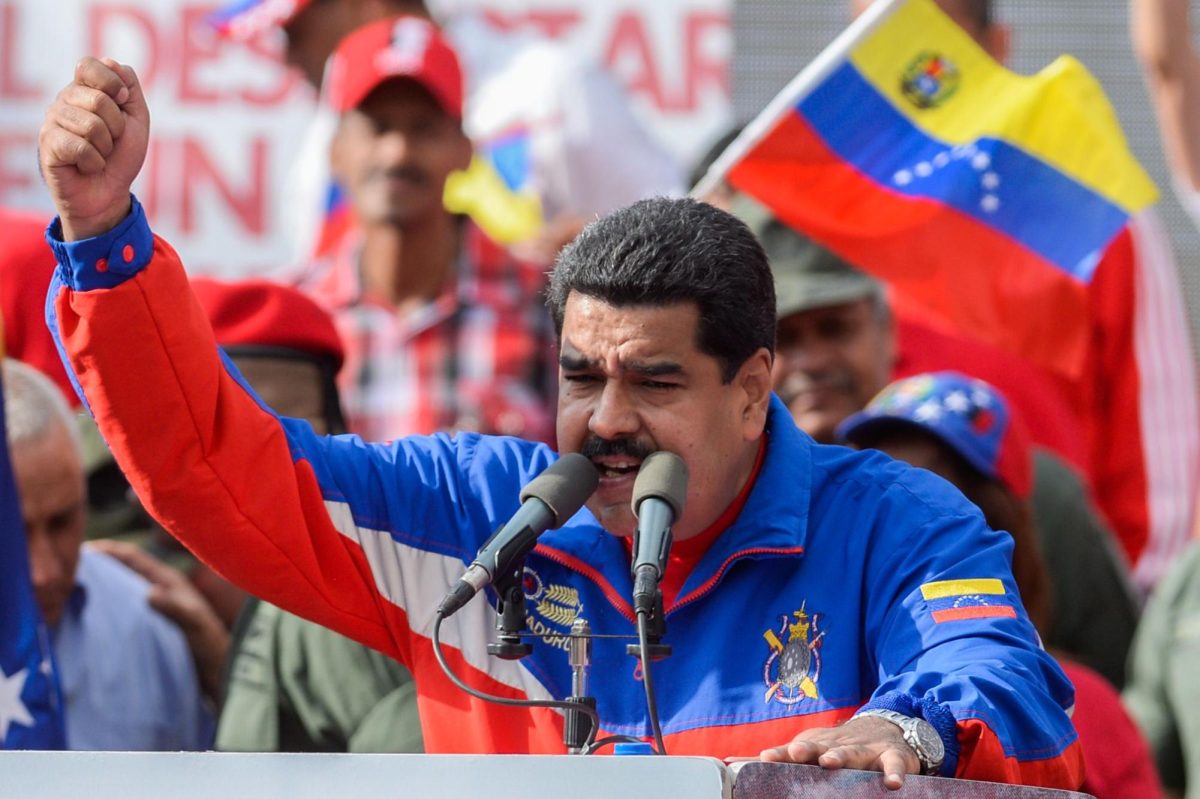
After former Venezuelan President Nicolas Maduro was captured by U.S. forces, the CEOs of the U.S.’s biggest oil companies quickly gathered at the White House to discuss the operation. With ExxonMobil, Valero Energy and Chevron all represented, President Donald Trump urged oil executives to invest $100 billion into rebuilding the country’s troubled oil sector.
Venezuela, which has 303 billion proven barrels of oil, more than any other country, has become key to the Trump administration’s energy strategy.
“A number of factors pushed the administration to do this: U.S. security in the Western Hemisphere, immigration concerns, narcotics concerns, and energy security,” Brandon Mulder, a journalism fellow at the University of Texas Energy Institute, told The Ticker.
After the intervention, oil stocks rallied, with Chevron seeing an unprecedented 7% gain in pre-market trading on Jan. 5. However, although oil prices initially stabilized, recent U.S. strikes on Iran are likely to disrupt Gulf supplies, making Venezuela’s oil more profitable.
Despite higher prices, Venezuelan oil carries its own risks.
“Oil companies are considering how they can operate in a country that has experienced a lot of violence and insecurity as well as the direction of the global oil markets,” Mulder said.
Oil was first discovered in Venezuela in the Maracaibo Basin in 1914, with foreign companies often vying for control of the country’s resources. During World War II, Venezuela supplied more than 70% of America’s foreign oil, aiding U.S. wars against the Axis powers.
In Texas, the home of America’s oil industry, major companies like Shell and Texaco spent billions of dollars in today’s money building refineries along the Gulf Coast. These refineries, which were converting 1.7 billion barrels of crude oil into gasoline by the 1960s, also employed thousands of Americans.
“All of the refiners in Texas were built specifically to refine Venezuelan heavy crude because globally there weren’t a lot of light oil resources left until we discovered hydraulic fracturing,” Mulder said.
Concentrated mostly in the Orinoco Belt, Venezuela’s oil is denser than the lighter grade produced by fellow OPEC partners like Saudi Arabia. This makes Venezuelan oil more challenging to refine into gasoline, requiring heavy equipment.
Venezuela’s oil extraction pollutes the atmosphere with high amounts of methane, a toxic, highly flammable gas that can cause severe breathing complications for people living in affected areas.
Despite the 1970s oil boom, more than one-third of Venezuelans were living in poverty, reflecting deep economic inequality.
Socialist leaders like Hugo Chávez saw American control of Venezuela’s oil as a continuation of the country’s colonial exploitation. Petróleos de Venezuela, Venezuela’s state oil company, was founded in 1976, and by 1999, Venezuela changed its Constitution to ensure state control of oil reserves.
While some U.S. companies, including Chevron, negotiated new operating deals with the Chávez government, others like ExxonMobil and ConocoPhillips were forced out of the country. The Bush administration also imposed sanctions on Venezuela over narcotics concerns.
In addition to sanctions, Mulder said, “Infrastructure requires lots of expensive maintenance, and in the years after U.S. oil companies left the country, there was a lot of alleged mismanagement among the Chavez and Maduro administrations where the infrastructure began to decay.”
After the intervention, the U.S. Treasury reversed sanctions on Venezuela. Venezuela’s national assembly also passed a new law allowing for American investment, and it’s new president Delcy Rodríguez expressed interest in greater trade cooperation.
Although ExxonMobil CEO Darren Woods called Venezuela “uninvestable,” Shell and BP have already been issued licenses for oil and gas projects.These initiatives could revitalize Venezuela’s economy, which is facing a 172% annual inflation rate.