
The second annual spoken word “Talk to me Nice” Black History Month event took place on Feb. 25 at the Baruch College Performing Arts Center in the Engelman Recital Hall on Feb. 25.
The Black & Latino Studies Department, The Percy E. Sutton SEEK Program, the Black Male Initiative and the Office of Student Life played a role in bringing the event to life.
Before entering the venue, attendees walked through an art gallery created by professor Shirley Reynozo’s past BLS 1003 students as their final class projects last spring. Most of the work in the gallery put heavy emphasis on Black feminism.
The gallery’s “Black Feminism Poster Series,” created by John Galanis, featured three female activists important to Black feminism including Bell Hooks, Audre Lorde and Angela Davis.
Three collages were created by Eve Yang to showcase healthcare disparities, harmful stereotypes and misrepresentation.
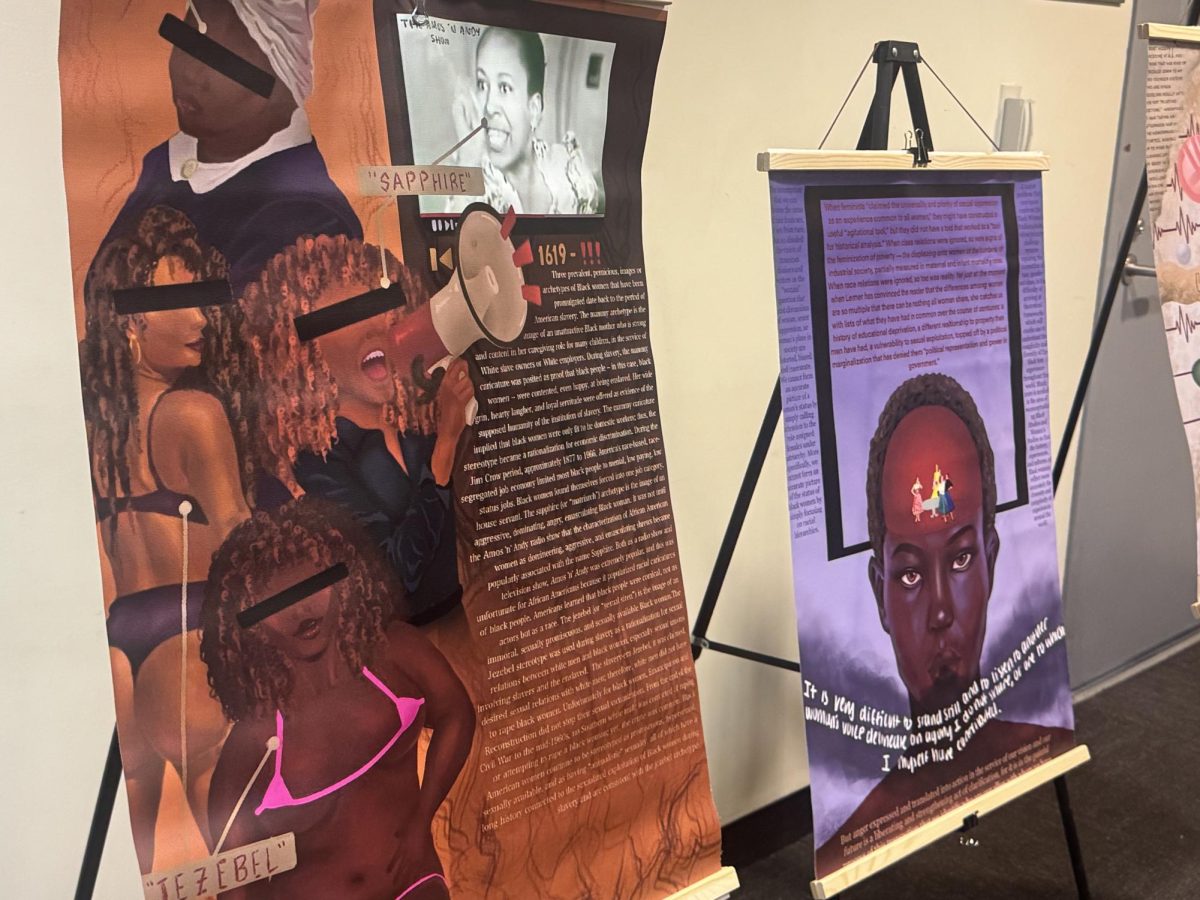
“From Slavery to Stethoscopes” outlined how the health care system would subject Black women to pre-existing bias resulting in high mortality rates. A morgue record was featured in the collage, identifying the woman’s cause of death as effects of “structural determinants” and “social determinants,” including slavery, Jim Crow laws, education, income, food stability and redlining.
“The Fruits From the Roots,” explained the origins that popularized three harmful Black female stereotypes. The stereotypes included “mammy,” “sapphire” and “Jezebel.” Despite having old roots, many are still popularized in the media portrayals and continue to defeminize and oversexualize Black women.
Alongside the student work, Reynozo also featured some of her own work: a series of photos from Black Lives Matter protests for Adama Traoré and George Floyd.
Attendees quickly filled the seats and were handed a show program that ended with a lined page where they were encouraged to write poems of their own.
To kick off the event, a video was projected with Reynozo, or DJ Møya Rey, as the mixer. The video not only followed her through the event’s promotion but also highlighted different Baruch clubs that were tabling throughout Black History Month.
SEEK counselor Marcus Clindinin was the event’s presenter. He explained that “Talk to me Nice” is “a black phrase to express the demand to be treated with grace, mercy, love and respect, or words that hold the history of the mistreatment of Black people and Black culture, and we plan to use more words to reclaim our humanity, by way of self expression, community, justice and celebration.”
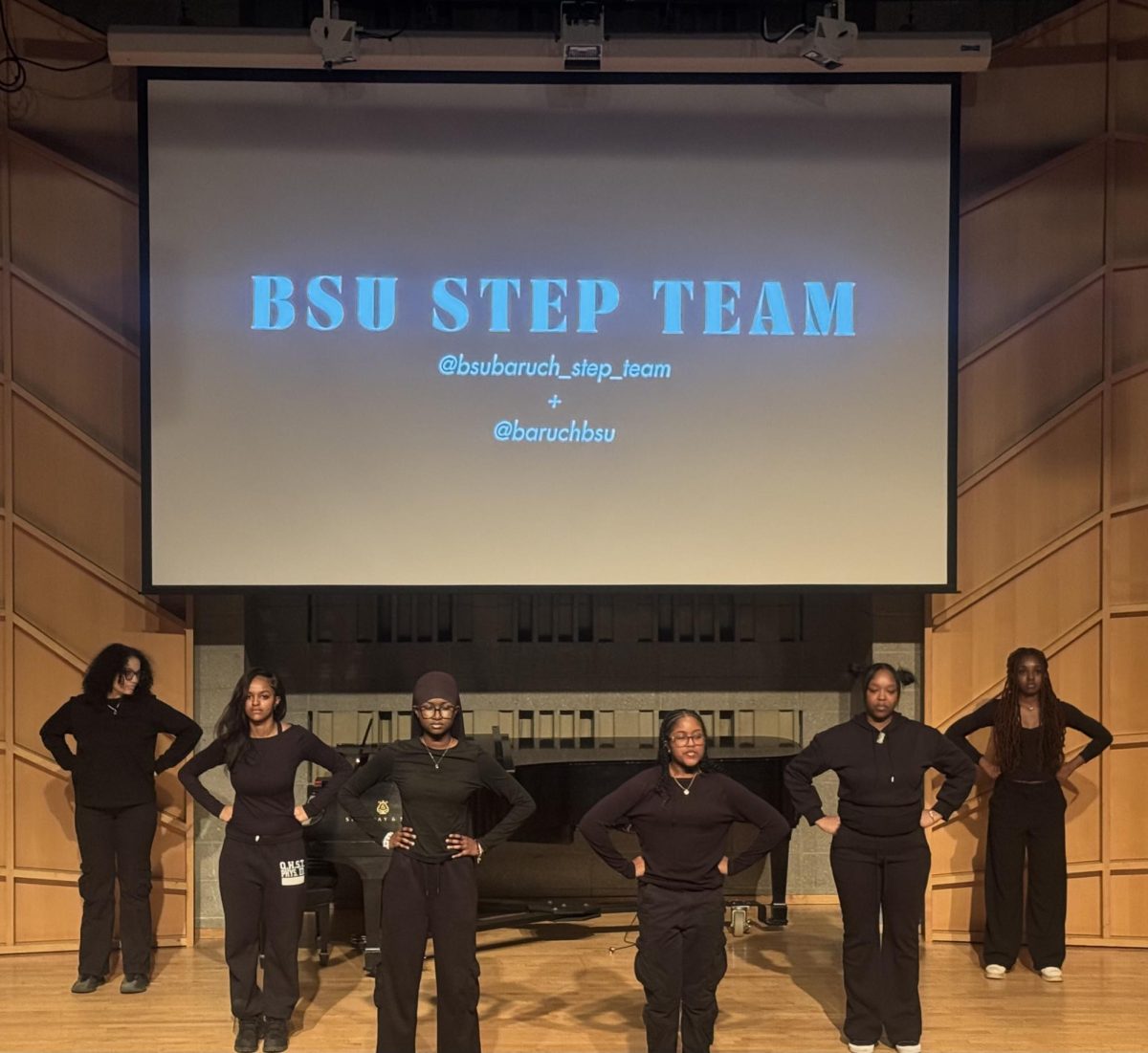
Baruch’s Star Steppers took the stage following a rendition of “Lift Every Voice and Sing.” They explained that step is grit, discipline, unity and community.
Baruch sophomore Jaden Diaz was the first poet on stage, sharing his poem “18.” His poem spoke about “constantly chasing freedom, with somebody else’s map” and the fear of when it’s time to make your own choices.
Kevonna Fowler, a Baruch senior, went from covering the event last year to stepping up to the microphone. She performed her poem “Make Do.” Through her poetry, Fowler expressed her frustration at hearing “black people don’t have no culture” as those same people will ask for permission to utilize their style and braids.
The third and last student poet, Karamoko Kaba, performed with more than just his words. In Psalmayane 24’s “A Note from Spit from A Native Son” Kaba brought the audience into a scene with a police officer. The piece digs into police brutality through its systematic racism.
Reyonzo made her live poetry debut as the event’s first open call of the night. She told The Ticker that “seeing my two students on stage gave me confidence.”
Reynozo viewed the opportunity as the chance to show her students another side of herself outside of a professor to let them know they aren’t alone in their feelings. Reynozo’s poem was titled “The Dead Lecturer.” She not only built a safe space for her students, but they in turn created a safe space for her as well.
Non-student poets included Stephine Pacheco, Farrah Gamo, Almighty Luck — who also goes by Mr. All That All That — Ali, Just Brey and Smoove Babii.
Pacheco shared four of her poems. For the last poem, “Where I’m From,” her notebook was put away as Pacheco recited it from memory. This final poem spoke of the quickening gentrification of her home in the Bronx.”
I mean, if the pigeons can fly, we can too,” said in her poem. “I say we black and brown and poor and trans and queer. We’re eternal. We build, so we burn. It is cultural practice. It is cultural practice to refuse to die.” Through her poem, Pacheco spoke about the realization that no amount of gentrification can truly erase them.
In Ali’s set for the night, “Unapologetic,” she took the audience through “different facets of being Black.” Ali’s second poem was one she wrote for her younger self. In the poem she spoke on what media portrayals would often instill into the minds of young Black people.
She expressed how growing up, her parents wouldn’t let her watch Disney because of its “color theory” with their princesses, “cause the color of Black girls is never seen as complimentary. Cause in Disney, beauty only comes in ivory. Feminine found in porcelain: The shade of Cinderella, Belle, Snow White from the seven dwarves. Anything else is unfit or portrayed as a beast. Only fit to be the frog.”
Every poet was met with respect by the entire audience. The only noise was the occasional “mmm” in relation to the poem or the sound of a tambourine shake. Even if a poet stumbled on their words, the audience would encourage them to keep going.
Smoove Babii, co-host of the podcast “Ignorant Conversations” alongside Gamo, was the final poet of the night. Despite being the last one to go, the audience was at its loudest when Smoove Babii took the stage.
During Smoove Babii’s poem, he had the majority of the audience following along. Smoove Babii had a clear rule during his poem; if the audience liked what they heard, they had to tell him to “bring it back.” Once they did, he would repeat the last verse he said to give the audience exactly what they wanted.
In an interview with The Ticker, Clindinin expressed he became a SEEK counselor because he wanted to create the space for students that he had personally searched for growing up and hopes that more student poets will begin to emerge and step up onto the stage.
Clindinin reflected on an interaction he had with a student following the first “Talk to me Nice” event last year and how comfortable the student felt in that space.
“That’s what these spaces are for,” Clindinin said. “People leaning on each other, people embracing each other. For that student to come up to me, I knew the goal was achieved.”
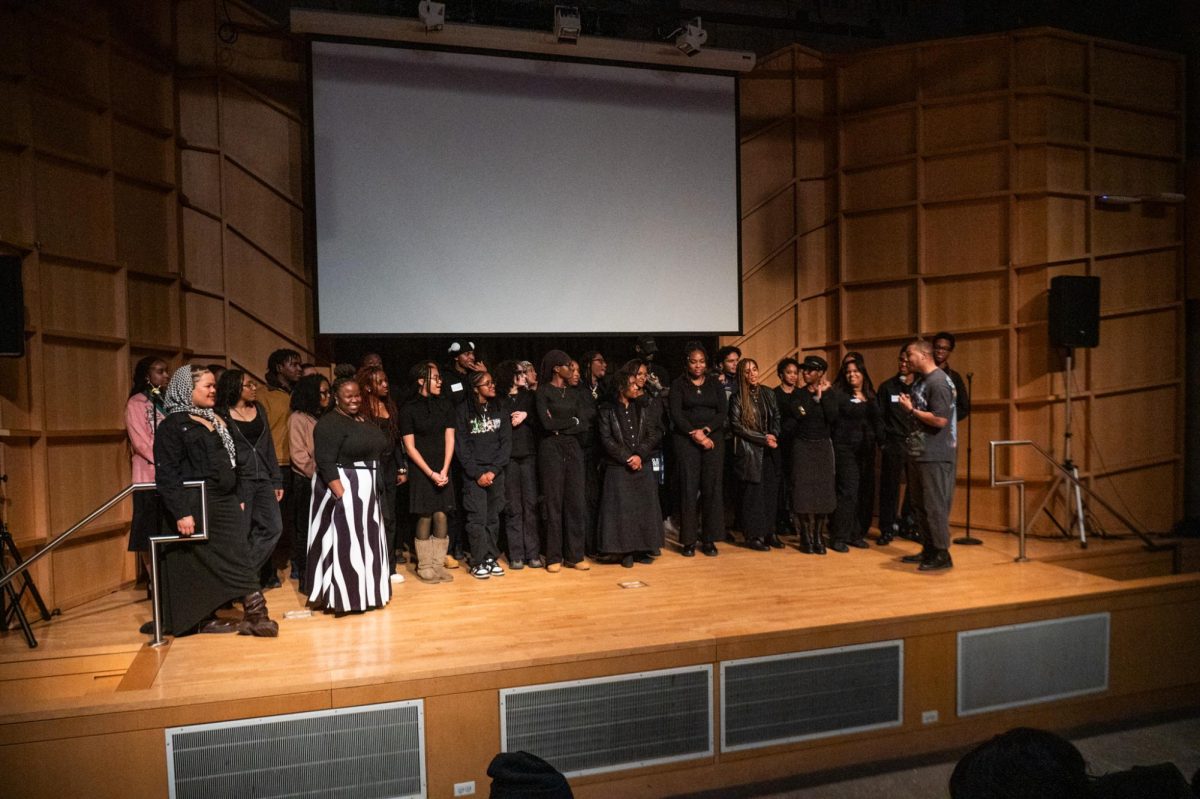
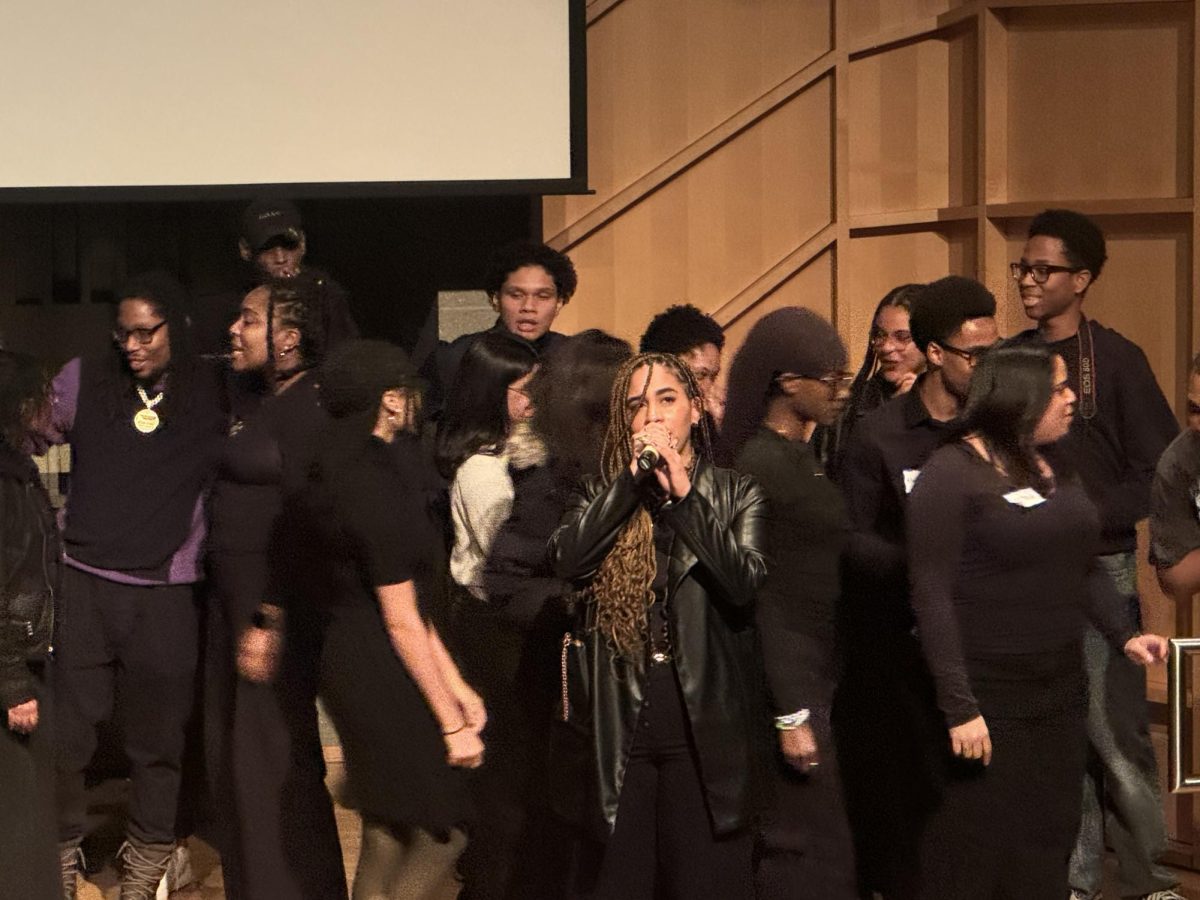
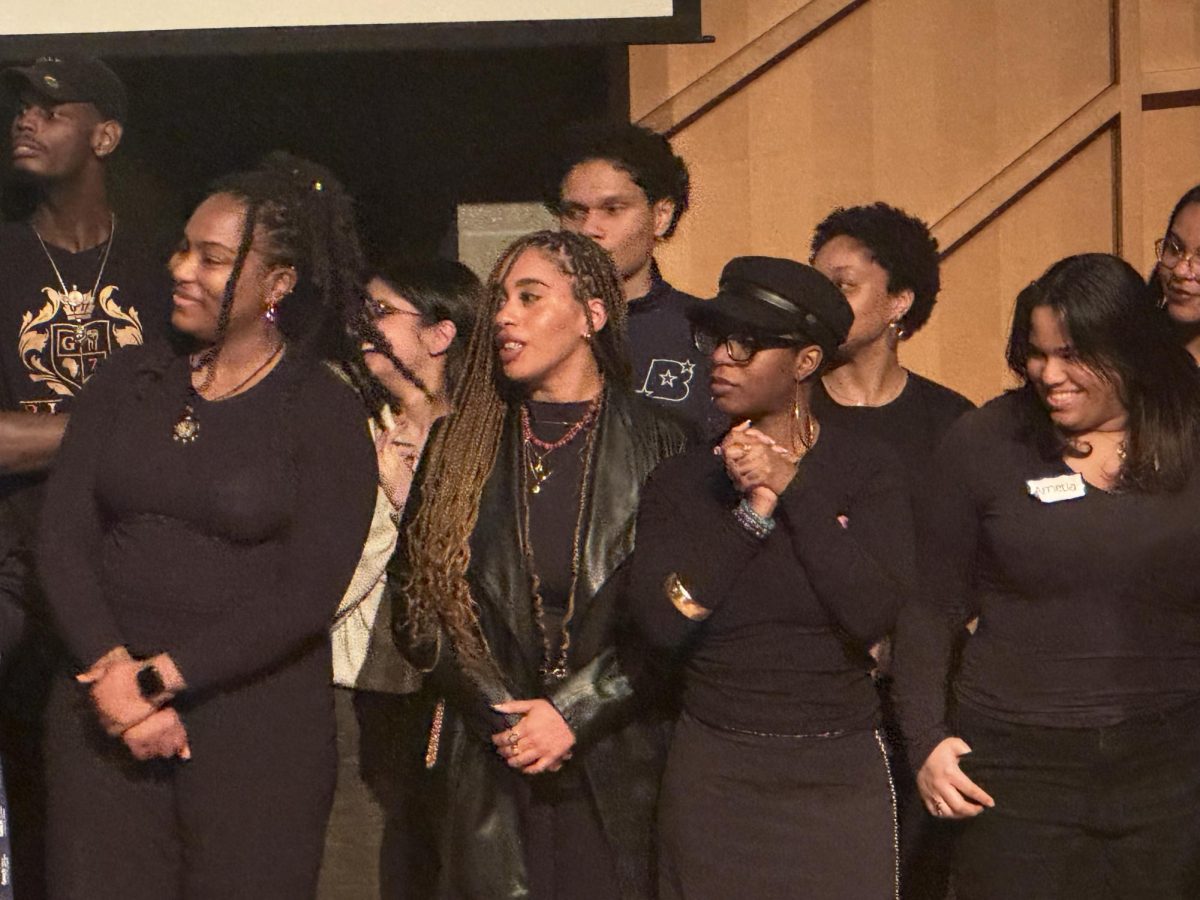
At the end of the night, everyone involved in making the event happen was called onto the stage so Reynozo and Clindinin could express the gratitude they had for each and every one of them.
Editor’s Note: Kevonna Fowler is The Ticker’s fashion columnist. She had no involvement in the editorial process of this article.