

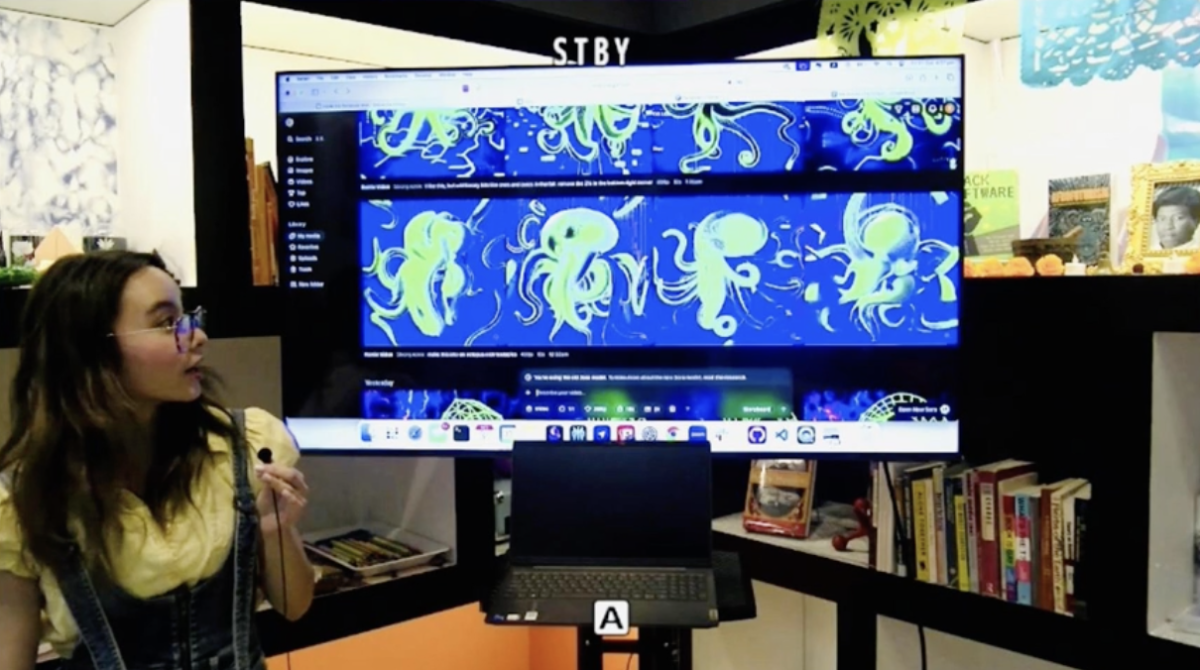
CUNY took over a storefront in the Oculus and turned it into a space that showed how technology can protect people. The Public Interest Technology Pop-Up ran from Oct. 27 to Nov. 6.The event was funded by a PIT-UN grant and organized by the CUNY PIT lab in partnership with BetaNYC. It consisted of a gallery and workshop where students and volunteers showed how data can be used in a way that benefits people. The pop-up presented projects covering various topics, including immigration, climate, legal risk, data mapping and digital access.
The projects covered immigration, climate, legal risk, data mapping and digital access.
One of the projects was completed by Professor Joe Rosenberg at the CUNY School of Law. His work focuses on a resource page titled “Emergency Planning with Parents Who Fear Deportation,” which provides guidance and planning materials to help parents protect their children if they are detained or removed.
When parents get detained, the child is left behind in a legal and emotional vacuum.
Rosenberg mentioned that his resource provides fillable forms, an attorney and custody preparation through a guided interview available in both English and Spanish.
It exists because this is not an abstract fear infact this is something families in New York are actually preparing for another project focused on climate risk.
Jillian Melough, a Civic Innovation fellow at BetaNYC, demonstrated a tool that uses New York City open data to map extreme heat, flooding, tree coverage and how building materials affect temperatures on different blocks.
It was a simple, visual way to understand risk. The goal was to help New Yorkers see the conditions around them more clearly.
It raises questions like which neighborhood will overheat next summer and which street will flood first.
Another set of work came from an international civic nonprofit, presented by a group of young women. Their focus was on digital literacy training and building technical skills for communities with limited access or support.
They explained that many of the people they serve start with no access at all. These people have no equipment, no support and no entry into the tech world.
They were also not promoting trendy coding courses. They were discussing a real gap between people who can utilize technology to move forward and people who never get the chance to begin.
One more project was led by Ana Ortega-Villegas, Program Director at Mobile Pathway. Her tool visualizes immigration court outcomes and exposes geographic bias.
User select a nationality and a city and the platform shows the approval or denial rates from the jurisdiction.
The public imagines that law is neutral, but her project shows how two courts, with the same law and the same facts, can still deliver different outcomes.
“It shouldn’t really be the case because it’s supposed to be adjudicated fairly,” Ortega-Villegas told The Ticker.
Her project does not argue or take a side. It simply demonstrates how the system works.
Technology changes based on who controls it. If it is built for the community, it helps people understand the systems that impact their lives.
Technology does not have to be about profit. It can be built to help people understand their reality and make better decisions. That is what public interest technology aims to do.