
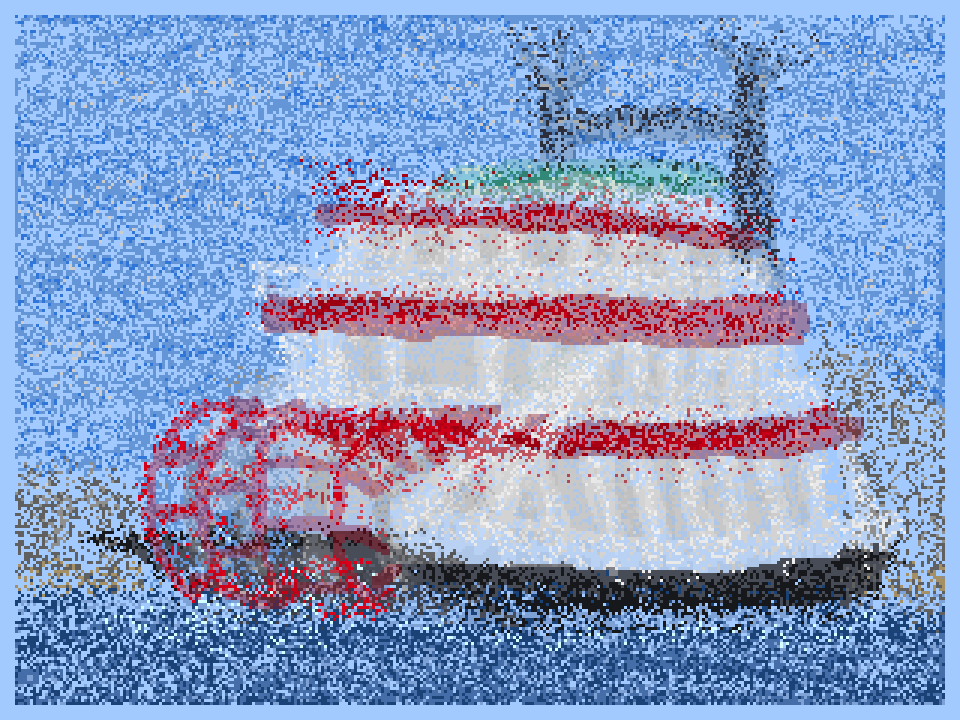
The American Heritage cruise ship was struck by the Atlantic Asphalt tanker while docked at a port in New Orleans, La, on Nov. 13. The collision resulted in 32 injuries and caused the cruise ship to capsize and sink.
Prior to the collision, the American Heritage 190 people were on board, including 140 passengers and 50 crew members, and was set to embark on a week-long sail through the lowermost sector of the Mississippi River. Thirty of the reported injuries were among those on board the cruise, with no reported fatalities.
Cruise ship passengers Robert Baum and his wife, Bernadette Baum, were among those aboard the ship at the time of the collision.
“The staff started yelling, ‘Get on the floor! Get on the floor!’ And just as everyone was trying to get on the floor, the tanker struck our boat,” Robert Baum told USA Today when recounting the events.
The Atlantic Asphalt, a 520-foot vessel nearly double the size of the cruise ship, bore a crew of 19, none of whom sustained injuries in the collision.
Immediately after the collision, the U.S. Coast Guard issued an emergent closure of the Mississippi River between the mile marks 93 and 96 for emergency response crews to work safely without endangering others in the waterways.
American Cruise Lines, responsible for the operations of the cruise ship, released a statement noting that officials would remain in “close coordination with the U.S. Coast Guard and local authorities.” They offered reassurance to the public that “guests and crew were evacuated” and shared that the company was “deeply concerned for everyone involved.”
Thome Ship Management, responsible for the Marshall Island-flagged tanker, released a statement to BBC News assuring the public that all crew aboard the tanker had been accounted for and detailed the commitment to comply with local authorities investigating the collision.
“OSM Thome is fully complying with the local authorities as they carry out the necessary investigations,” they said.
Rescue operations quickly turned chaotic as the cruise ship began to take on water and began to sink, only to later capsize. New Orleans Mayor Helena Moreno recounted the high-stress rescue efforts at the news conference, stating, “The passengers began disembarking from the ship after that collision. But while that was happening, the cruise ship began to sink, and then eventually, the cruise ship toppled over and flipped. Now, when that occurred, we started to have people in the water.”
Approximately 100 of those aboard the cruise and two responding police officers were found in the river. Local responders and the U.S. Coast Guard utilized commercial tugboats to successfully pull everyone from the water, while the captain of the American Heritage, Leonard Stewart, maintained his place on the bridge, keeping the cruise ship pressed against the dock until he was the last person on the ship and evacuated.
All people on the ship were accounted for, an outcome Moreno called a “miracle on the Mississippi.”
Preliminary findings from the National Transportation Safety Board indicated that the collision was triggered by a sudden steering failure aboard the Atlantic Asphalt as it began to traverse beneath the Crescent City Connection bridge. NTSB investigator Bart Barnum said the tanker’s voyage data recorder captured the tanker’s whistle and radio warnings that requested assistance and for emergency commands to drop the tanker’s anchor moments before impact.
While the steering malfunction offers a potential explanation as to how the tanker collided with the cruise, investigators have not yet determined what caused the system to fail.
After the collision, the Atlantic Asphalt was placed under a federal maritime arrest warrant while legal claims work to be resolved. The warrant was issued after the Board of Commissioners of the Port of New Orleans filed a federal lawsuit alleging at least $1 million in terminal damage.