
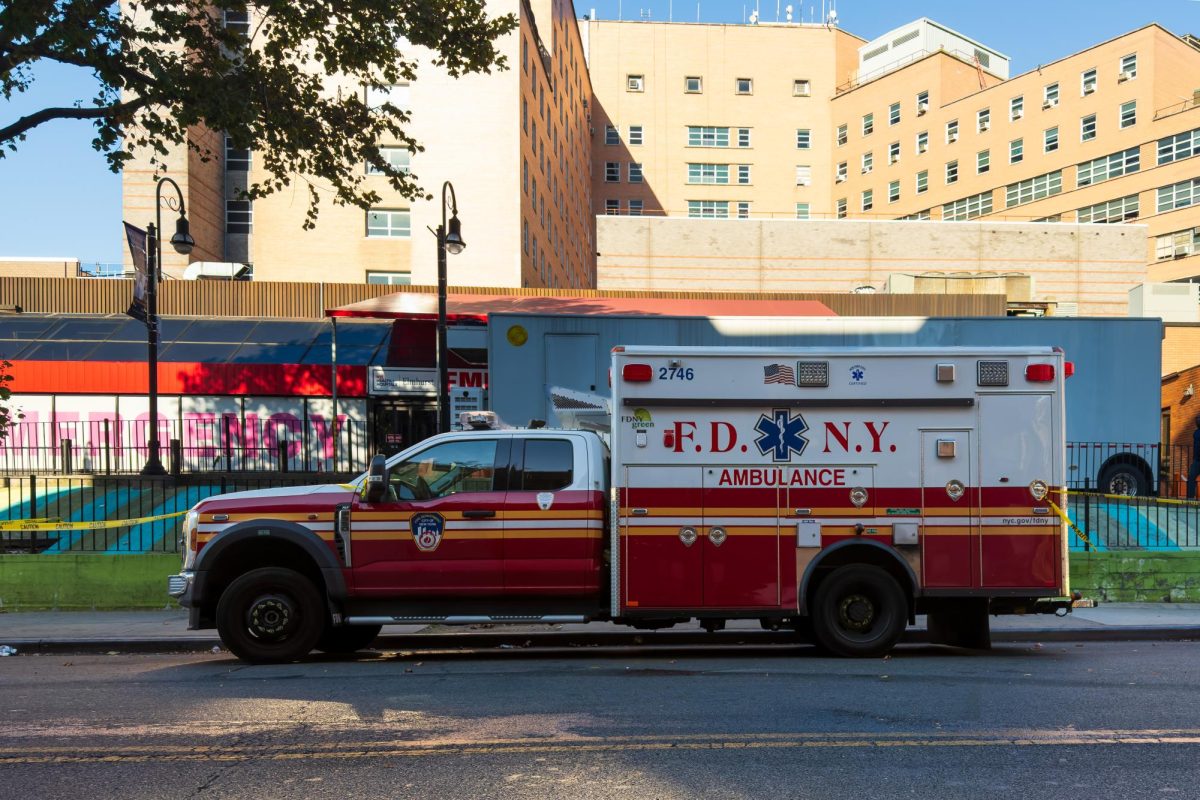
New York City Fire Department ambulance response times for life-threatening emergencies have soared 41.2% since 2015, according to recent reports from the NYC Comptroller’s office.
The impact of these Emergency Medical Services delays were highlighted in recent events, when 14-year-old Kevin Daly suffered a stroke while at school.
Despite repeated assurances from 911 dispatchers that an ambulance was on the way, no ambulance arrived at St. Francis Preparatory School for nearly an hour.
Daly’s father, Brian Daly, described the turmoil felt with the preestablished knowledge that with a stroke, every second matters.
“I told them I was a retired fireman and everything. I said you gotta get there right now,” he said in a statement.
Following the incident, the Daly family demanded answers from city officials and the FDNY, prompting the City Council to host a hearing to address the ongoing EMS delays.
In an interview, Daly’s mother, Jeniffer Daly, expressed her disappointment with the situation: “It’s kind of sickening, because they should have availability for things like this,” she said.
FDNY spokeswoman Amanda Farinacci said the department is investigating the incident.
“Our thoughts are with this student and his family, and we hope for his full recovery,” she said. “New Yorkers deserve timely, reliable emergency care, and we are committed to doing everything we can to fulfill the FDNY’s lifesaving mission.”
In response to the crisis, the FDNY said that it will begin conducting a comprehensive fleet review to increase the number of EMS vehicles available to dispatch.
The FDNY also said that it will expand its Hospital Liaison Unit to dedicate sufficient personnel at hospital emergency rooms to receive patient handoffs so EMS members can return to service faster.
The lag in response times has been attributed to the rise in call volumes, urban traffic congestion and severe staffing shortages within the FDNY’s EMS.
In 2026 alone, more than 500 emergency medical technicians abandoned their positions, citing discriminatory pay practices, expired contracts and the absence of new contracts, as well as allegations of unfair working conditions.
Many former EMTs have even transferred into firefighter positions for better pay and faster salary growth. An additional 1,500 EMTs are forecasted to quit their current positions by the end of 2026, a third of NYC’s EMT population.
Oren Barzilay, president of EMS Local 2507-Uniformed EMTs, Paramedics & Fire Inspectors of the FDNY, advocated for EMS workers to address the anticipated one-third decline in the workforce, said, “The strain on our EMS rank is real, and it is made worse by the staggering pay disparities our EMS heroes are forced to endure.”
EMTs working on the front lines also echoed similar concerns, expressing their frustration due to the lack of fair wages in comparison to other city agencies, burnout and unjust treatment.
Anthony Almojera, FDNY EMS paramedic lieutenant and vice president of Local Station 3621, expressed his frustration with the City Council, said, “We have a tremendous attrition problem. People are leaving. I don’t know why, over the years, many administrations have decided they do not want to value us.”
Kenneth Londono, communications director for the Mayor’s Office of Labor Relations, released a statement in response to the unrest within the EMT community surrounding the lack of legitimate contractual work, stating, “Contract negotiations are currently underway with the EMS union, and we remain fully committed to good-faith bargaining at the table. The Mamdani administration values the vital, life-saving work that our EMS members perform for New Yorkers every single day.”
The Mamdani administration has confirmed that negotiations are currently underway to ensure that EMT contracts will be reinstated; however, they have publicly declined to disclose whether these bargaining sessions have transpired or where current negotiations stand.
Londono maintains that the mayor’s office hopes that the two can reach a “fair and sustainable outcome” for EMTs while also “remaining fair to city taxpayers.”
Outer-borough neighborhoods, partially those in areas of lower income, higher density and congestion across Queens, the Bronx and some parts of Brooklyn, have been hit the hardest by these EMS delays due to the boroughs having far more station closures and higher emergency room crowding.
Manhattan has also suffered from delays exacerbated by its persistent traffic congestion, primarily below 60th Street in Midtown.
As city officials and union representatives continue negotiations, the FDNY faces pressure to address workforce shortages and eliminate high, and potentially deadly, response times.