
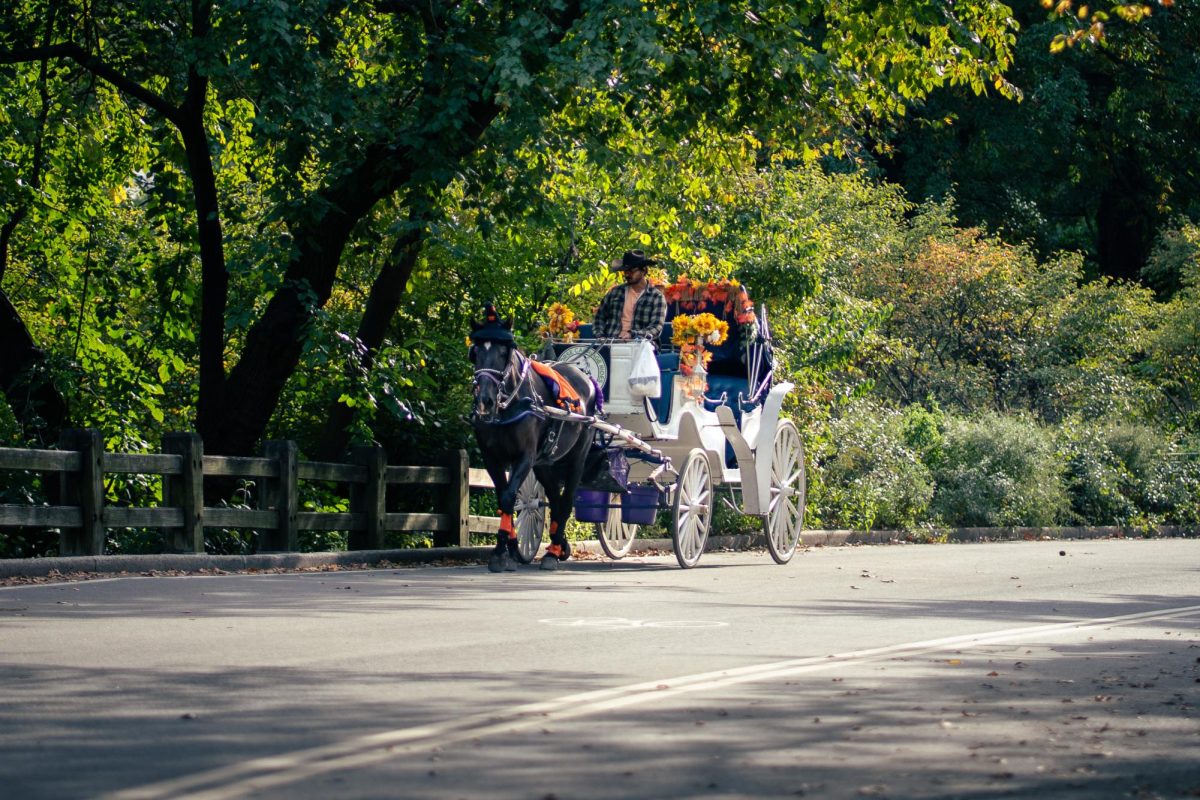
New York City, a city that long reigned in popularity among tourists for its horse-drawn carriages, will soon no longer offer rides. NYC Mayor Zohran Mamdani and City Council Speaker Julie Menin reached an agreement to phase out Central Park’s staple horse-drawn carriages by June 1, 2028.
Both officials proposed the addition of a new piece of legislation, dubbed Romanch’s Law, with the proposed legislation set to improve public safety and animal welfare while helping former carriage drivers and business owners transition into new employment opportunities.
The agreement follows the death of 18-year-old tourist Romanch Mahajan, who was fatally injured in mid-June after being thrown from a runaway horse-drawn carriage in Central Park. The horse that was pulling the carriage, which held Mahajan, his mother, father and younger brother, had reportedly been spooked by stray electrical voltage leaking from the city’s underground power grid.
The situation was exacerbated by the horse’s unsecured reins after the driver momentarily stepped away from the carriage and was unable to ground the horse, causing it to bolt and the carriage to overturn.
Mahajan’s family later filed a $105 million lawsuit against NYC, Con Edison and several other city agencies following the accident. The family cited the city’s failure to regulate the horse carriage industry by not enforcing tethering rules, properly training drivers and failing to implement measures preventing unattended horses from bolting.
The tragedy reinforced pre-established concerns regarding the safety of carriage riders, park visitors and the horses themselves. “This was an avoidable accident. The allegations set forth in the Notice of Claim describe a preventable tragedy that followed years of warnings, prior incidents and failures to implement basic safeguards,” Sagar Chadha of Liakas Law, P.C., an attorney representing the family, said.
Beyond concerns regarding overall passenger safety, several incidents involving Central Park’s carriage horses have drawn attention to animal welfare concerns. This past June, 16-year- old carriage horse Deniz collapsed and died whilst completing his shift in the park. Deniz’s death was later attributed to the ingestion of Japanese yew, a plant that is toxic to horses, yet remains displayed throughout the park’s landscaping.
Ryder, a former carriage horse in Central Park, also brought attention to animal welfare concerns in August 2022 after collapsing in Midtown Manhattan due to a heat stroke. Following his collapse, Ryder was retired at a farm in upstate New York and was later humanely euthanized. Ryder’s collapse and later death fueled outrage among animal activists.
Activists from various animal rights and safety organizations gathered outside of horse stables in Central Park, urging tourists to skip carriage rides and pushing for the establishment of Ryder’s Law, meant to strictly prohibit the use of carriage horses in temperatures exceeding 90 degrees Fahrenheit.
Ryder’s law was later renamed to Romanch’s Law. The horse-drawn carriage industry has faced much criticism in recent years. “Since 2010, mayors and local legislative leaders have tried to outlaw horse- drawn carriages from operating in Central Park, citing concerns about the safety of the animals as several have died in accidents and from exhaustion,” journalist Chris Sommerfeldt reported to Politico.
On Oct. 22, a full council vote was held to deliberate the proposed horse carriage bill ban. The council ruled in favor of the bill, which will prohibit all horse-drawn carriages in Central Park in 2028. The bill will also place a hard expiration date on existing horse carriage medallions and licenses by May 31, 2028, ending the industry after decades of debates over its future in the city.
“Horse-drawn carriages have long been part of New York City’s history, but in an increasingly busy Central Park, this tradition has become a growing public safety liability,” Menin said in a statement. “Next week, the Council will take decisive action by voting on [this bill] to protect New Yorkers, visitors, and the horses themselves.”
Mamdani also expressed his support for the agreement on social media.
“The horse carriage industry is coming to an end in New York City. Our administration will make sure workers and owners are protected and the horses are safe,” he wrote in a post on X.
The proposal has drawn heavy opposition from carriage drivers and others within the horse-drawn carriage industry, with concerns surrounding the economic impact of the ban. Workers have questioned whether the proposed assistance will adequately compensate for the loss of income and business.
Although the legislation calls for support in finding future employment, compensation for carriage owners are still under consideration rather than guaranteed. Many workers have expressed their fear regarding the situation, drawing parallels to their employment being stripped away without due process to clauses existing in the U.S. Constitution.
The Transport Workers Union, meant to represent carriage drivers and owners, vowed to sue the city. They claimed the pending ban is “wildly unconstitutional,” and violates clauses of the 14th Amendment that entitles someone to due process and equal protection.
As a means to support potentially affected workers, the legislation would require that the mayoral administration establish a workforce transition program by April 1, 2027.
This program would then include assistance in job placement, hiring events, career counseling, workforce training and information about educational opportunities that would coincide with tuition assistance programs.
Workers would also receive guidance to point them towards work in familiar fields such as transportation, tourism and hospitality.
The program will also call for officials to aid workers with the relocation of their horses and supplies as well as provide them with possible monetary compensation for their business and licenses.
The legislation also calls for the humane placement of horses, including restrictions on their sale to slaughterhouses or for use in another horse-drawn carriage business.
City officials maintain that the legislation is a necessary step to address potential public safety liabilities that arise from horse-drawn carriages and animal welfare concerns in a city environment as congested as NYC.