
Gov. Kathy Hochul and the Metropolitan Transportation Authority announced on Oct. 7 that modern fare gates will be installed at 20 additional subway stations after a year-long pilot program.
The expansion is part of a $1.1 billion initiative following a pilot program that saw an average 35% reduction in fare evasion. Hochul indicated that the gates provided a “better riding experience” and “made it harder for would-be fare evaders” to enter stations without paying.
“Based on the results of this pilot, already we know that this will save taxpayers nearly $100 million a year that otherwise was stolen in fares,” Hochul said in a news conference.
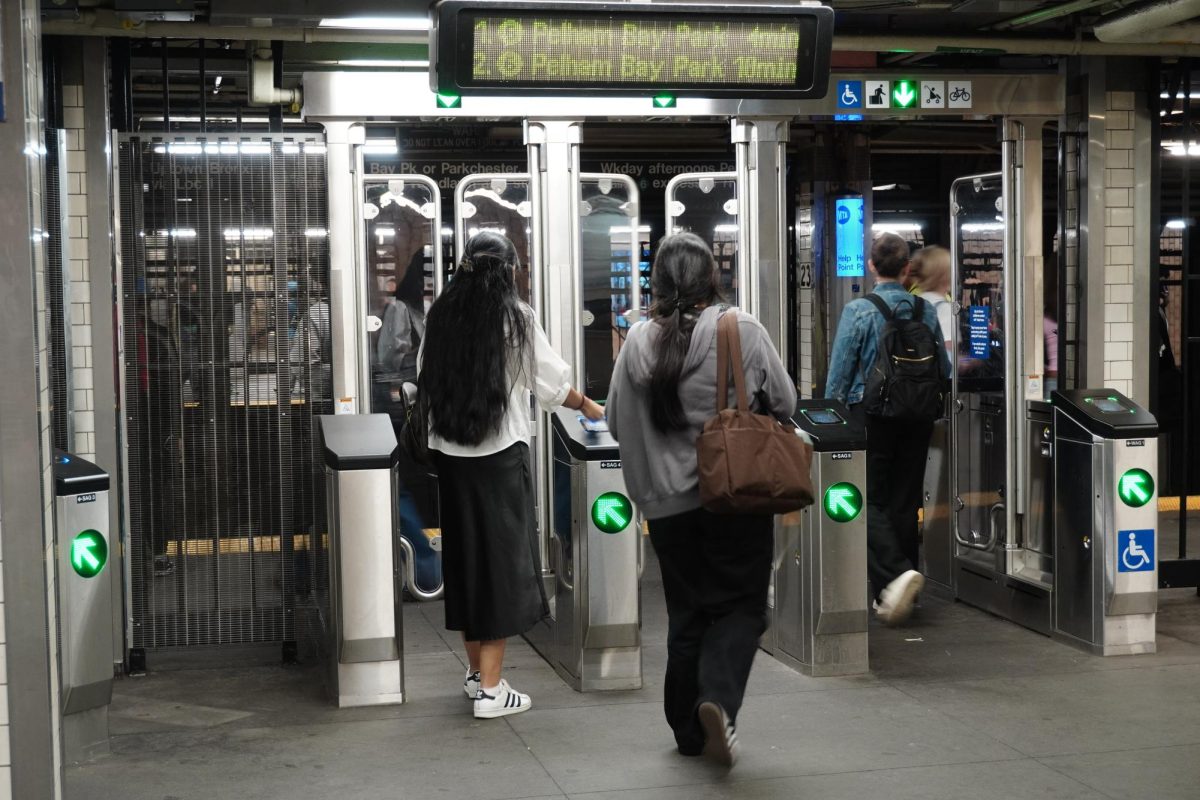
Unlike traditional turnstiles, the modern gates feature tall glass barriers, automatic doors and sensors designed to prevent passengers from entering without paying.
While reducing fare evasion is the primary goal, the MTA also aims to improve accessibility across the system. Traditional turnstiles often require riders using wheelchairs, pushing strollers or carrying luggage to use the emergency gate. But the modern gates provide a more convenient way for passengers to enter and exit the station.
“They have cutting-edge sensors, long double doors, they make them nearly impossible to jump over or crawl under and we’re already seeing a difference,” Hochul said.
The MTA plans to install the gates at 20 additional subway stations by the end of the year. Some stations include Coney Island-Stillwell Avenue in Brooklyn, 161st Street-Yankee Stadium in the Bronx, 14th Street-Union Square in Manhattan and Astoria Boulevard in Queens.
According to the MTA Construction and Development President Jamie Torres-Springer, all traditional turnstiles at the 20 stations will be replaced, instead of one selected set at each station.
The pilot program involved three companies: Cubic, Conduent and S Traffic. Cubic, the company that created OMNY, had the highest fare evasion reduction of 72%, according to the MTA.
“Every time a fare beater steals a ride, they’re stealing money meant for our trains and our buses to keep them moving. They steal money that pays the salaries of our union transit workers and who fits the bill for the missing revenue? The taxpayers, riders who do the right thing,” Hochul said.
Despite the improvements, riders expressed concerns about the gates’ effectiveness. Rider Keith Nicholas told NY1, “If somebody taps, they would like… it would be open for a couple seconds. Somebody else could walk through, or if somebody is leaving it could be open, somebody could walk through. But it’s still better than having the spikes over the turnstiles.”
Nicholas’ concerns highlight the challenge of tailgating, as the MTA continues to expand the program. The MTA will continue to evaluate the gates’ performance as the expansion progresses, with the goal of introducing modern fare gates at more than 150 subway stations.