
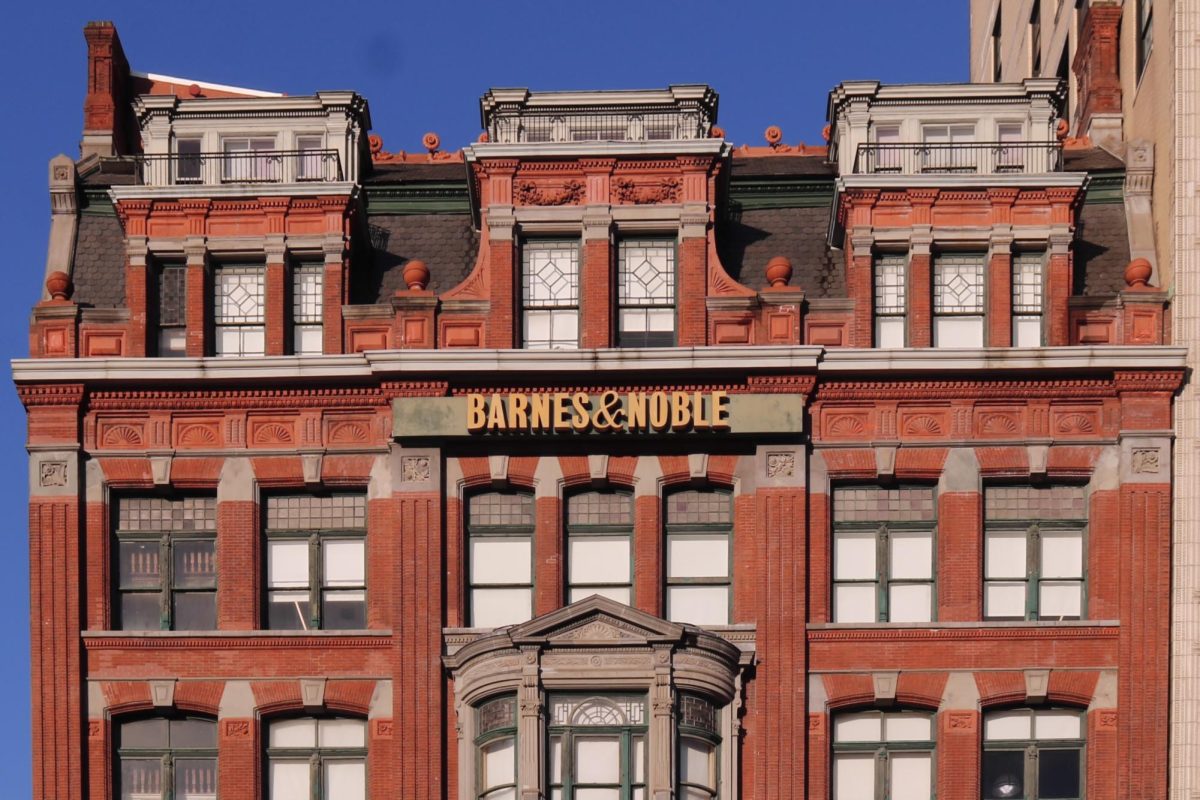
Following nearly two decades of store closures, Barnes Noble is undergoing a major expansion, with 60 new stores opening nationwide in 2026.
Barnes Nobles was founded in 1873 by Charles Barnes from Illinois, who started a book selling business from his own home. In 1917 Barnes’ son, partnered with G. Clifford Noble, went to New York City and eventually opened the flagship store during the Great Depression.
What was once a small business turned into a book empire in 1971 when a bookseller named Leonard Riggio bought the flagship store and company name.
Most mega bookstores began closing in the early 2000s as Amazon made its mark for readers by offering cheaper prices and fast delivery.
But instead of allowing the company to die out like the rest, Barnes Noble quickly worked to integrate an online model into its already established brick-and-mortar operations.
To compete with Amazon’s reader service, Amazon Kindle, Barnes & Noble launched its own e-reader service, Nook, in 2009.
While Barnes & Noble is currently the number one brick-and-mortar bookseller in the United States, operating in all 50 states, Amazon remains the largest book retailer in the world. By 2018, Barnes Noble closed roughly 400 retail locations. “At the end of 2018, the giant bookselling chain reported its seventh quarterly loss in a row, red ink of $27.3 million on sales of $117.2 million,” the Los Angeles Times reported.
However, the company has been quickly rebuilding the number of locations it has nationwide since 2023. During the company’s rebranding that year, it opened approximately 30 new stores in 2023 and 60 new stores in both 2024 and 2025.
Much of the credit toward the company’s recent expansions has been given to Barnes & Noble CEO James Daunt.
Daunt is also the founder and managing director of Waterstones, the U.K.’s largest bookstore chain.
In a 2023 interview on Daniel Roth’s “This is Working” podcast, Daunt expressed that the things that helped the company get back on track were relatively simple. Barnes & Noble was focused on becoming a big retailer instead of a brick-and-mortar bookseller, losing its “good book selling” aspect.
Daunt trusted that each local community of managers at Barnes & Noble locations would learn from each other and best adapt their own store formatting accordingly.
On whether to buy a book from an online retailer like Amazon or going to a bookstore, Daunt said, “If you come into this store to buy it, you will have an experience. And when you walk out of the store with it in your bag, it will lift you. It’s the same book, but I promise you it’s a better book and the reading of it will be more pleasurable because you bought it in a bookstore.”