
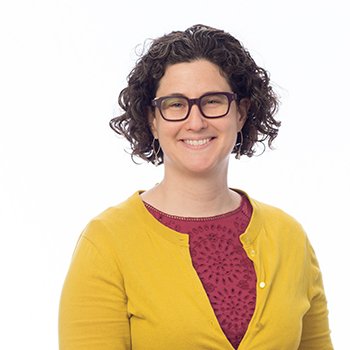
Professor Spokony has been teaching biology at Baruch College since 2013, and has become a familiar name amongst students who have taken Introduction to Biology.
Before coming to Baruch, she spent years studying how insects change as they develop, specifically how their brains reorganize during metamorphosis.
“It is amazing how much has changed in such a short period of time,” Spokony said in an interview with The Ticker, while reflecting on her work.
Working with flies and beetles helped her understand how a young nervous system transforms into an adult one.
It has shaped the questions she still asks about how genes and hormones guide development.
While pursuing her doctorate, she focused on how the genome controls these changes. Only a small part of DNA makes proteins.
Most DNA decides when genes turn on. Because this is hard to predict, scientists need to test it directly in the lab.
Spokony studies the juvenile hormone, which keeps insects on the juvenile stage. To become adults, they need to break down this hormone and she studies what happens when the enzymes responsible for this breakdown are missing.
The gland that produces the hormone becomes noticeably larger in these mutant flies, and many genes change their expression levels.
These results show how a single disruption can spread through multiple parts of the developmental process.
Spokony’s most recent project examined this disruption.
Her team discovered that when flies cannot break down the juvenile hormone, the gland that produces it grows much larger than normal.
They also found that hundreds of genes change their activity, demonstrating how such a small shift in hormone balance can affect the entire developmental process.
This work is part of a new preprint that her lab is continuing to build on with students.
In her lab, students use tools such as RNA interference and CRISPR to make small genetic changes and see how those changes affect the flies.
They learn how to care for different groups of flies, breed new flies with specific genetic changes and compare them to regular flies.
The work can be slow and unpredictable because the flies do not always grow as expected and experiments do not always work the first time.
Spokony tells her students that this is a normal part of doing research and often the moment when most learning happens.
“If everything worked perfectly, we would not discover anything new,” she said in an interview with The Ticker.
She encourages students to start by reading scientific papers, so they understand the background of a project.
If the methods in a paper are unclear, she recommends reaching out to other labs since scientists often help each other fill in the gaps.
For students who want to join a lab, her advice is simple and attainable.
Spokony says to take classes with the professor, participate, show genuine interest and explain clearly why research is something worth pursuing.
Today, her work continues through a recent preprint and several student projects.
For Spokony, the best part of research is seeing students discover something new and watching science move forward through curiosity and patience.