

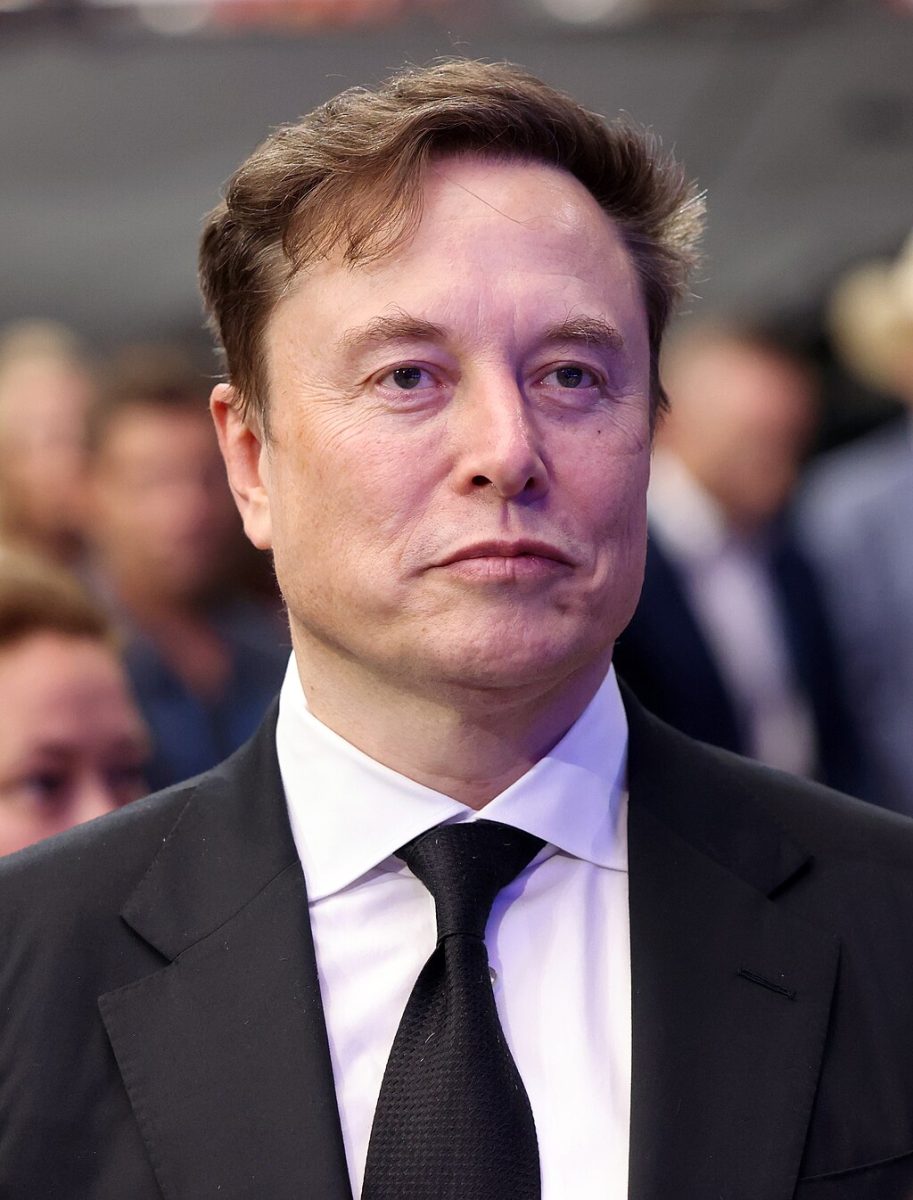
Elon Musk’s xAI launched Grokipedia, a fully artificial intelligence-generated alternative to Wikipedia with almost 1 million encyclopedia entries, in October 2025.
After reaching an estimated five million monthly visitors, Grokipedia has sparked significant controversy online over its entries on the Holocaust, President Donald Trump, the Apartheid and the AIDS epidemic.
Musk himself has criticized Wikipedia, accusing the website of being “controlled by far-left activists” and discouraging donations.
With Wikipedia facing its own controversies, public discourse has centered on the differences in reliability between human-edited encyclopedias and AI-generated ones. In judging reliability, Harvard’s guide on “Evaluating Sources” said, “The most reliable sources are … articles published in peer-reviewed journals and books published by academic publishers.”
After Wikipedia’s release, many school districts banned the site on school computers while universities restricted citations.
Echoing “Republic” by Plato, “Until philosophers rule as kings … cities will have no rest from evils,” critics of Wikipedia argue that because the website’s articles can be edited by the public, they are inherently biased and unreliable.
The differences between the two encyclopedias are most visible when it comes to Trump’s biography. While Wikipedia often details the president’s most controversial statements, Grokipedia tends to omit his word choice, focusing instead on legislative initiatives.
Musk explained the purpose of creating Grokipedia has been to remove ideological biases associated with human writing.
“The goal of Grokipedia is the truth, the whole truth and nothing but the truth,” Musk wrote on X.
While conservatives have tried to create Wikipedia alternatives in the past, including Conservapedia and Ruwiki, none have been fully AI-generated. Grokipedia raises significant questions about truly original knowledge.
“The non-human agent needs to collect information, find ways to process that data, and benefit from the act of learning to reach further than the role of its designer into unknown environments,” technology ethicist Lorenzo Belenguer said in a 2022 essay on AI bias.
In the context of original knowledge, AI models trained on existing, often-copyrighted data, have already reached into “unknown environments,” making novel scientific discoveries. In as early as 2018, Google’s AlphaFold model revealed millions of new protein structures that were previously unknown to scientists.
However, according to Grokipedia’s own standard of “awareness acquired through experience,” AI is incapable of true judgement.
“Judgment involves the wise resolution of new problems, striking a balance between different values … AI systems possess a degree of episteme but lack both techne and phronesis,” Peter Gärdenfors, a professor of cognitive science at Lund University, said in a Psychology Today article.
In referencing Aristotle’s “Nicomachean Ethics,” Gardenfors argues that AI can comprehend scientific facts, but not artistry or moral wisdom. In Grokipedia’s case, an AI-generated encyclopedia could present material facts but miss the moral and creative weight of its words. However, AI hallucinations cast further doubt on reliability.
In an ongoing Delaware lawsuit, conservative activist Robby Starbuck sued Google for defamation after the company’s AI falsely linked him to white nationalists. Google spokesperson Jose Castaneda defended the chatbot, saying “Hallucinations are a well-known issue for all LLMs, which we disclose and work hard to minimize.”
Considering harmful hallucinations, it’s challenging for judges to determine if AI outputs could be considered protected speech under U.S. law. While the First Amendment prevents Congress from “abridging the freedom of speech,” it is unclear if a machine can identify itself as a speaker.
In this way, if the Delaware court rules in favor of Google, Grokipedia could be protected under journalistic merit; if not, it could be treated as the speech of its developers. Fundamentally, the competition between Wikipedia and Grokipedia is not just a dispute about the accuracy of articles, but it is also a debate about the purpose of knowledge itself.