
The land of hieroglyphics, gods and pharaohs makes its way to the home of mystery, confined in one place. The Grand Egyptian Museum opened its doors to royals and heads of state at the opening ceremony on Nov. 1.
After two decades of work, architectural firm Heneghan Peng Architects managed to bring to light the architectural masterpiece. This was possible after it won the international competition that was proposed by the Egyptian government in 2002. “It was unreal,” Róisín Heneghan, the company’s co-founder, said in an interview about the day she received the call confirming her and her four-person architecture firm as the winners of the competition.
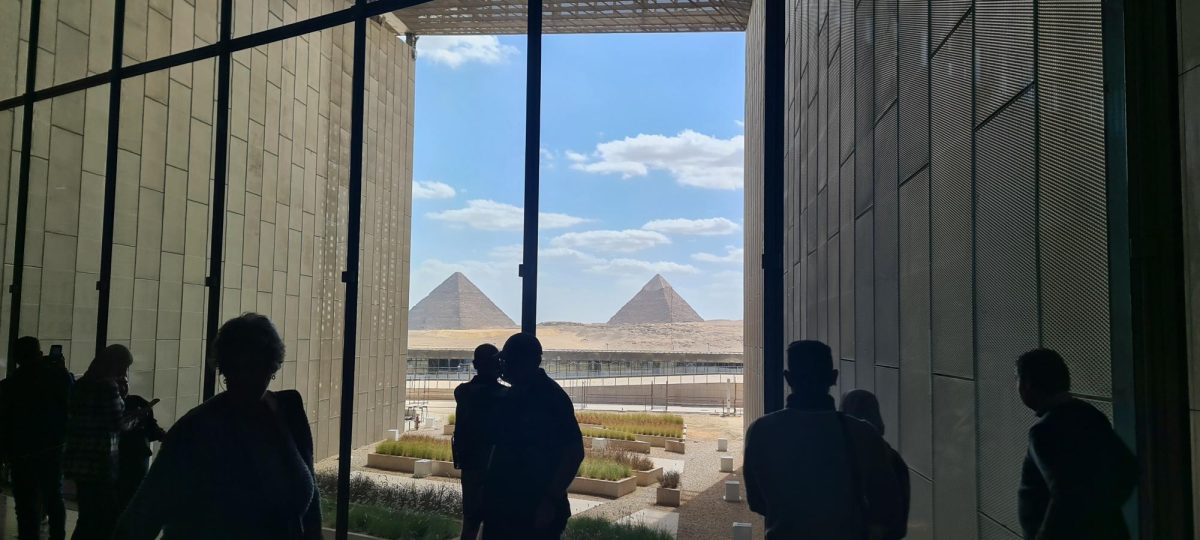
The designers made the facade and structure of the museum the key element by intentionally aligning them with the three Giza Pyramids.
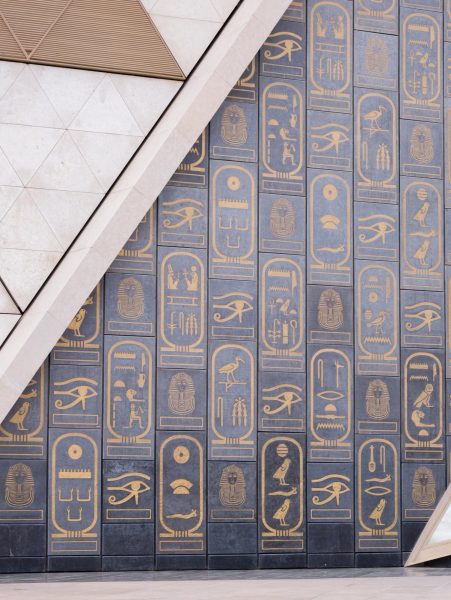
The glass facade is decorated with hundreds of cartouches, which are ovals encircling the names of kings and queens. Visitors are greeted by the massive statue of King Ramesses II in the Grand Hall and it features a grand staircase for a majestic introduction to civilization. What started as an idea is now regarded as the largest museum ever dedicated to a single civilization.
Some of the artifacts that are on display include the entire collection of 5,000 objects from King Tutankhamun’s tomb, which are on view for the first time ever after their discovery 103 years ago. The museum is now home to over 100,000 artifacts, with about 20,000 of them having never been in the public eye.
Some Egyptian artifacts have been illegally obtained by other museums around the world, like in the Netherlands, which has been plagued to return a 3,500-year-old sculpture that belonged to a high-ranking official from the dynasty of Pharaoh Thutmose III.
There are some major museums that have historically refused to return artifacts or even delayed their return.
The most notable being the British Museum, which has refused to return the Rosetta Stone. The museum said that the stone is an essential part of humanity’s universal heritage. Berlin’s Neues Museum has also refused to return the bust of Nefertiti, stating that the trip to Egypt would damage the delicate bust.
Some arguments are that the objects are safer in museums with better conservation facilities, or that the artifacts are part of a universal human heritage, meaning they should be accessible to a world audience and that the original acquisition was legal at the time.
After facing multiple delays over the years, the GEM’s successful launch is more than a completion; it is a triumph for society and history.
The full opening marks a crucial dawn for Egypt, where this majestic edifice rises not just as a museum but as a lighthouse for the past. By gathering brilliance and the nation’s heritage, they showcase a civilization that has been the base for modern day society. It’s a whisper of a new golden age.