
Baruch College students are known for running small businesses that sell unique items to the student body.
But when it comes to selling on online platforms like Mercari or Depop, online fees can quickly eat into profits. Recognizing this, Baruch students My Anh Phan, Manish Kumar and their team created Bearcat Thrift in the fall 2024 semester.
Phan and Kumar founded the student-run marketplace through the Collegiate Entrepreneurs’ Organization, which jump-starts student ventures.
“We had friends that would resell, and they would always complain about the fees,” Phan said. “We thought, ‘why don’t we just have a marketplace here.’”
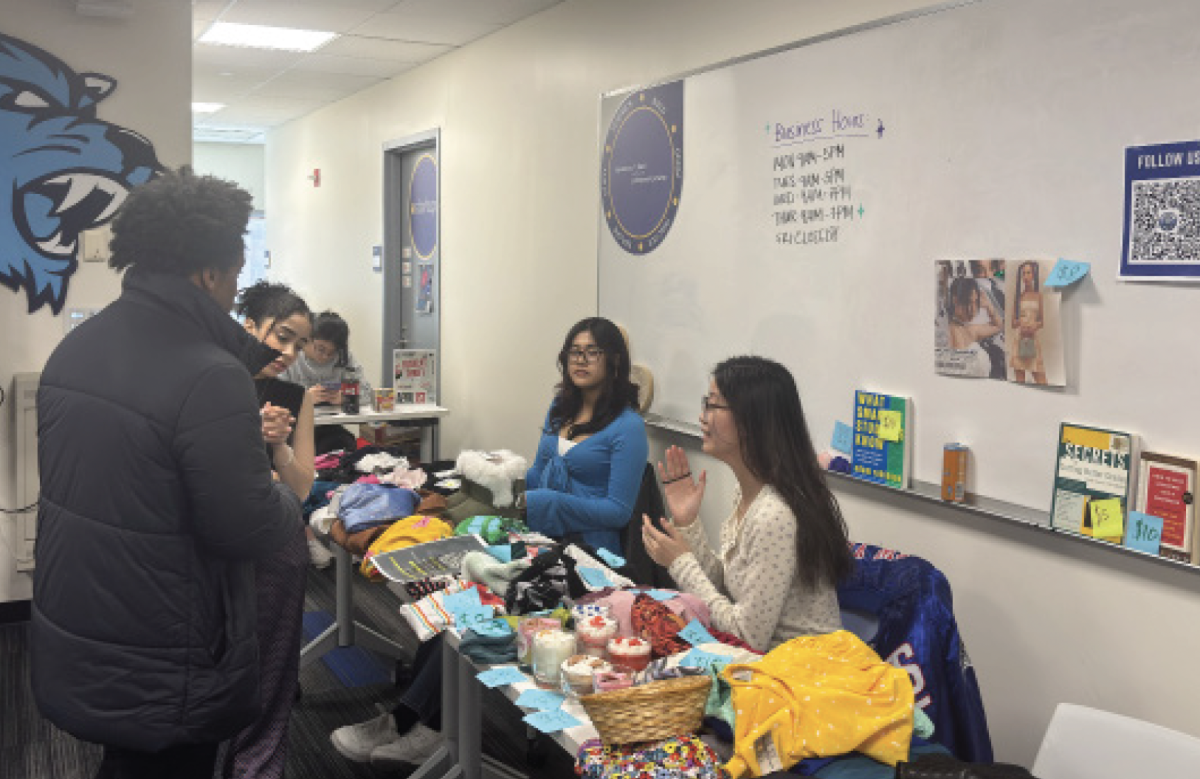
The co-venture leads held their second “Bearcat Thrift” event of the semester in partnership with Lawrence N. Field Center for Entrepreneurship on April 1. At the marketplace held during club hours, about 20 vendors sold vintage thrift finds, handcrafted goods and unworn items for a relatively affordable price.
Laura Ly Bui was one of the vendors, selling a variety of her own second-hand items and candles she made from scratch from her brand, The Pastry Shop Candles.
She promotes her business primarily through word-of-mouth on campus and often sells to peers. Selling on her own proved to be challenging until she brought her business to the Bearcat Thrift.
“This is a great opportunity,” Bui said. “People can make money by selling their things without having the hassle of going through a big process. With this, you can make quick money and it’s accessible because it’s at Baruch.”
Psychology major Nishat Tasnim brought a selection of brand-new and name-brand apparel to sell, including items from Lululemon, Fear of God ESSENTIALS and SHEIN at lower prices than typical market value.
Tasnim sources her clothes from online stores such as SSENSE and finds apparel through deep searches on the internet instead of just sticking to “page one.”
Primarily selling on Facebook Marketplace, Poshmark and Mercari, she said the pop-up turnout was substantial.
“I thought this was a great opportunity to see people face to face and sell to them,” Tasnim said.
The second Bearcat Thrift saw a lot more sellers and buyers compared to their first event in February, with 34 transactions at the first event and 130 at their second.
The low turnout was due to the event being held on a Tuesday when it was a Monday schedule.
The February event still gained traction. Red Bull sponsored the marketplace and the thrift offered a free Red Bull and instant ramen cup with every purchase.
Phan and Kumar spent their own money on ramen and Instagram advertisements promoting the event, since the field center had to see if their venture was feasible to enter the “incubation period.”
The co-venture leads will enter that phase next semester, which will provide them with financial support. Kumar mentioned that they were a small team at first, but with 10 people now, they’ve dedicated more time to marketing and attracting more sellers.
“It was me and Manish doing everything together and it was difficult scaling it,” Phan said. “Now, we have people who are interested who want to sign up, want to be a seller and want to help us out.”
The student-run marketplace hopes to launch a website where students can sell their items through Bearcat Thrift.
While the website is still in the works, they want to create a system where students can purchase items online and pick them up in the field center. Many vendors at the event sell their products online, including Andy Garcia, who started selling a selection of vintage t-shirts and pants last year.
Garcia has curated a collection of apparel dating back to the 1960s and prioritizes acquiring items made before the 2000s. One of the most dated shirts he had at the table was a 1990s Fruit of the Loom shirt, which he was selling for $25.
Since the marketplace was in person, Garcia’s prices ranged from $10 to $35. But prices were negotiable because there were no extra fees to account for that would usually result in an upcharge.
Before Kumar and Phan opened the field center to buyers, they suggested some sellers consider lowering their prices or leaving room for negotiating.
They also plan to add an authentication process for items at the marketplace.
“This is about getting the most bank for your buck,” Phan said. “We don’t support fraud or over-priced items. We want affordability.”