
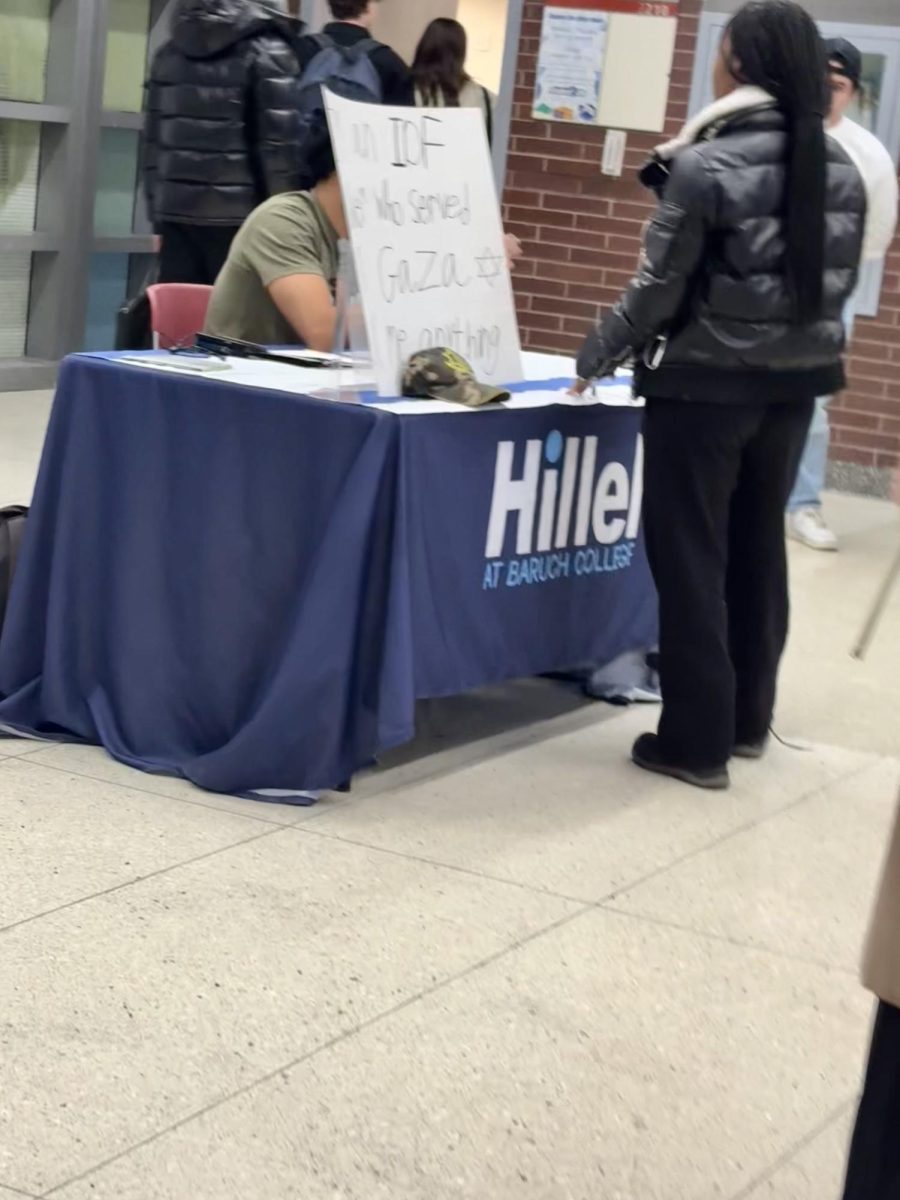
The Baruch College chapter of the Young Democratic Socialists of America posted on Instagram on March 4 about a Feb. 25 incident involving an Israeli Defense Forces soldier.
According to the post, the soldier had been invited to speak at an event hosted by Hillel at Baruch inside Baruch’s Newman Vertical Campus.
Following the post, YDSA created a petition calling for Hillel to be held responsible for allegedly violating Baruch’s Code of Conduct. The petition also called for “full transparency and accountability from all parties involved.”
In its Instagram post, YDSA said that universities should not serve as platforms for “foreign or domestic military propaganda especially when that militarism is tied to ongoing, globally condemned human rights abuses.”
YDSA is the youth wing of the Democratic Socialists of America, a national organization.
According to its national program, YDSA aims to build student and youth political power and campaigns for policies including free education, expanded labor rights and the reduction of ties between universities and military institutions.
The Ticker reached out to Adi Karni, the 22-year-old soldier invited to speak on campus, for a statement. Karni said he expected mixed reactions from students.
“Some students strongly disagreed with me and were vocal about it, but many others were curious and open to conversation,” Karni said.
Karni spoke to several students who asked questions about his experiences in the Israel-Hamas war, where he fought in both Gaza and Lebanon.
“For me, the goal of visiting campuses is not to argue, but to create dialogue,” he said. “Universities should be places where people can hear different perspectives and engage with them directly.”
According to The Informer, Baruch’s student organization handbook, the Office of Student Life allows clubs to have outside guests attend and host events.
Clubs must submit guest lists to their designated advisor and wait for the event to be approved.
Once the event is approved, public safety checks in any guests on the day of the event.
Student responses to the event have varied widely. Matthew Breagy, a Baruch senior, said he felt angry and concerned when he learned about the event while it was taking place.
“I feared for the emotional and physical safety of my colleagues, especially undergrads, Palestinians, and Muslims,” Breagy told The Ticker.
Breagy helped edit and circulate the petition and believed a soldier from a military currently engaged in war should not be invited to speak on campus. He added that the destruction of universities and academic institutions in Gaza made the event particularly troubling to him.
“To have someone connected to that war speak here feels incompatible with a university that claims to value academic life,” he said.
Some students had a different perspective. One student, who asked to remain anonymous, said they were concerned about the rapid assumptions surrounding the event. The student said they did not sign the petition and warned that efforts to block controversial speakers could create precedent for restricting debate on campus.
“I think there is real value in inviting speakers with military experience,” the student said.
“People who have firsthand knowledge of geopolitics and war can offer perspectives that are important for students trying to understand complex global issues.”
Hillel at Baruch did not respond to The Ticker’s request for a comment.