
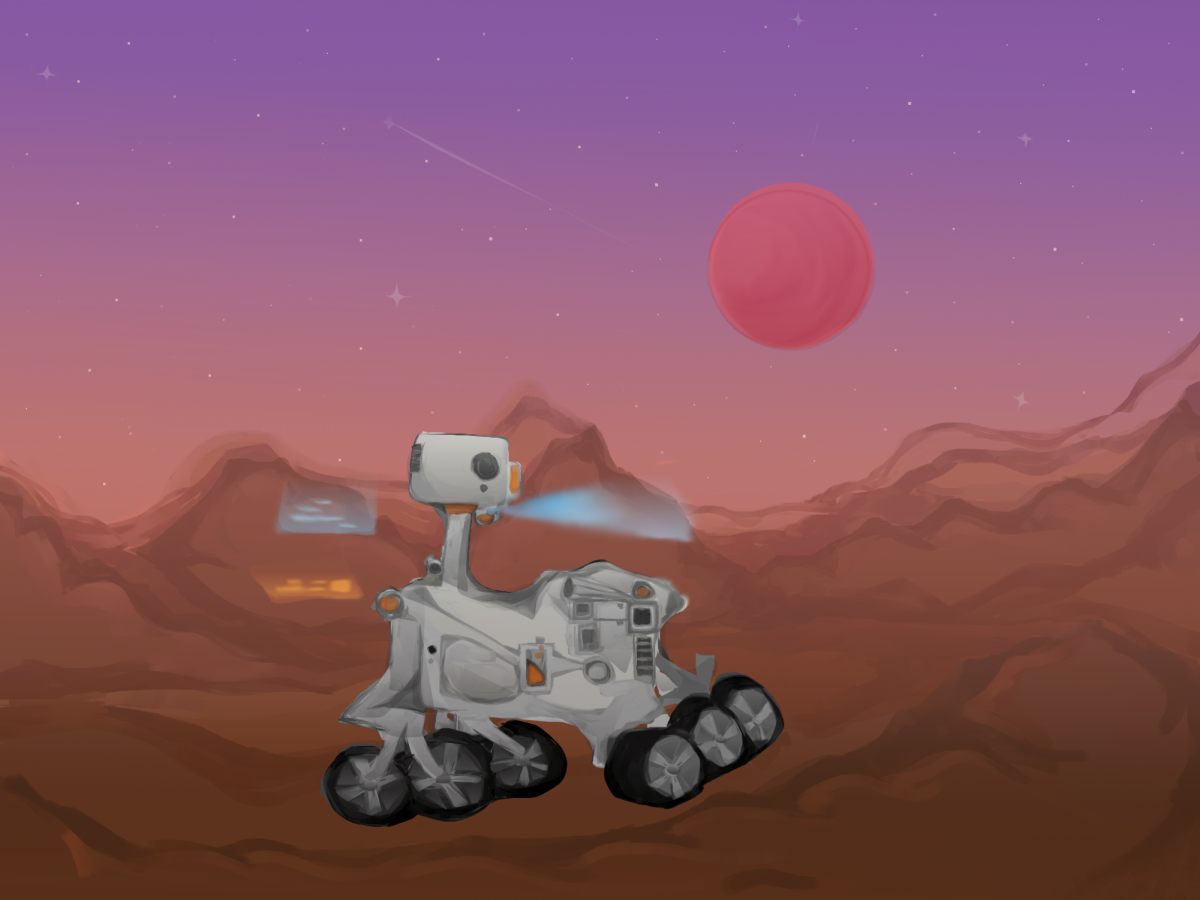
Mars has always been a hotspot for space exploration and serves many purposes, from learning about planetary evolution to developing technologies and potentially providing an alternative for human habituation beyond Earth.
One way to make significant progress in space exploration is by developing artificial intelligence technologies and autonomous machines that can handle rough conditions and uncover important discoveries.
On Dec. 8 2025 and Dec. 10 2025, NASA’s Jet Propulsion Laboratory in southern California used generative AI to create a safe route for the agency’s Perseverance Mars rover, a task that once required manual decision-making by human planners. It utilized vision language models that scanned huge volumes of rover images to analyze existing JPL surface mission dataset.
The effort was a collaboration with Anthropic and led by JPL’s Rover Operations Center, which used the company’s Claude AI models.
Previously, there were long communication delays that made real-time communication impossible. One-way signal times varied from four to 24 minutes depending on planetary alignment.
Vandi Verma, a member of the Perseverance engineering-team and a space roboticist at JPL, said that the pillars of autonomous navigation for off-planet driving are advancing.
The pillars include localization, or knowing the location; perception, or seeing the rocks and ripples; and planning and control, or deciding and executing the safest path.
Together, they minimize operator workload and flag key surface features. Engineers estimate that this will cut the time it takes to plan routes in half.
The pillars analyze the same information and images that human planners typically use and then generate waypoint locations, which are fixed locations where the rover absorbs new instructions.
This allows the Perseverance rover to safely travel across rugged Martian terrain.
Perseverance trips, which took 1,707 and 1,709 Martian days or sols, used generative AI to analyze the images from the High Resolution Imaging Science Experiment camera and the terrain slope data from the digital elevation models.
The model analyzed various terrains like bedrock, hazardous boulder fields, sand ripples and outcrops.
The commands were processed through JPL’s digital twin, a virtual replica of the rover, to verify over 500,000 telemetry variables before sending commands to Mars.
According to Matt Wallace, proprietary brand manager of JPL’s Exploration Systems Office, this technology is needed to “establish the infrastructure and systems required for a permanent human presence on the Moon and take the U.S. to Mars and beyond.”
The distance covered by the Perseverance rover continues to increase. On Dec. 8 2025, it traveled 689 feet or 210 meters; two days later it drove 807 feet or 246 meters.
The paths’ design had waypoints that were typically spaced more than 330 feet or 100 meters apart to reduce the risk of encountering hazards.