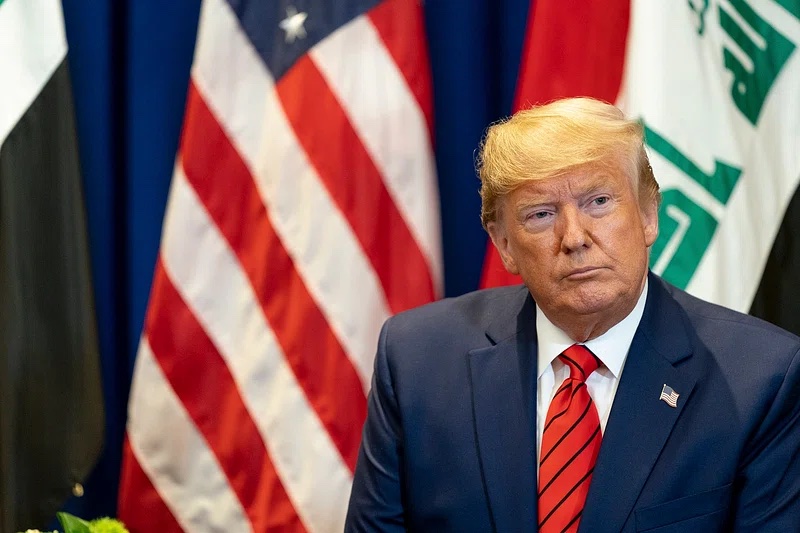

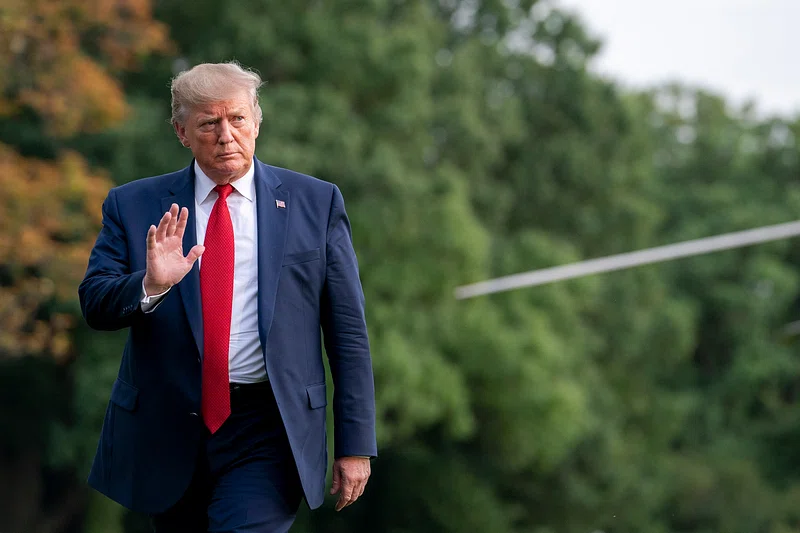
President Donald Trump’s renewed push to acquire Greenland, reportedly tied to resentment over not receiving a Nobel Peace Prize, has ignited controversy not just abroad but at home. His actions raise serious questions about temperament, strategic judgment and how the United States should wield its power in a world defined by alliances rather than conquest.
Historical context underscores why this matters. During World War II, the U.S. stationed forces in Greenland because Denmark had been occupied by Nazi Germany, leaving the island strategically vulnerable in the North Atlantic. After the war, the U.S. explored purchasing Greenland, but Copenhagen declined. The matter ended there without threats or a diplomatic break.
That is how territorial discussions among allies typically work in the modern era. States can make proposals and other states can refuse.
A refusal should not trigger economic retaliation or rhetorical escalation. Leaders should recognize that sovereignty is not a bargaining chip to be seized through pressure.
The same cannot be said for this dispute. Trump has reportedly floated tariffs of up to 10% on Denmark if negotiations over Greenland fail, framing the issue as a transaction rather than a delicate matter involving a NATO ally and the territory’s residents. Denmark already allows U.S. forces to operate on Greenlandic soil, hosting a strategically vital base and cooperating closely on Arctic security.
From a purely strategic standpoint, the U.S. government already enjoys many of the military and geopolitical benefits that pique interest in Greenland. Threatening a close partner that is already aligned with U.S. security goals risks undermining cooperation where stability is most needed.
What was most unsettling, perhaps, was the reported message Trump sent to Norway’s prime minister, later confirmed by Norwegian officials. In it, he suggested that because Norway had not awarded him the Nobel Peace Prize, he felt less constrained to prioritize peace while insisting that peace would “always be predominant.”
The Nobel Peace Prize is awarded by an independent Norwegian committee, not the Norwegian government.
Inflating the loss of the award makes it clear that Trump puts personal recognition over national interest.
Meanwhile, Norway publicly reiterated support for Denmark’s position, showing unity among U.S. allies rather than division. That response reveals another risk: pressure tactics aimed at one partner can easily ripple through an alliance network, especially in organizations like NATO that depend on mutual trust.
Trump’s attitude reflects a narrow conception of strength, one rooted in the 19th century logic of territorial expansion rather than the 21st century realities of international law and alliance management.
Modern power is measured not only by how much territory a nation controls, but also by how reliably it can coordinate with allies and avoid unnecessary conflicts.
Imposing tariffs on a close ally over a rejected proposal does not project steadiness. It signals volatility. Allies and adversaries alike pay attention to whether U.S. policy appears predictable.
The deeper concern for Americans is not simply whether Greenland changes owners, but whether the episode hints at broader possibilities to weaponize economic tools and diplomatic relationships over symbolic slights. Such behavior can erode confidence in U.S. leadership and complicate cooperation.
A critical assessment does not require caricature. Supporters may argue that Trump uses aggressive tactics to extract concessions, believing that traditional diplomacy can be too slow or deferential. There’s a time and place where hard bargaining is necessary in international affairs.
But there is a difference between tough negotiation and destabilizing rhetoric aimed at allies who have done little to provoke conflict.
When disputes escalate beyond their original stakes, they risk damaging far more than they gain.
At its core, this Greenland talk suggests the U.S.’s approach to leadership struggles with rejection and interprets “no” as a threat that deserves punishment rather than a position to be managed.
That instinct can be costly on the global stage, where miscalculation reverberates across continents.
For a country whose influence rests heavily on soft power, the U.S. benefits when partners see it as steady, principled and focused on collective security rather than personal vindication.
Whether one views Trump favorably or not, the controversy invites a broader reflection on how American presidents should conduct themselves in sensitive international disputes.
Impulsiveness is a strategic liability.