
Researchers at the University of Utah discovered that a plant native to the Colorado Plateau, Solanum jamesii, was not only domesticated by the Indigenous peoples of the region but shared beyond natural borders.
This could indicate kinship being a central part of their lives.
Conducting the study required researchers to analyze over 400 stone tools from more than a dozen archaeological sites beyond the normal range of the S. jamesii potato.
The location served as a way for researchers to find remnants of starch on tools for processing and grinding.
Of the 14 archaeological sites tested, nine had granules and four revealed tuber — storage stems typically for a seed plant that grow underground — as a stable resource.
The PLOS One published work is the first to conclude the range of S. jamesii is the product of extensive trade across the Colorado Plateau. Various Indigenous groups transported the crop to the Four Corners area of the Southwest.
“Traits of S. jamesii from the anthropogenic range already show evidence of manipulation, including population-based variations in freezing tolerance, extended tuber dormancy, sprouting resilience, and we suspect there are others that can be identified in the genome,” Bruce Pavlik, co-author and plant ecologist at BMP Ecosciences, said.
Pavlik added that archaeology and genetics together show a fuller picture of the S. jamesii crop domestication story. He also suggests that artificial selection is the “ultimate” way of proving domestication’s presence.
Indigenous knowledge shed light on how prevalent the crop was. Navajo elders, Diné, participated in the study and shared specialized information on Tuber, referring to it as “nímasii yázhí,” which means tiny potato relative, while Hopi elders refer to the crop as “tumna.”
Another co-author of the study, Cynthia Wilson, a doctoral candidate at the University of California, described the domestication of S. jamesii as a way Indigenous people stayed connected to land and others.
“The mobility of Indigenous foodways was driven by kinship-based practices across the landscape,” Wilson said. “Indigenous knowledge holders, especially matrilineal women, held on to these seedlings and stories across generations to sustain ties to ancestral land and foodways.”
S. jamesii, a plant once native to the Mogollon Rim, a New Mexican mountain range, made its way to other regions through domestication of the species and the extensive trade networks, turning strangers into kin.
Categories:
Ancient practices in the Americas fostered bonds
February 9, 2026
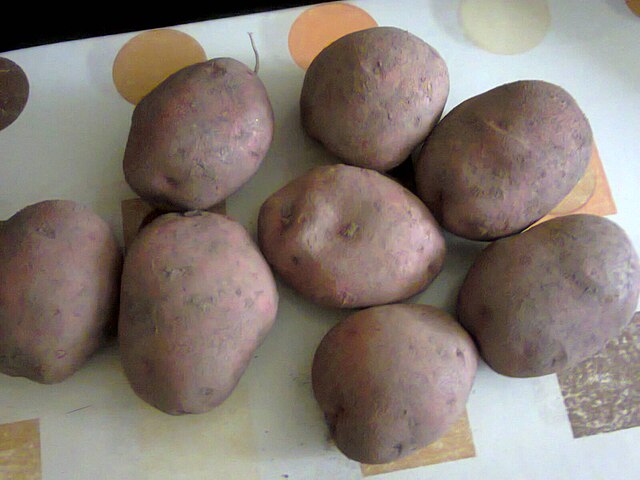
DenesFeri | Wikimedia Commons
More to Discover