
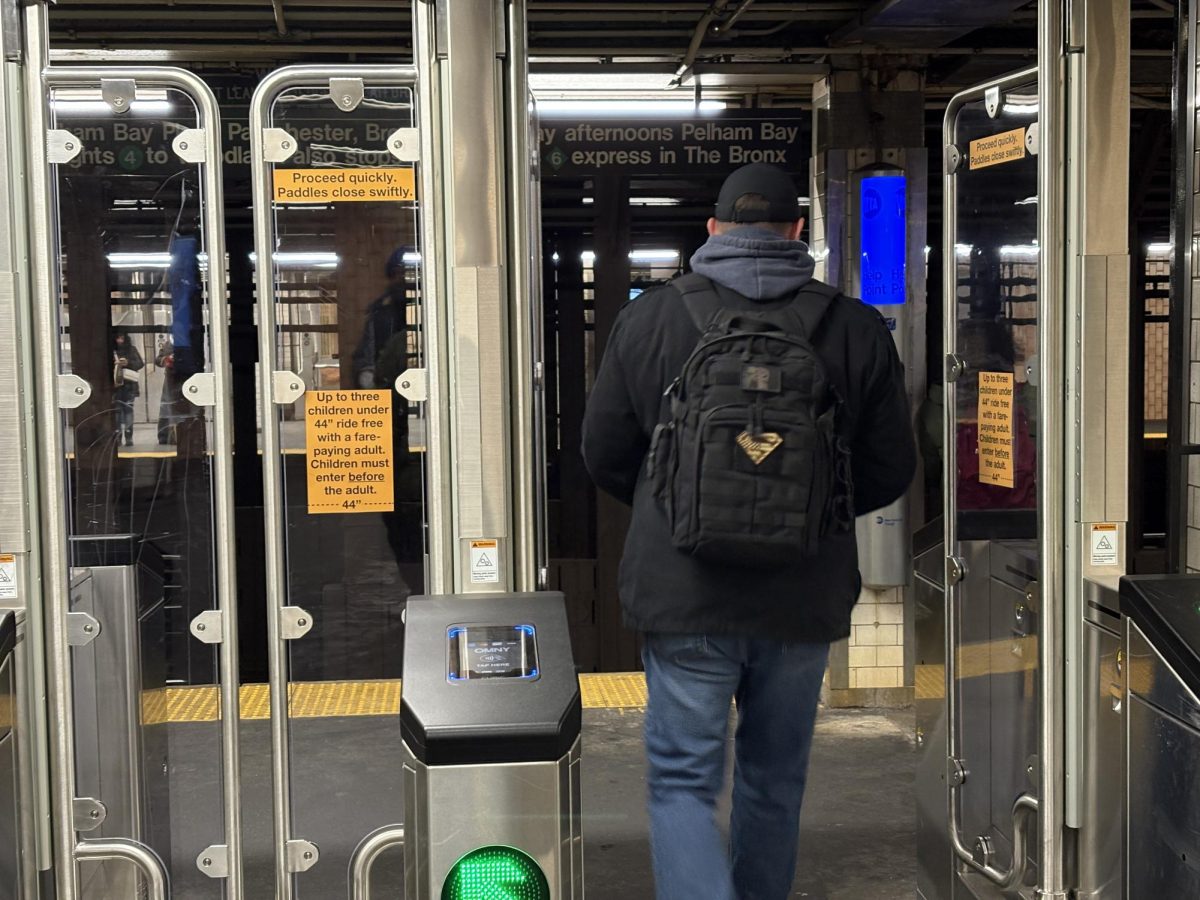
On Jan. 22, the Metropolitan Transportation Authority installed the third model of its fare gates at the 23 St-Baruch College train station. The gates, built by Korean tech company STraffic, are the last model of the organization’s citywide fare gate pilot program.
The gates feature tall glass doors in place of the turnstiles previously installed. The two earlier models were built by companies Conduent and Cubic Transportation Systems, both of which have installed similar gates in other major cities.
Additionally, Cubic is the company behind the One Metro New York fare system, which has officially replaced the MetroCard as of Jan. 1, 2026.
The gates are designed to combat fare evasion – a persistent issue that the MTA has struggled to crack down on. According to a study from the Citizens’ Budget Commission, a nonpartisan fiscal think tank, the MTA lost an estimated $350 million to unpaid subway fares in 2024.
The new fare gates provide the MTA with an opportunity to reduce its losses from subway fare evasions, which have been on a constant rise since the start of the pandemic.
The fare gate program began in December 2023, when the MTA first tested its wide aisle gates at the JFK Airport station in Jamaica, Queens. Since then, the MTA has piloted other designs at 20 stations across the city. In the next few years, the fare gates will be installed at 150 stations – the goal being to serve 75% of riders by the end of 2029.
Meanwhile, the MTA is continuing to modify existing turnstiles. Spiked partitions and plastic paddles have been installed on current turnstiles. Exit gates have also been modified with delayed egress locks, and police presence has increased at various locations.
As a result of these changes, the MTA has begun to see its first downward trend in fare evasion in a long while.
However, some riders still report issues with gates across all three models.
Some commuters have gotten their heads stuck between the gates’ doors while others flaunt various methods to bypass them on social media. NY1 also reports that the new model stays open too long, allowing fare evaders to pass through.
Despite these issues, the MTA has not paused the rollout of the new fare gates. It plans to continue installing the model at the remaining stations of the pilot program.
Upcoming stations to be outfitted with new fare gates include: Crown Heights-Utica Avenue on the 3 and 4 lines, Delancey Street on the F, M, J and Z lines and Jackson Heights-Roosevelt Avenue on the E, F, M, R and 7 lines.
As the MTA continues to test the gates and expand the pilot program, officials will evaluate how each model performs before selecting a design to install at the remaining 150 stations.
“As we evaluate their performance, we’re learning more every day about how to design modern, effective fare gates for New York City,” MTA spokesperson Eugene Resnick said in a statement.