

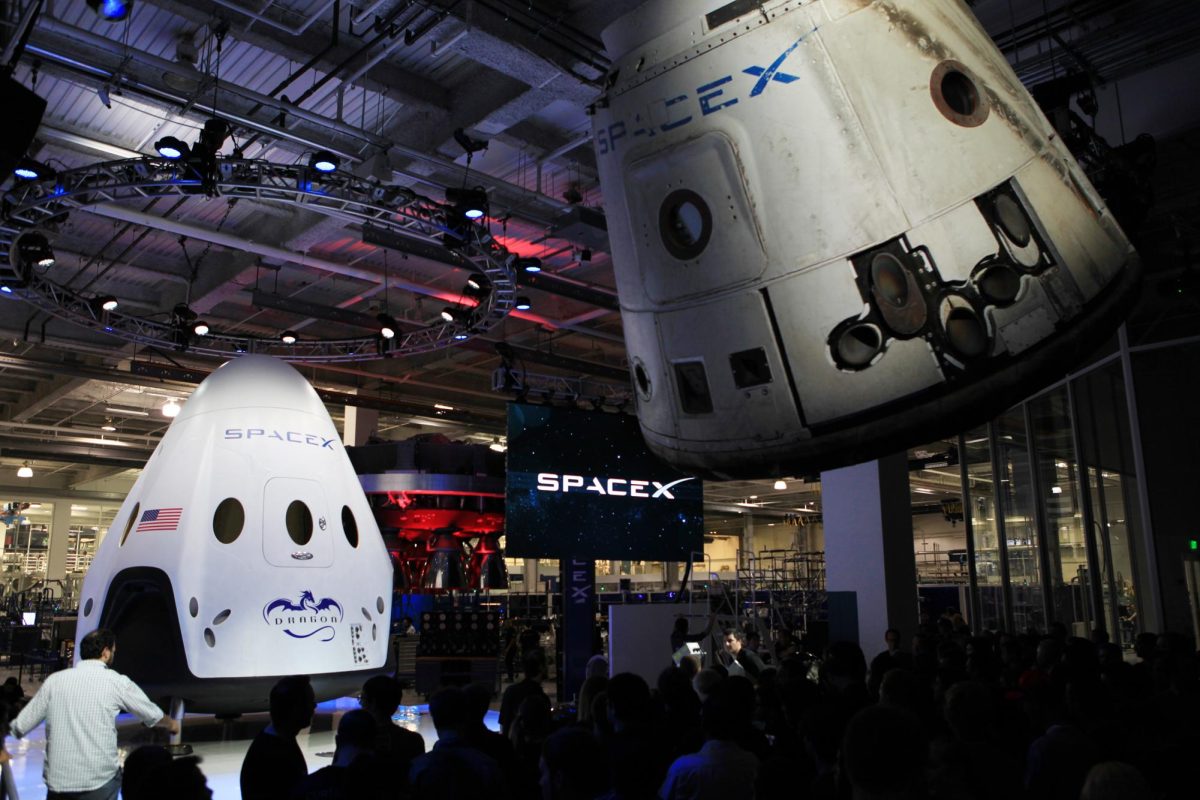
The initial public offering of SpaceX, the world’s largest private aerospace company, is likely to set records in 2026.
The Texas-based corporation, founded by Elon Musk in 2002, was the first private company to send American astronauts into orbit.
From its scientific origins, SpaceX has since grown into a major defense contractor by selling cutting-edge satellites to the U.S. military.
Since its first $1.6 billion contract with NASA, the 2008 Commercial Resupply Services deal, SpaceX has launched more than 60 people into orbit, 600 rockets and 10,000 Starlink satellites.
With total revenues in 2025 estimated to be around $15.5 billion, these satellite launches are more than just commercial – they’ve become essential tools for U.S. foreign policy.
In Ukraine, Starlink satellites have been used on the frontlines of the ongoing war to ensure resilient internet connectivity during military operations. In Iran, SpaceX aided anti-government protestors with free satellite internet during a recent communications blackout.
In addition to Musk’s close personal relationship with President Donald Trump, SpaceX itself spent around $3 million lobbying Republicans in the 2024 election. These efforts have led to a renewed focus on aerospace in the second Trump administration.
The White House recently announced the development of a new $175 billion aerial defense system known as Golden Dome, which will protect America in the event of a nuclear war.
“Once fully constructed, the Golden Dome will be capable of intercepting missiles even if they are launched from other sides of the world and even if they are launched from space, and we will have the best system ever built,” Trump said in the Oval Office.
In addition to the Golden Dome project, which would mark the first time that weapons were put into space, SpaceX also foresees the colonization of Mars as an important future goal.
“If we can establish a Mars colony, we can almost certainly colonize the whole solar system, because we’ll have created a strong economic forcing function for the improvement of space travel,” Musk told the BBC.
The company’s IPO is likely to make Musk, already the world’s richest man, a trillionaire.
SpaceX has a current valuation of $800 billion, with Musk owning around 42% of the company.
Some Wall Street forecasters already anticipate a $1.5 trillion post-IPO market capitalization for SpaceX as well as a $2.5 trillion projection by 2030.
On Wall Street, competition for underwriting the SpaceX IPO is fierce, with the company reportedly considering a partnership with one of four major investment banks: JP Morgan Chase, Goldman Sachs, Morgan Stanley or Bank of America.
However, there are concerns surrounding the company’s high valuation.
“The extremely high valuation that SpaceX has been able to get does remove some upside potential. Even if it becomes a $2 trillion company that’s only going to be a return of 100% or 200%,” University of Florida professor emeritus Jay Ritter told Investing.com.
For Musk, the money raised from a SpaceX IPO could help fund the construction of new solar-powered orbital data centers.
These data centers, which he plans to launch into space, would increase computing capacity for the training of new artificial intelligence models.
From a small rocket startup to the world’s largest private defense contractor, the SpaceX IPO is likely to define markets in 2026, underscoring America’s renewed interest in space exploration.