
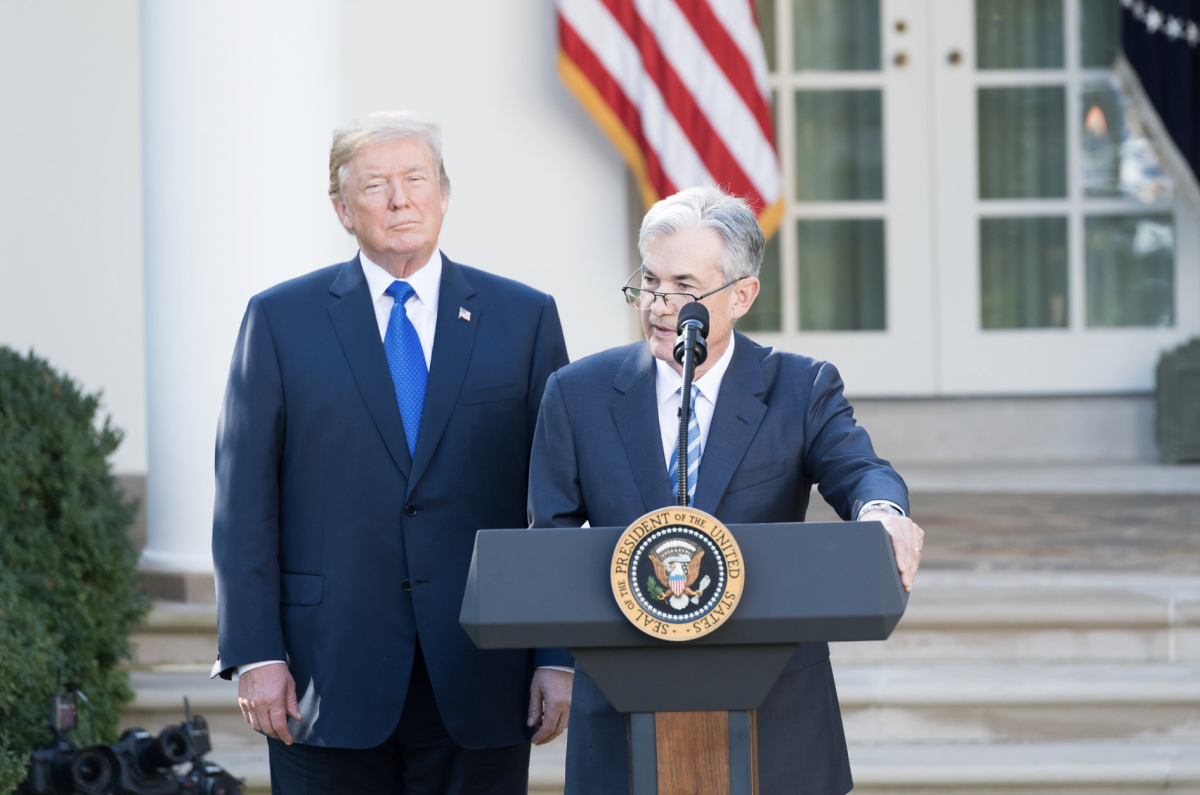
Since his first term, President Donald Trump has been worried about how interest rates were affecting the economy. He often expressed frustration when the Federal Reserve digressed from his interest rate preferences, even suggesting multiple times that he might fire Federal Reserve Chair Jerome Powell.
It is no surprise that Trump has once again set his sights on the Fed. He believes that the Fed has kept interest rates too high and that he should have more power over its decisions.
Trump has made several moves with this goal in mind, such as attempting to fire Fed Gov. Lisa Cook for alleged mortgage fraud on one of her homes.
The U.S. Department of Justice has launched a criminal probe into Powell regarding his testimony to Congress, presumably so Trump can find a reason to fire him as well.
These actions suggest that Trump is trying to remove the board’s current members and replace them with loyalists, betting that the new appointees will vote on interest rate decisions in his favor.
This strategy has worked for him in the past. Trump-nominee Stephen Miran was appointed to the Fed’s Board of Governors for a temporary position in September 2025 and has already voted multiple times for the larger rate cuts Trump favors.
Trump has also signaled that his pick for the next Fed chair will be largely based on their alignment to his preference toward lower interest rates.
While Trump’s moves constitute the largest attack on the Fed’s independence in a generation, he is unlikely to succeed. He faces too many obstacles that he will not be able to overcome.
Trump’s plans lack support in government, even among his allies. The Supreme Court will take up Cook’s case, and there’s reason to believe they will resist Trump on this issue.
Leading members of the Roberts Court, such as Justices Samuel Alito and Brett Kavanaugh, have written about the importance of the Fed’s independence and their respect for its unique structure, suggesting they will not give Trump the power to fire Fed officials that he desires.
Trump has also faced pushback from influential Republican allies in the Senate.
They have not only publicly defended the Fed’s independence but also pledged to delay future nominations until the charges on Powell are dropped.
Trump will also face pushback from the markets. The Fed is considered one of the most important institutions in global finance and investors all around the world have been keeping a close eye on Trump’s actions toward the central bank.
Even if Trump were to succeed in firing multiple members of the board and replacing them with loyalists, the backlash from financial markets would almost certainly force him to reverse course.
Fearing an increase in inflation, markets would sell off U.S. bonds if the Fed’s independence was truly compromised.
This would be catastrophic for Trump because it would cause a spike in interest rates, which is the exact opposite outcome that he wants. Trump has not forgotten the market’s reaction to his Liberation Day tariff announcements in April 2025. There’s reason to doubt he could handle a repeat.
The final obstacle that will spell trouble for the president’s ambitions is the Fed itself.
The central bank has been independent in its power over monetary policy for 75 years, and it’s because of the prudence of its members that it has remained that way.
Even if Trump nominates a loyalist for the chair and appoints another loyalist governor, most board members are still technocrats who will safeguard their independence.
Much like Miran, any Trump loyalist would likely find themselves routinely outvoted.
Powell has repeatedly rebuked Trump’s various attacks on him, with speculation that he might even stay on the board as a governor for the remaining two years of his term.
Despite his best attempts to conquer the Fed, the truth is clear: Trump has chosen a battle he cannot win.